
Oil and chemical releases into United States waters
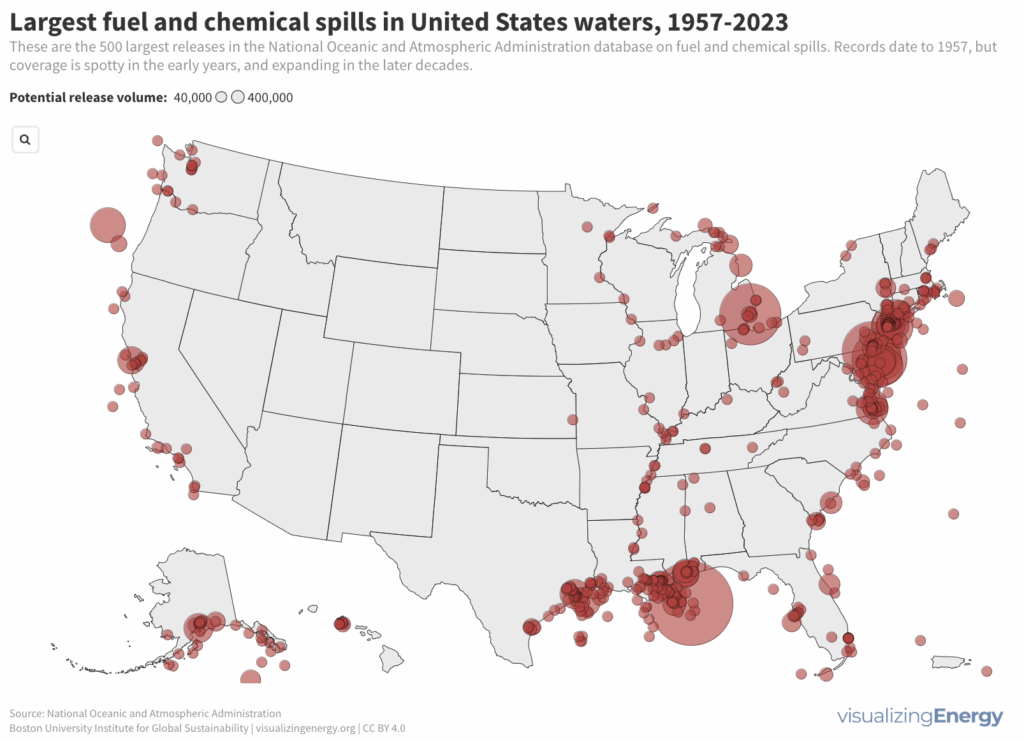
Crude oil and natural gas are refined into numerous fuel types and petrochemicals, contributing to over 6000 consumer products. However, extraction and processing lead to significant accidents, with approximately 4600 incidents reported since 1957, primarily affecting rivers and coastal areas due to industrial activities and transportation routes, highlighting environmental hazards.
The price of household heating in England, 1300-2000
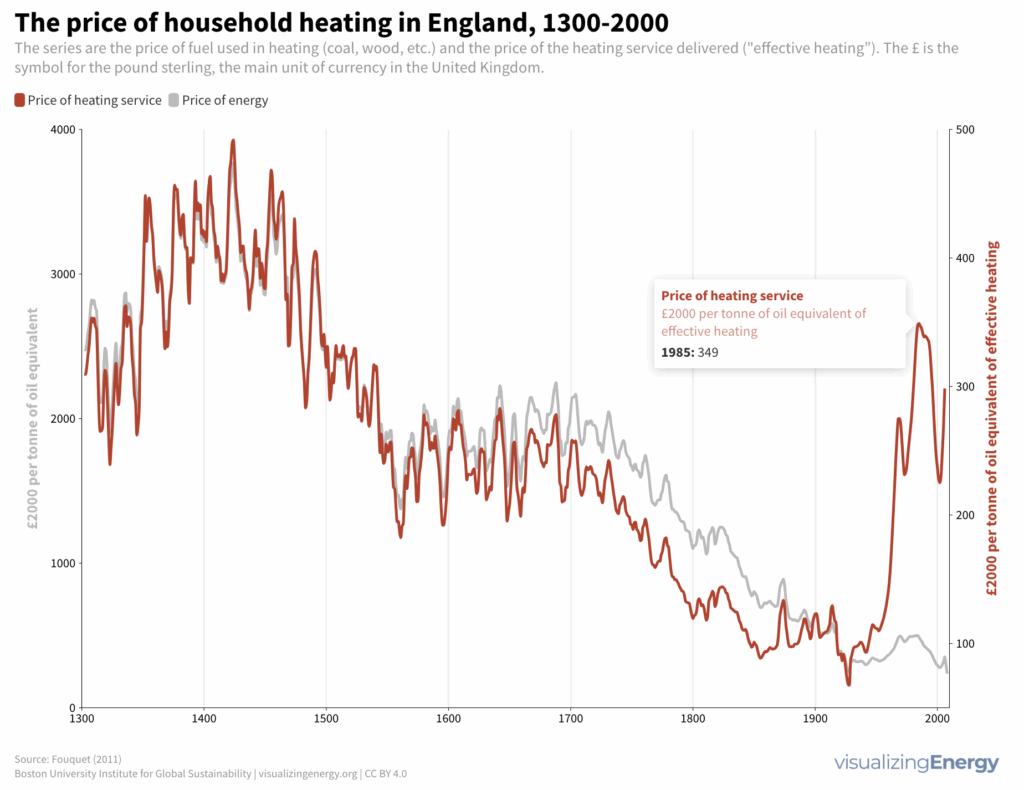
Energy historian Roger Fouquet’s analysis of historic energy transitions in household heating in England from 1300 to 2000 reveals interesting trends. The shift from wood to coal and later to natural gas resulted in fluctuations in fuel prices. Despite the increase in energy costs, improvements in technology and air quality led to a significant decrease in the price of heating services by 2000.
Explore the world history of nuclear reactors, 1951-2022

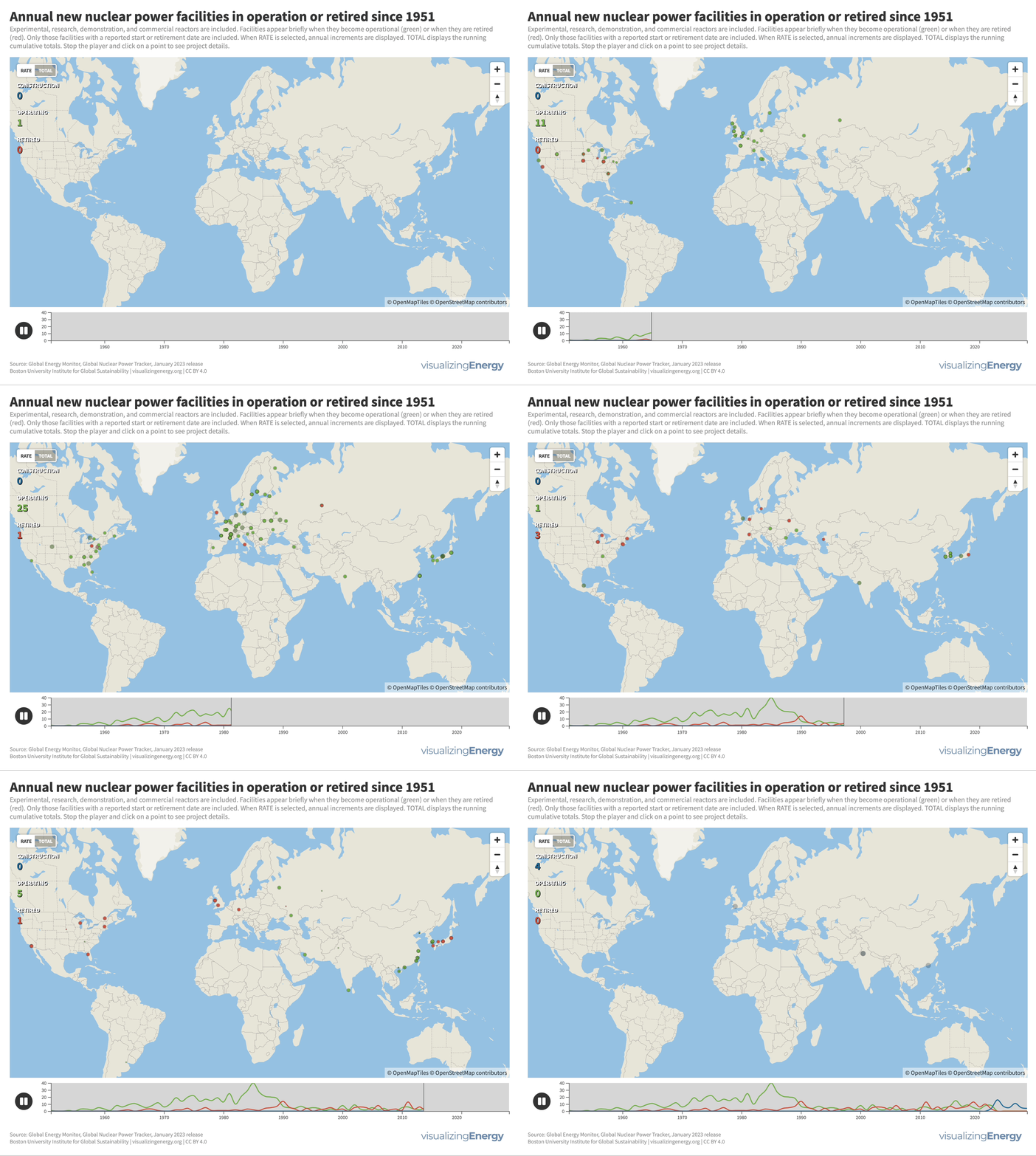
Explore the global history of nuclear reactors from 1951 to 2022. This visualization showcases 626 operational reactors, highlighting the dominance of pressurized light water reactors (PWRs). Different reactor types exhibit geographic patterns, with retired reactors and ongoing upgrades observed in various countries. The average age of reactors in the United States was 41 years in 2021.
Who benefits from energy booms? The case of fracking in Texas
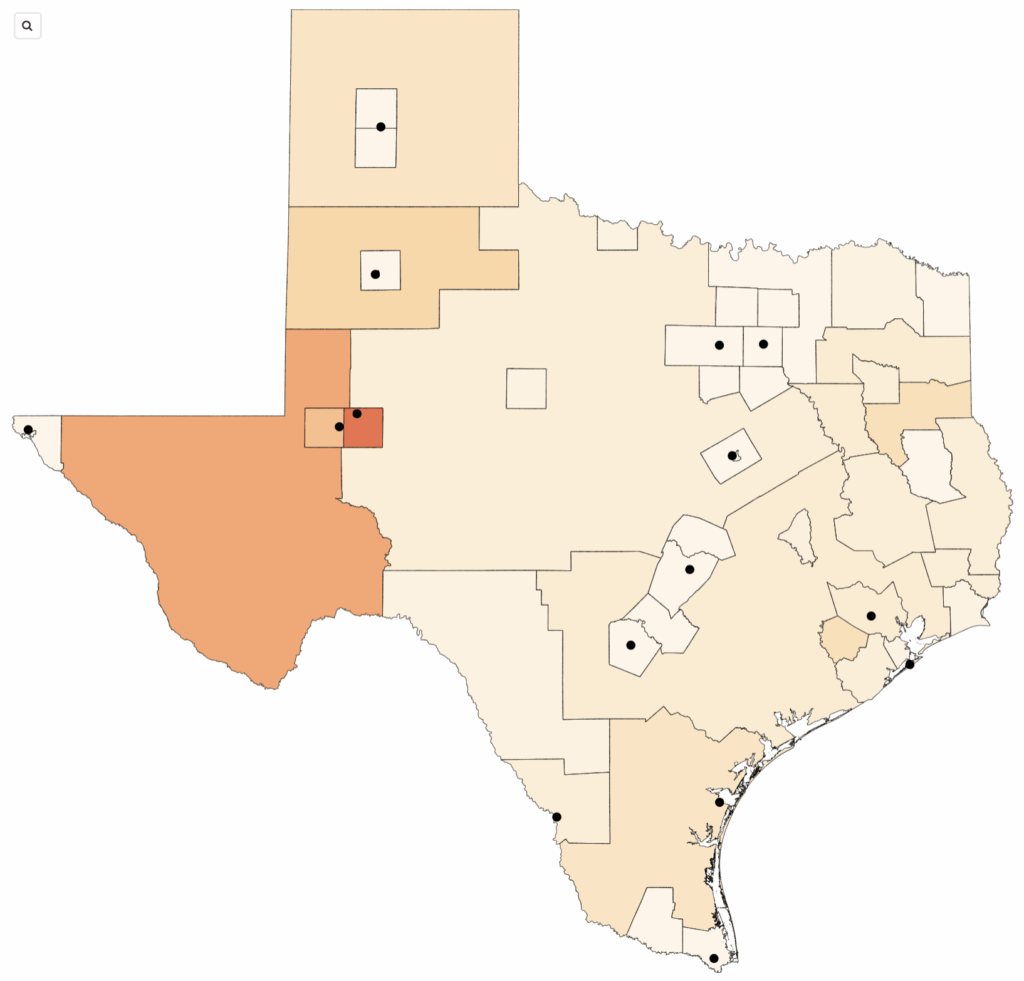
Texas has emerged as a prominent oil and gas producer, ranking as the fifth largest oil producer globally if it were its own country. The development of fracking technology and a surge in oil prices led to a significant increase in oil and gas production in Texas from 2000 to 2014. However, the distribution of employment gains during this boom varied across gender, race, and ethnicity. The Texas example underscores the importance of ensuring an equitable distribution of economic benefits in energy systems, especially as governments incentivize low carbon energy initiatives.
Where is new nuclear power in the world being built?
Nuclear power plant construction has shifted to countries like China, India, Russia, and South Korea. Around 64 GW of new nuclear capacity is currently under construction, with China leading the way. An additional 177 GW has been announced globally. Some countries see nuclear power as a low-carbon option to meet climate goals. Factors such as economics and geopolitical considerations will determine how much new nuclear capacity actually gets built.
Where in the United States is the net carbon benefit of direct air capture the greatest?
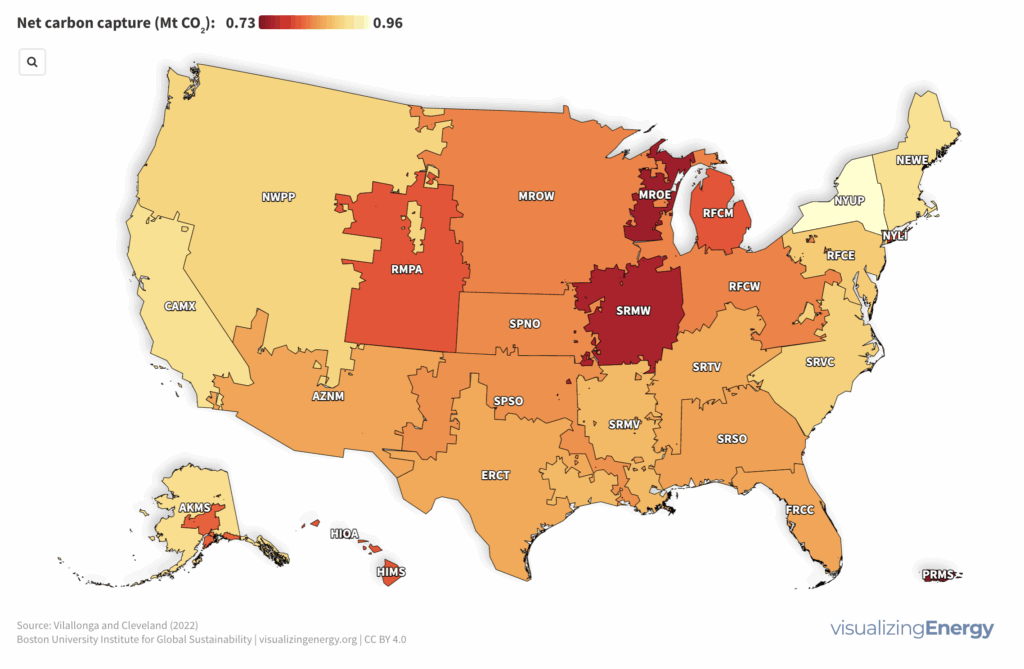
Direct Air Capture and Storage (DACCS) systems, which remove CO2 from the atmosphere, offer a significant carbon benefit depending on the energy mix of the regional grid. The greatest carbon benefit is achieved when DAC processes utilize zero-carbon sources like renewables and nuclear power. The ongoing decarbonization of the grid in most regions of the United States supports the effectiveness of DAC and electrification technologies.
United States electricity history in four charts
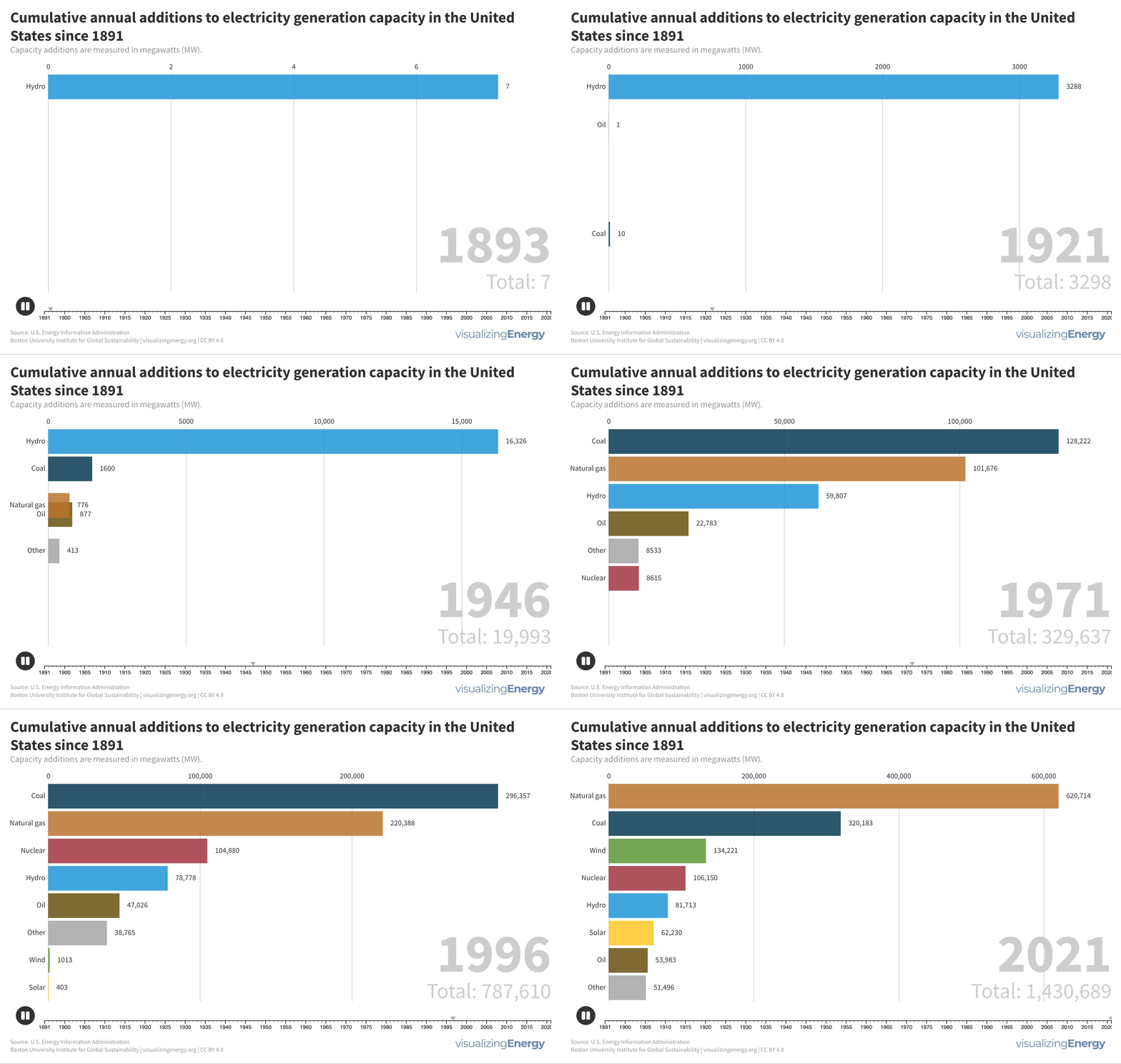
Electricity in the United States has seen remarkable growth, with a significant shift from coal to renewable energy sources. Government policies and technological advancements have played a crucial role in shaping the energy landscape. President Biden’s goal of achieving 100% carbon-free electricity by 2035 highlights the need for continued progress in policy, technology, and public perception.
What are the connections among fuel poverty, time poverty, and gender equity?
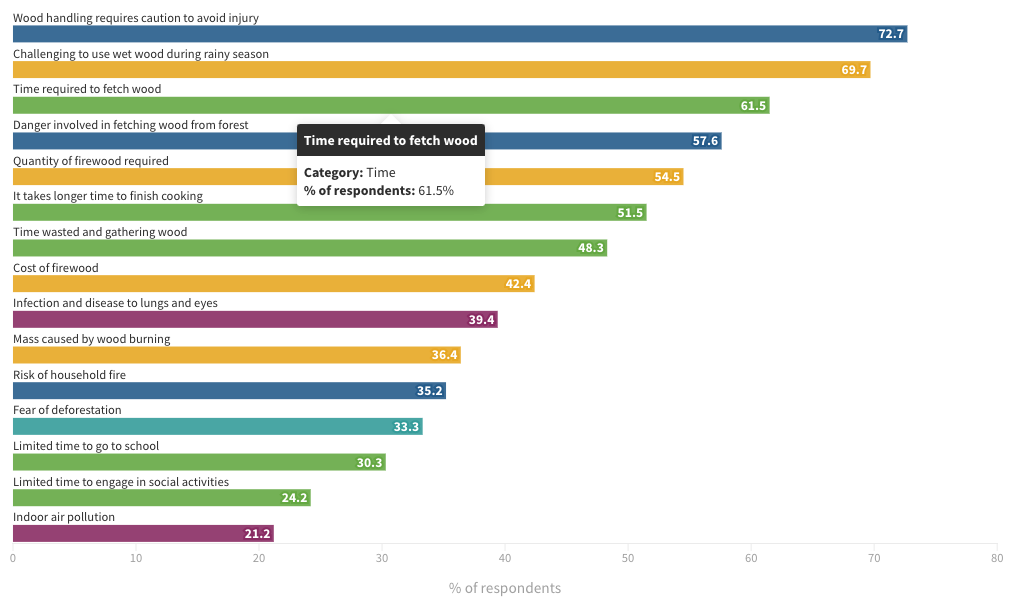
Access to clean cooking fuels is crucial for gender equity and poverty alleviation. Currently, billions of people lack safe and affordable energy sources for cooking. Women and girls bear a disproportionate burden in collecting and processing polluting fuels, affecting their well-being and opportunities. Clean cooking energy reduces cooking time, allowing women to engage in other activities like childcare, work, and household chores.
Where is new wind power in the world being built?
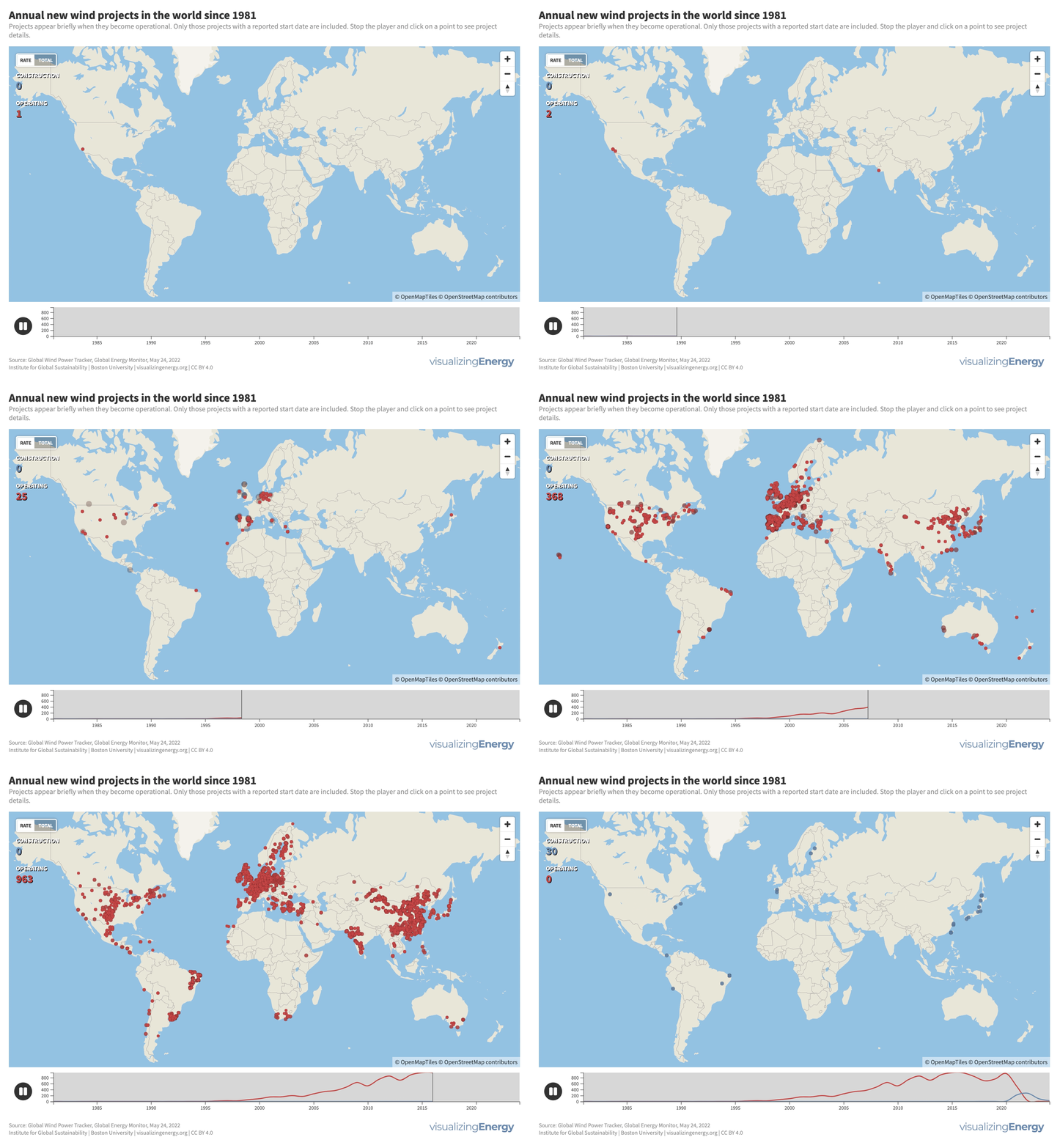
The wind energy industry started in the 1980s in Southern California and several European countries. Today, the United States, Europe, and countries like India, Australia, Japan, Canada, China, and Brazil lead in new wind power capacity. Currently, wind power generates around 7% of global electricity, with onshore systems dominating but offshore capacity expected to grow in the future.
What is the relationship between energy use and access to safe water?
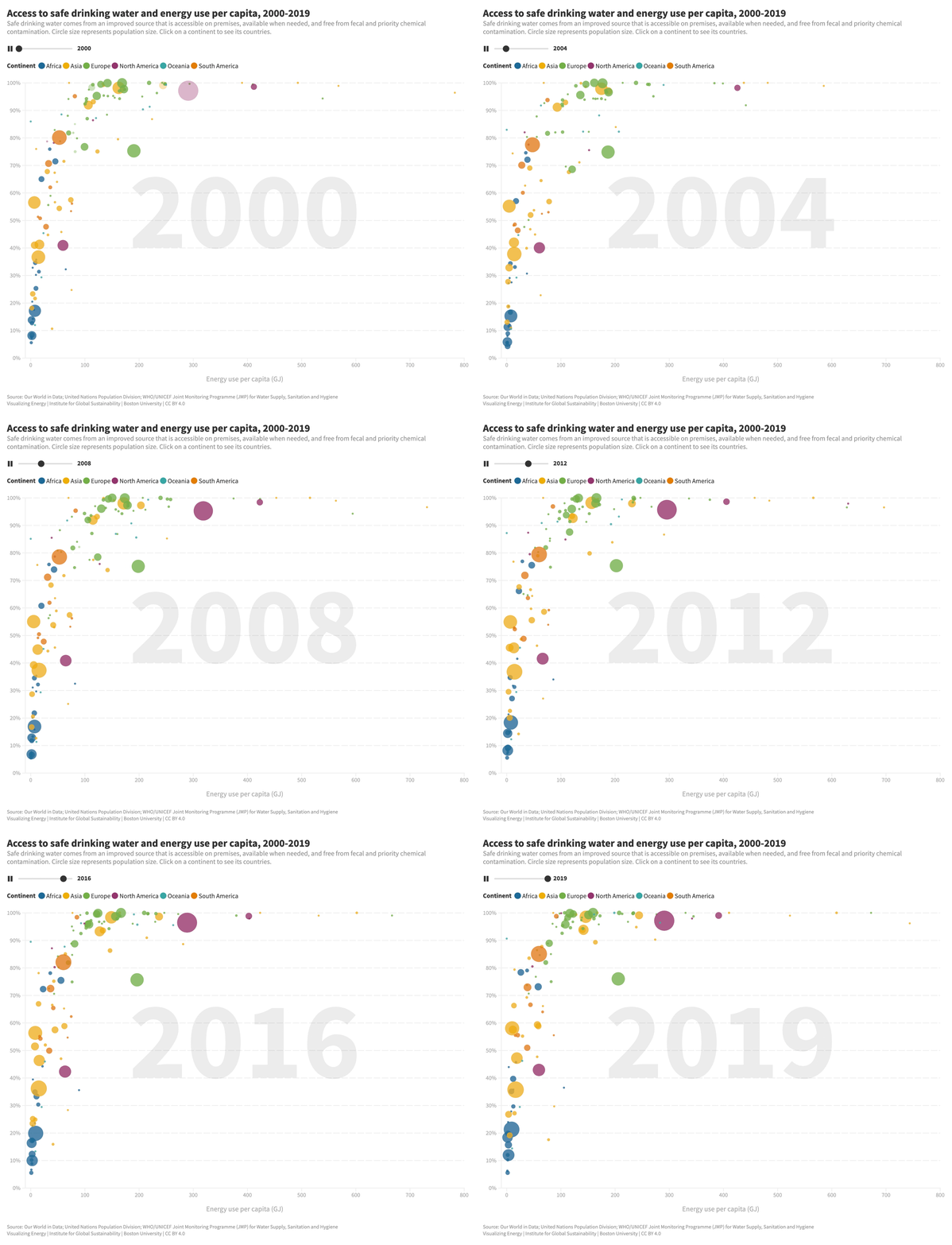
Access to safe water is vital for human well-being. While progress has been made, millions still lack basic water services. Energy plays a key role in expanding water access, powering machinery, pumps, and purification systems. Increasing energy use per capita improves access to clean water, but the impact diminishes at higher energy levels.