
Why is hydrogen assigned different colors?
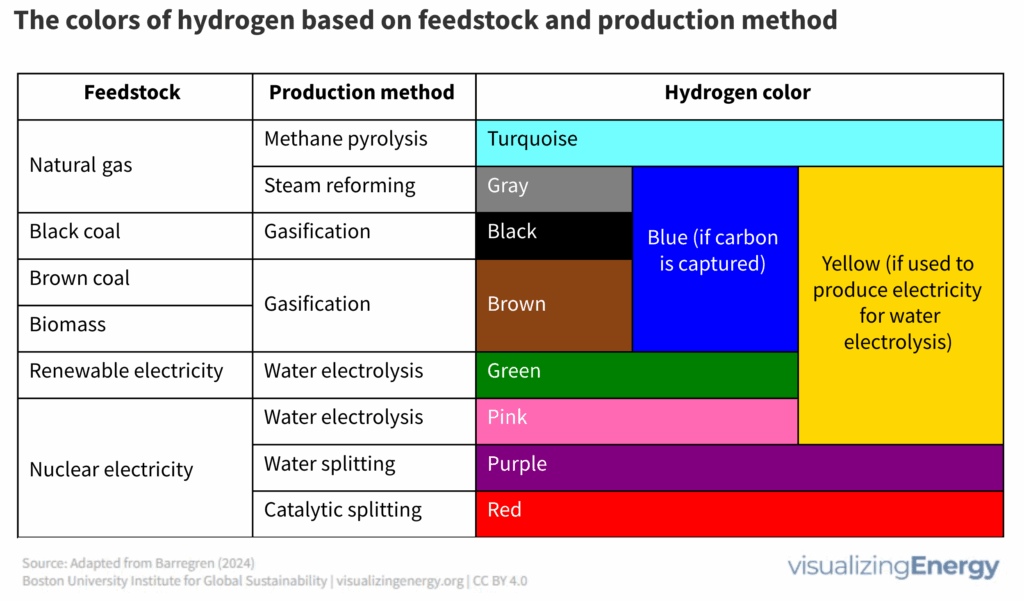
In 1875 the French Novelist Jules Verne published The Mysterious Island in which the protagonist Cyrus Smith envisioned a solution to the perceived inevitable exhaustion of coal: “Water, decomposed into its primitive elements, by electricity. (…) I believe that water will one day be employed as fuel, that hydrogen and oxygen which constitute it, used […]
Where are the world’s nuclear research reactors?
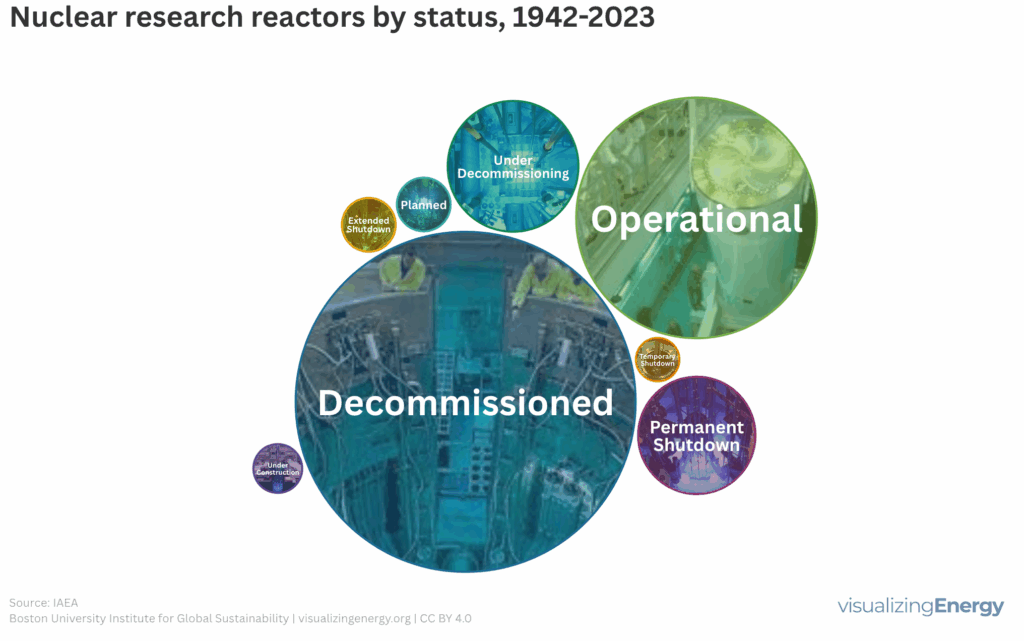
Nuclear research reactors do not generate electricity. Instead, they produce neutrons primarily for research, radioisotope production, and nuclear education and training. Since 1942, about 884 research reactors have been built in 71 countries. As of 2023, 227 reactors were operational in 54 countries, while 520 had been decommissioned or were undergoing decommissioning.1 Data PNG Embed […]
How has the knowledge economy affected energy use?
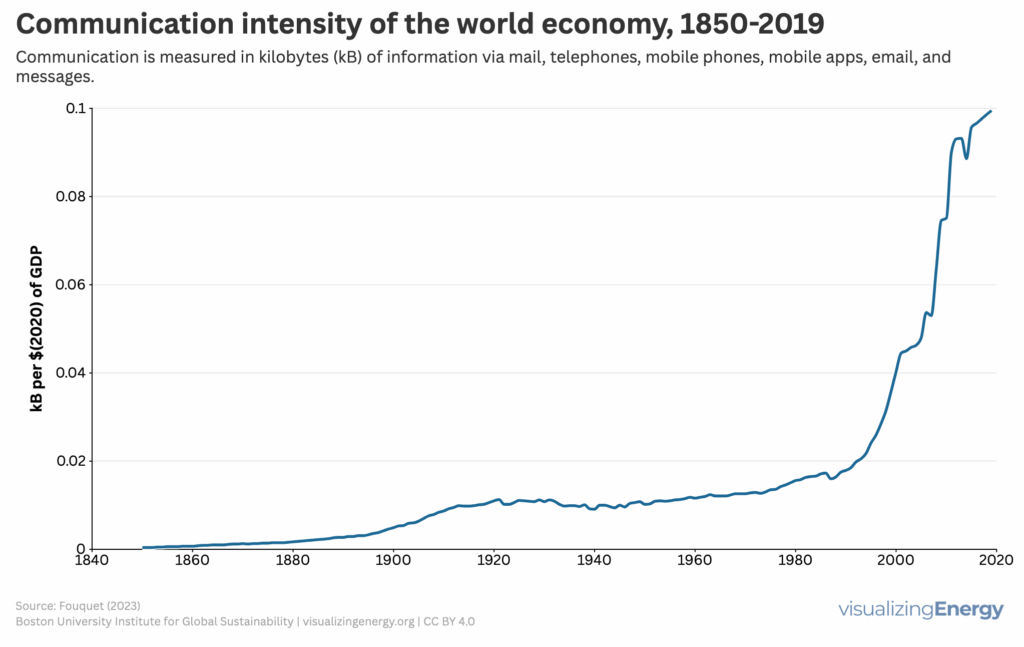
Digitalization uses digital technologies and systems to improve, transform, or create processes, operations, and services. It involves integrating digital tools and technologies, especially computers and the Internet, into various aspects of business, society, and everyday life. With globalization, dematerialization, and decarbonization, digitalization is a “megatrend” producing sweeping changes in society and the environment.1 What is […]
Global anthropogenic methane emissions, 1970-2022
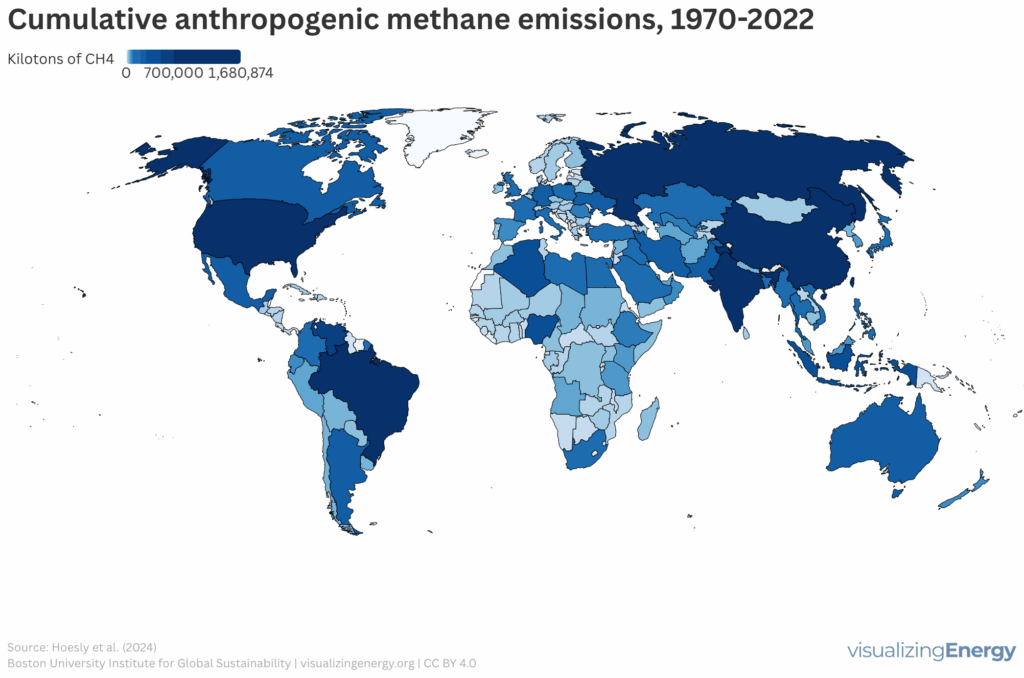
Methane (CH4) is a hydrocarbon and a major component of natural gas. It is a potent greenhouse gas (GHG), so its presence in the atmosphere affects the earth’s temperature and climate system. Methane belongs to a class of so-called “super pollutants” that simultaneously contribute to climate change and degrade the health of people and ecosystems. […]
The cost and potential for global methane emissions reductions from fossil fuels
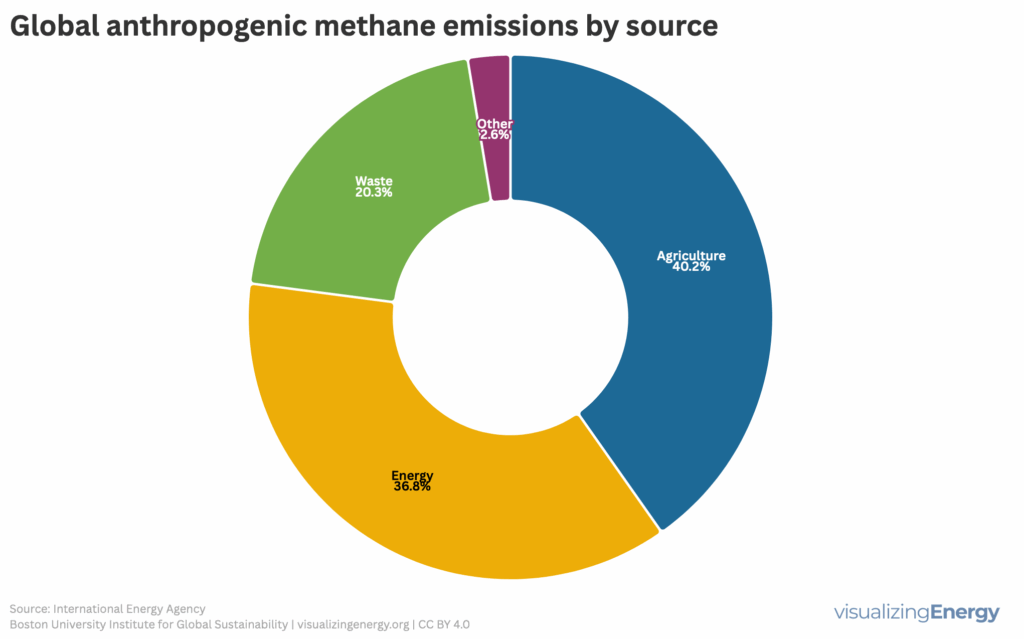
Methane belongs to a class of so-called “super pollutants” that simultaneously contribute to climate change and degrade the health of people and ecosystems. It has about 30 times the impact on global warming per unit mass compared to carbon dioxide over a 100-year lifetime (83 times larger over 20 years).1 Methane is responsible for about […]
Where is new wind power in the United States being built?
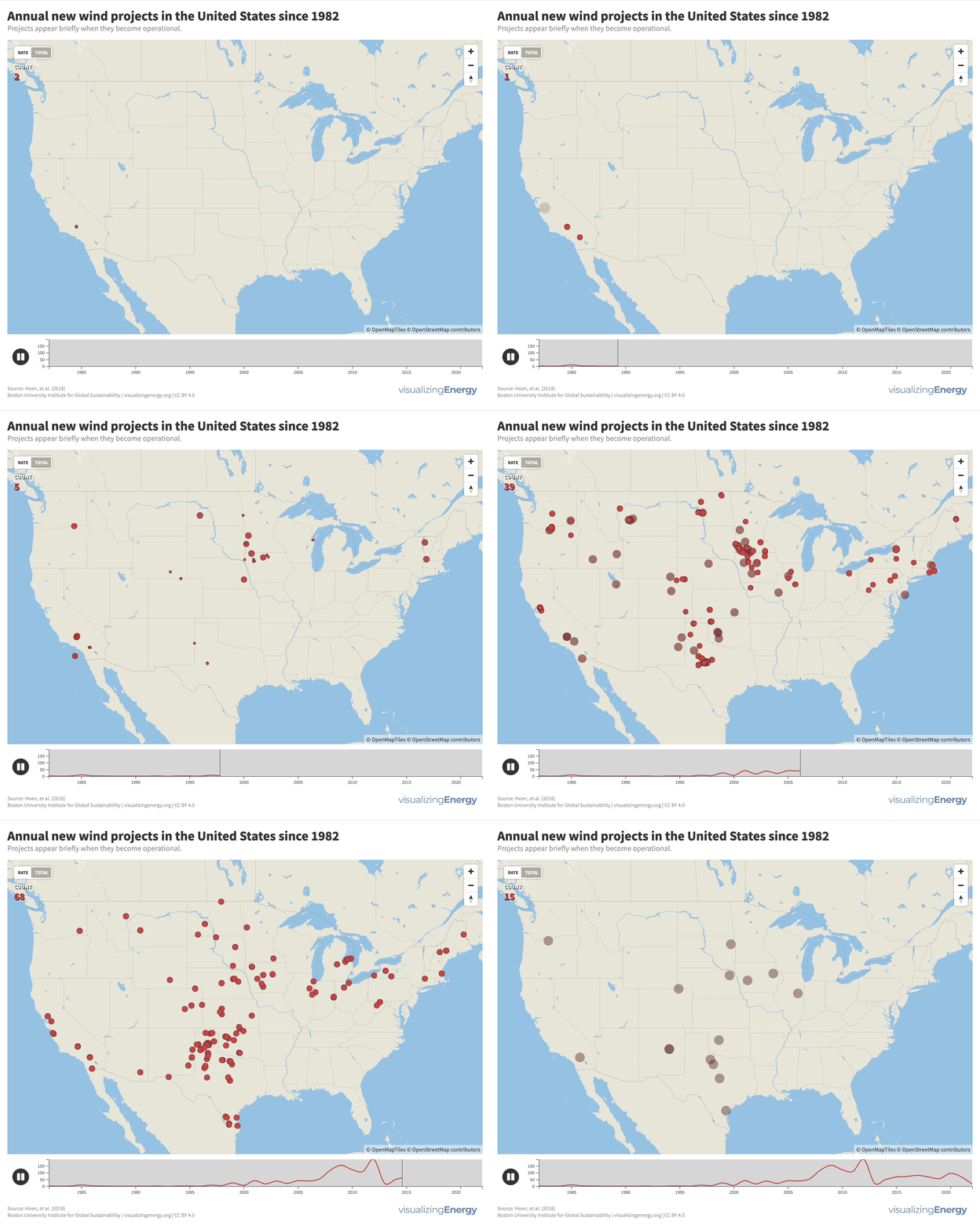
Modern wind energy in the United States began in California in the early 1980s with several wind farms in mountain passes in central and Southern California. By the mid-1980s California accounted for more than half of the wind-generated electricity in the world. Most of those projects are still in operation today, albeit with upgraded/ infrastructure. […]
Global anthropogenic ammonia emissions, 1750-2022
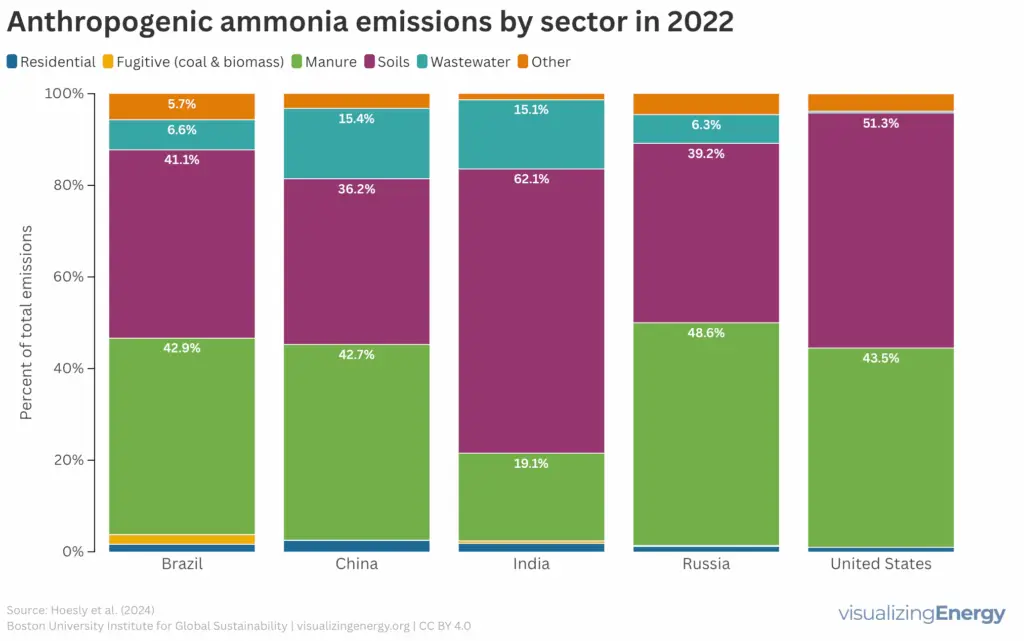
Ammonia (NH3) feeds and pollutes the world.1 The synthesis of ammonia underpins all nitrogen fertilizers, and without their applications it would be impossible to feed, at current levels, nearly half of today’s 8 billion people. China could not feed 40% of its population without nitrogen fertilizers.2 This makes ammonia one of the most important materials […]
Underground natural gas storage in the United States
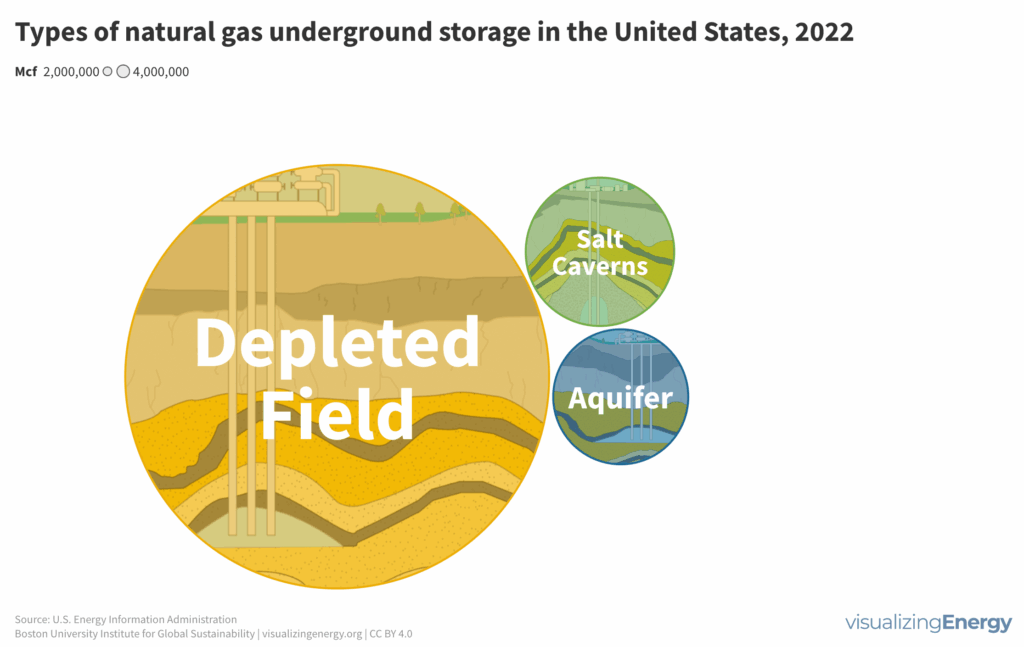
Natural gas demand in the U.S. varies seasonally, with higher consumption during colder months potentially causing price increases due to supply shortages. Underground storage, primarily in depleted reservoirs, salt caverns, and aquifers, helps balance supply and demand year-round. Storage levels drop significantly during colder winters, affecting overall availability.
What happens to low level nuclear waste in the United States?
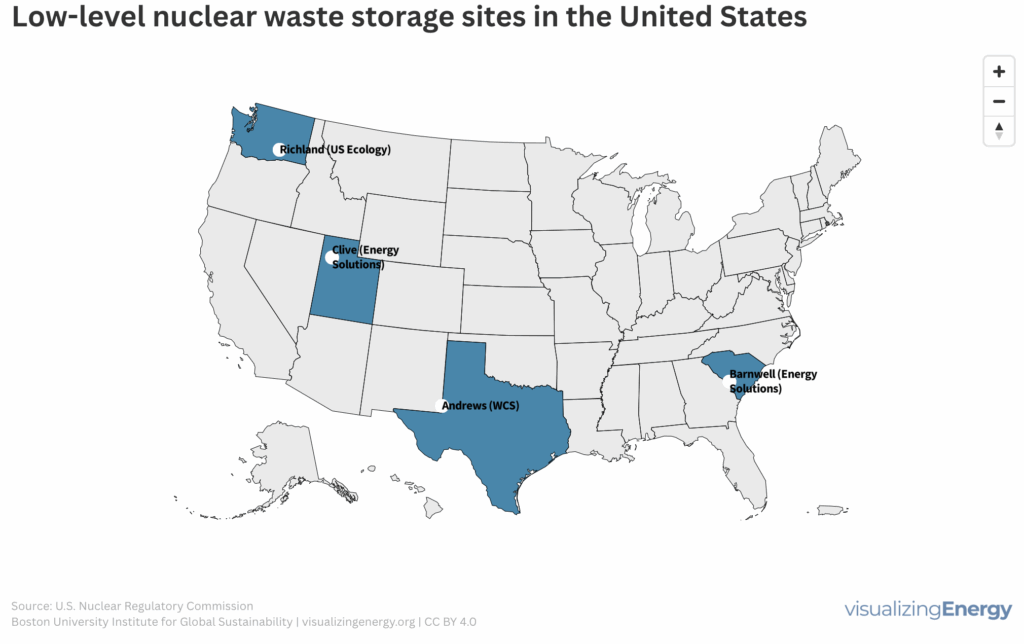
Low-level radioactive waste (LLW) is produced by various commercial operations and the U.S. Department of Energy. It includes contaminated materials like clothes, tools, and medical supplies. LLW is typically stored on-site until it decays or is shipped to disposal sites, regulated under the Low-Level Radioactive Waste Policy Act of 1980.
Satellite detection of methane plumes, 2022-2024
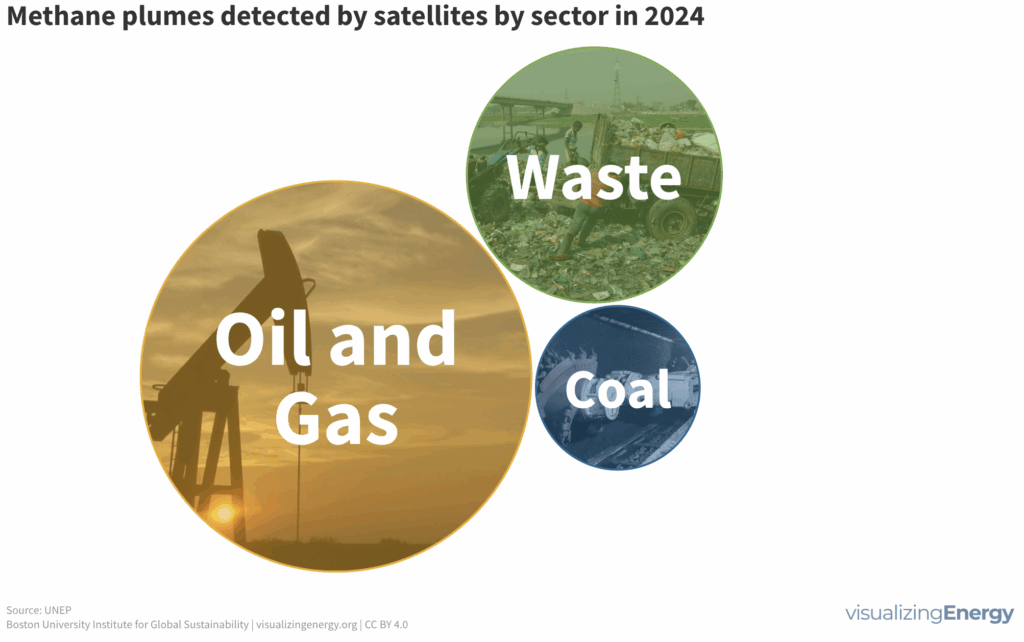
Satellites significantly enhance our understanding of methane emissions, responsible for about 30% of anthropogenic global warming. The United Nations Environment Programme’s Methane Alert and Response System detects plumes from waste, oil, gas, and coal, identifying super emitters to improve emissions accountability. Methane from waste facilities is particularly concerning due to inefficient capture methods.