
Where do people lack access to electricity?
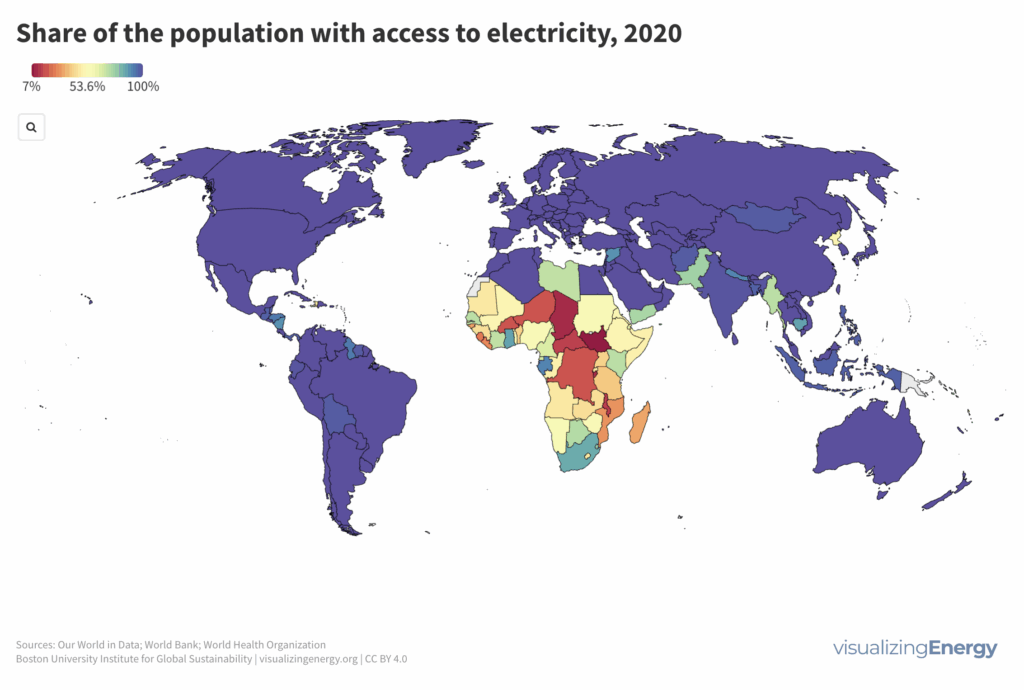
The United Nations’ 17 Sustainable Development Goals (SDGs) include SDG7, which aims to ensure affordable and sustainable energy for all. The share of global population with access to electricity has increased to 90% in 2022, yet around 800 million people are still without access, mostly in sub-Saharan Africa. Various factors influence access to electricity, impacting income and well-being.
Where are the highest prices for carbon?
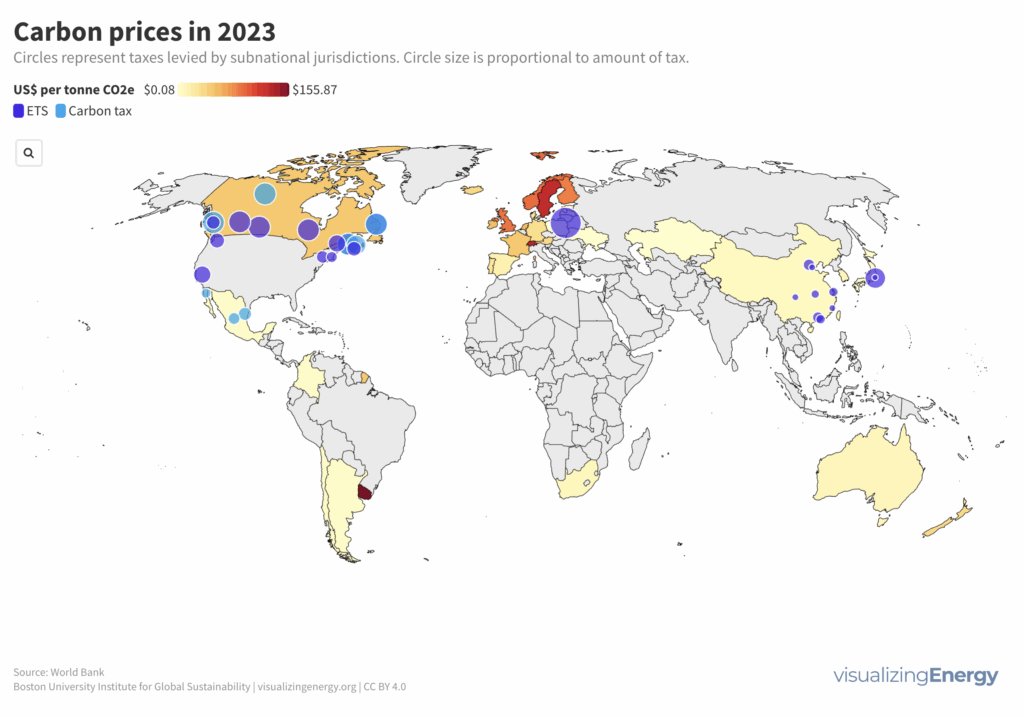
Many experts advocate for “putting a price on carbon” to reduce greenhouse gas emissions and address climate change. This involves capturing the external costs of emissions and linking them to their sources through a price. Approaches include emissions trading systems (e.g., “cap and trade”) and carbon taxes. Currently, 73 initiatives cover 23% of global emissions, with examples in South Africa and the European Union.
Where do people have access to clean cooking?
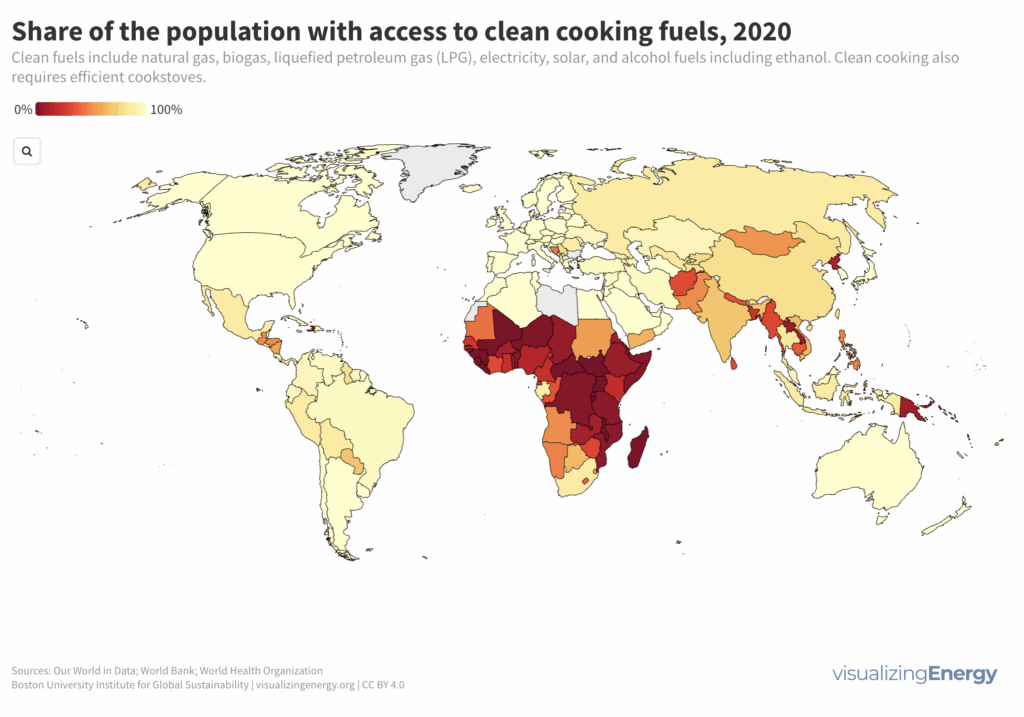
The transition to clean energy brings life-changing benefits like clean cooking services. Clean cooking uses gaseous fuels and electricity, reducing harmful emissions. However, 2.3 billion people still use polluting fuels, leading to millions of deaths annually. Access to clean cooking varies by country income and location. While global access has increased, challenges remain in many countries.
What is nuclear power uprating and why is it important?
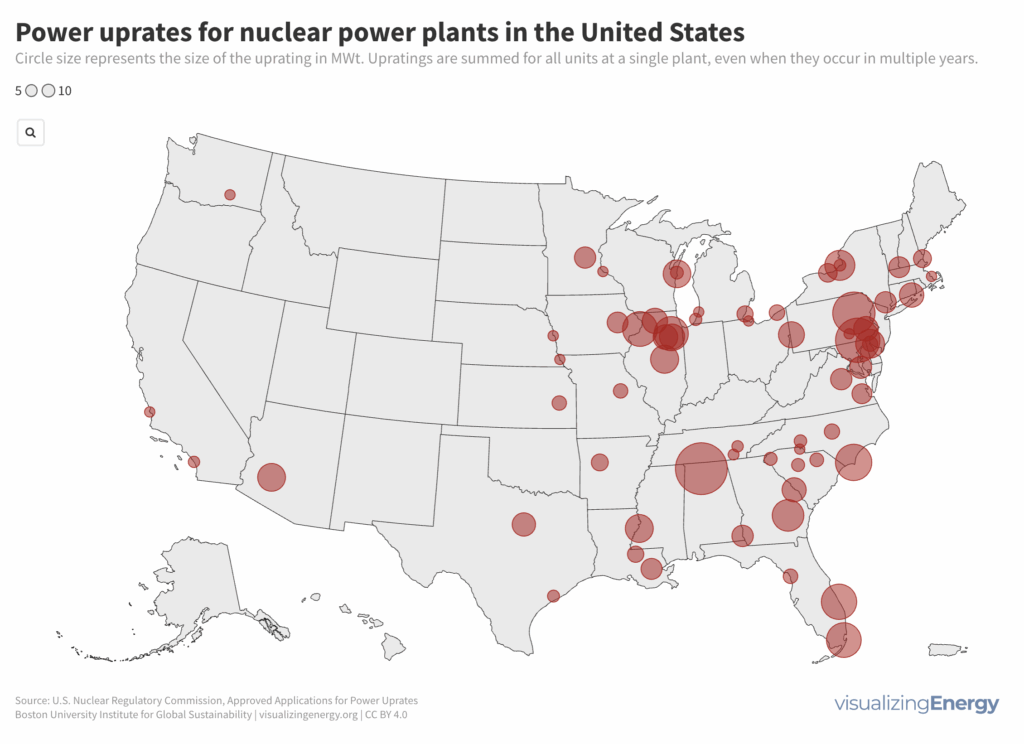
Nuclear power in the US has steadily contributed 19% of electricity since 1990, mainly through uprates. These uprates, approved by the NRC, have boosted capacity by 24,080 MWt or 8030 MWe, equivalent to over 7 new plant units. Most uprates range from 0-5%.
Watch the history of coal power plants in the United States
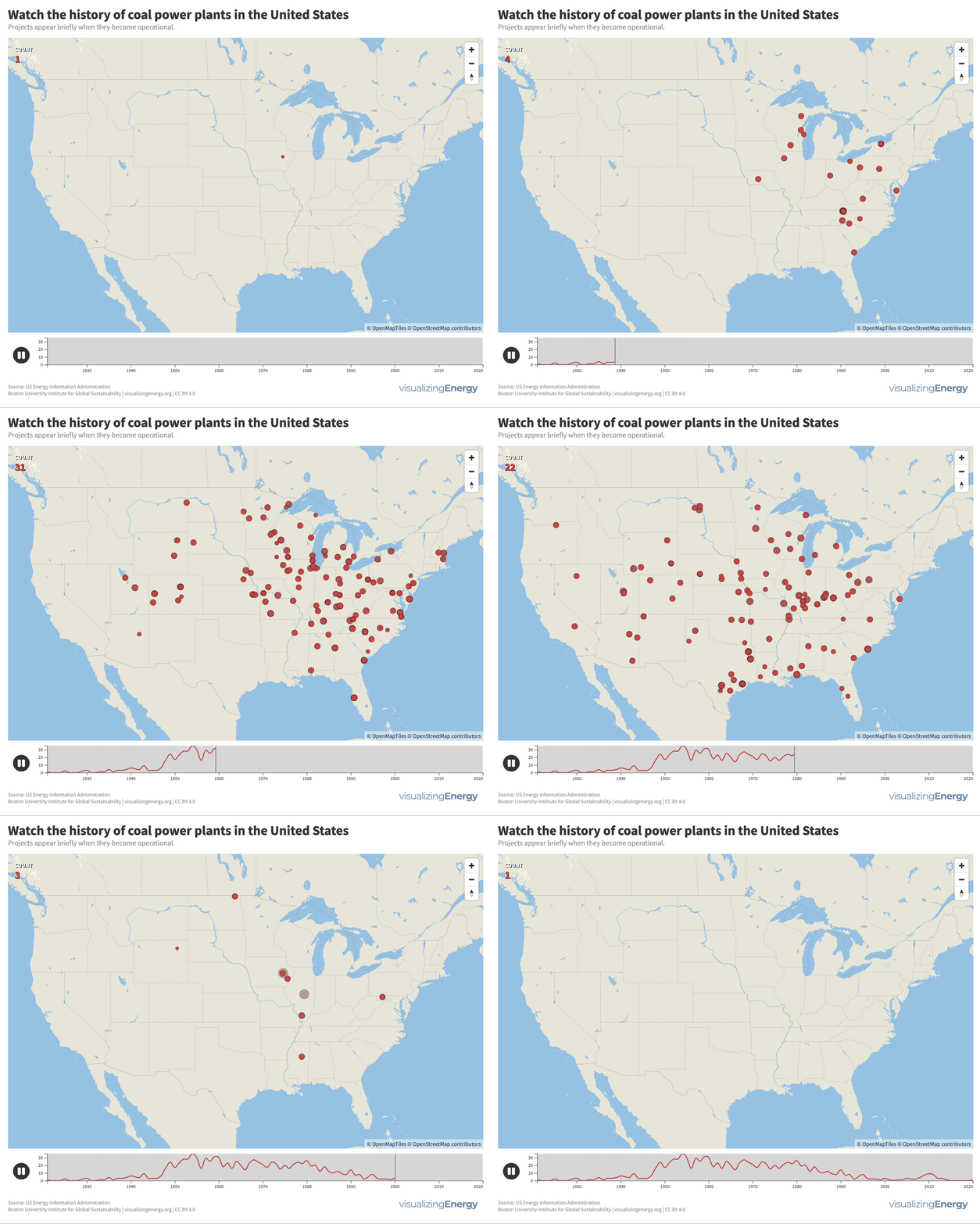
Coal played a significant role in the US, generating half of the nation’s electricity in 1920 and maintaining that share for decades. However, aging coal plants are being retired due to competition from efficient natural gas and renewable energy sources, as well as state climate policies. This shift reflects growing concerns about cost and carbon emissions.
Gender diversity in the United States energy workforce
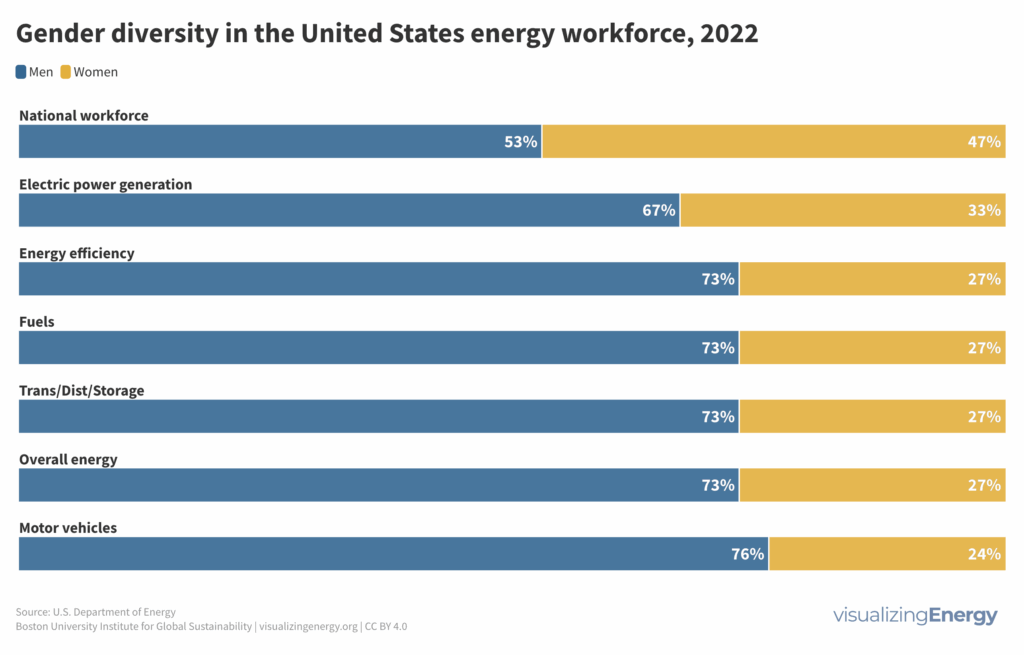
Gender equity is vital for economic stability. In the U.S. energy industry, women hold 27% of jobs, despite recent growth. Challenges persist globally in solar, wind, and hydropower industries, emphasizing the need for ongoing efforts to address gender disparities.
Watch the history of geothermal power in the United States
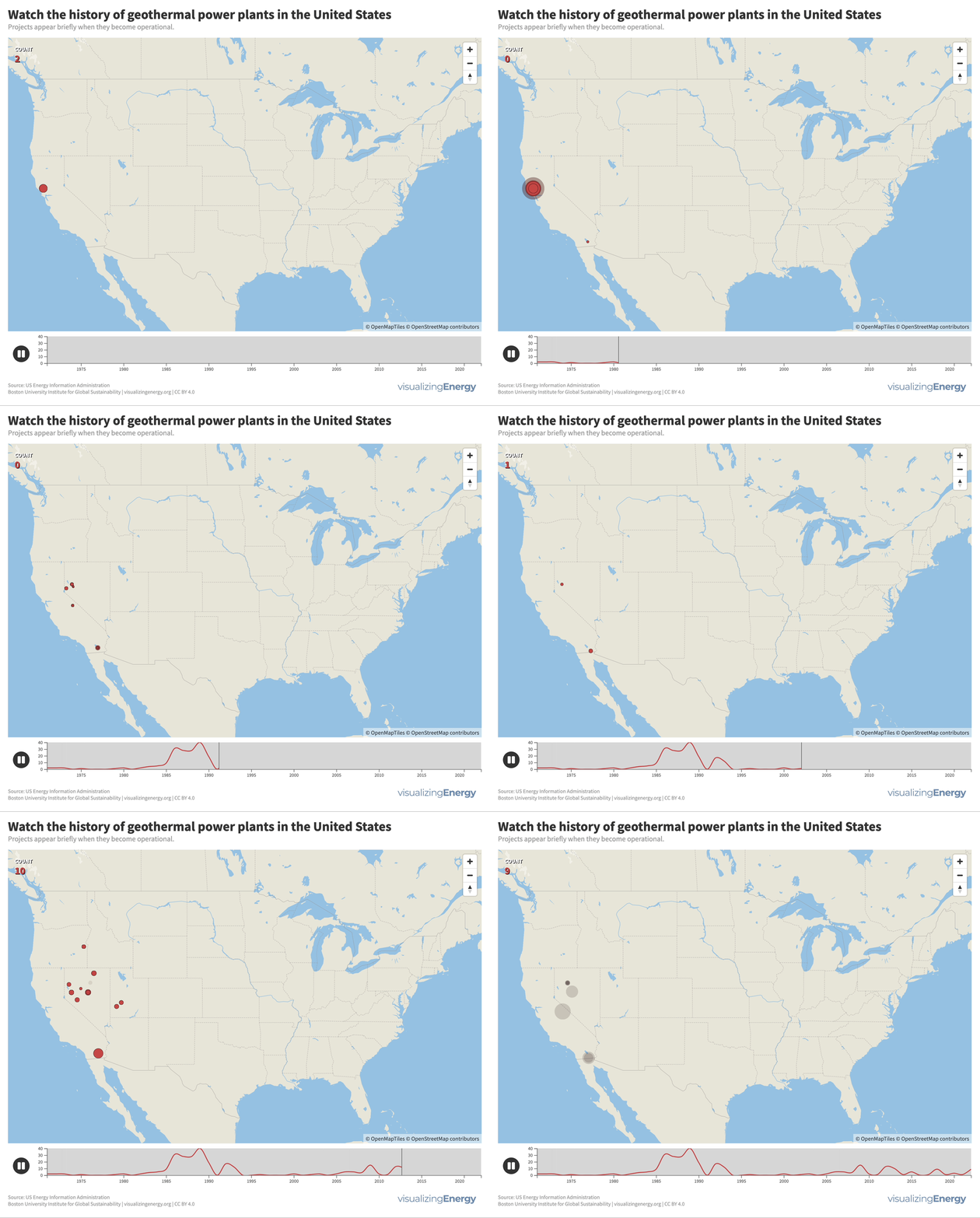
In the United States, geothermal power plants are predominantly located in six western states due to significant tectonic activity. In 2022, California housed 72% of this capacity, generating 6% of its electricity from geothermal power. The Geysers project in northern California is the world’s largest geothermal array.
Watch the history of battery storage in the United States
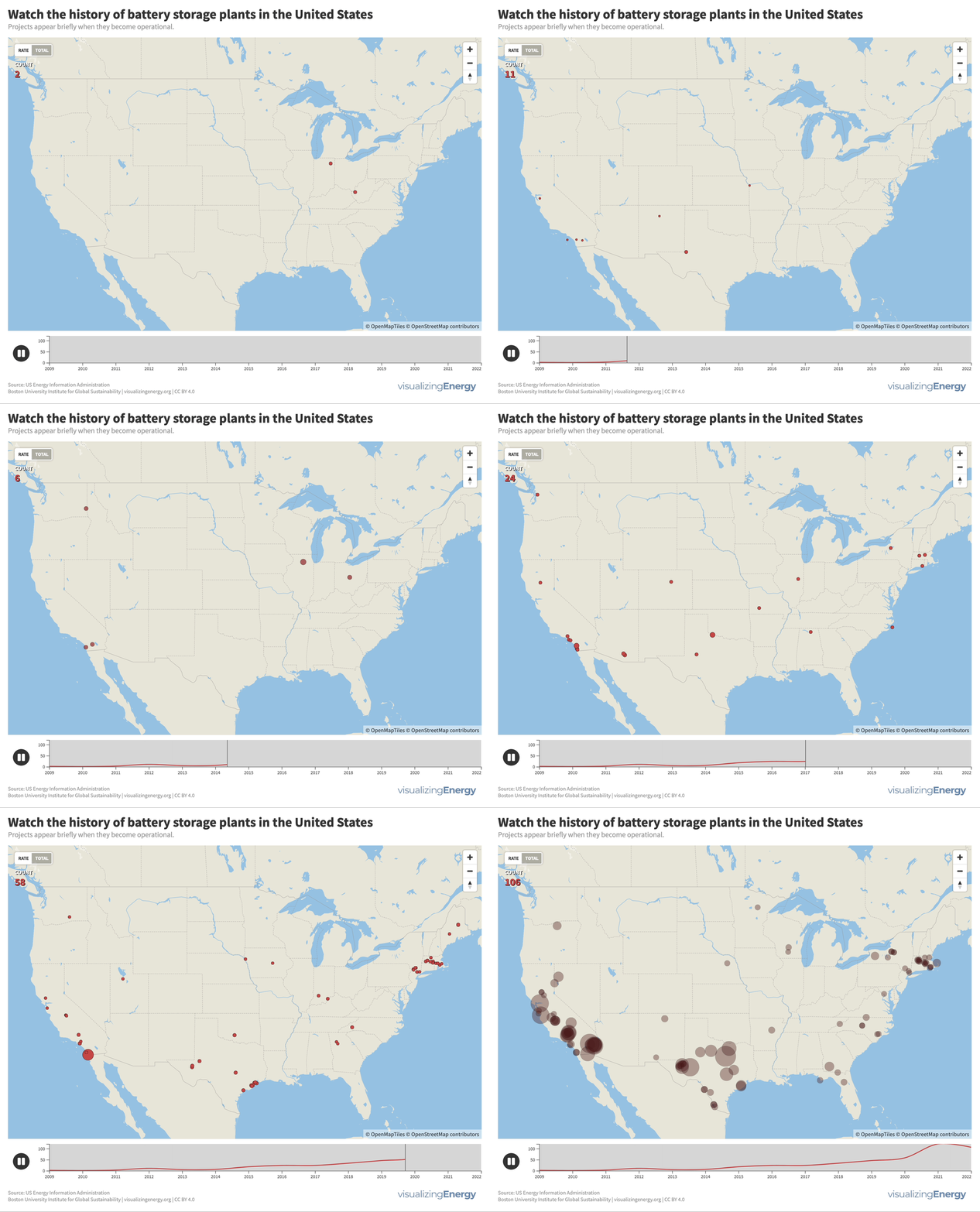
Utility-scale battery storage (BESS) systems store and distribute large-scale electricity and are crucial for renewable energy integration. Since the mid-2000s, about 460 such systems were built in the U.S., the largest being the 409 MW Manatee Energy Storage Center.
Does the United States financial system support global climate goals?
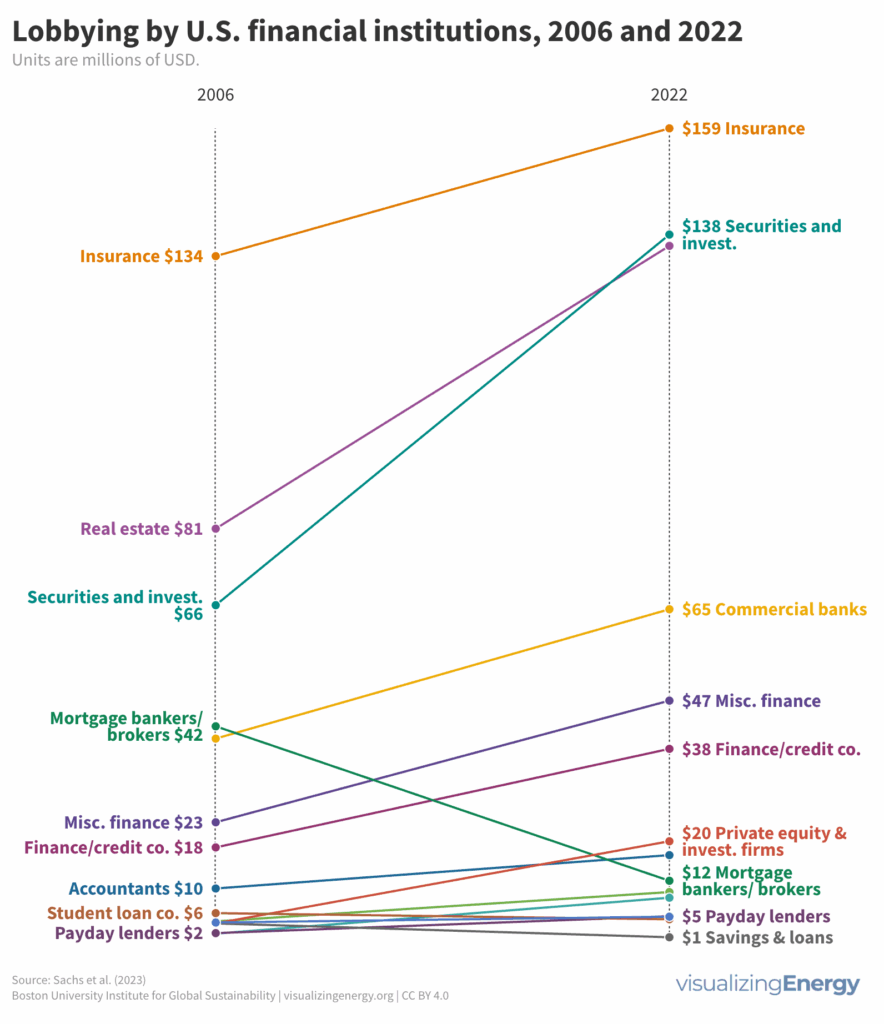
Major financial institutions’ practices are not climate-friendly, with policies disconnecting short-term targets from required long-term climate actions. A Columbia University report highlights financial institutions’ political influence, using lobbying and campaign contributions, often obstructing climate policy. The report suggests measures for shifting towards positive climate action.
Where are new biopower plants being built?
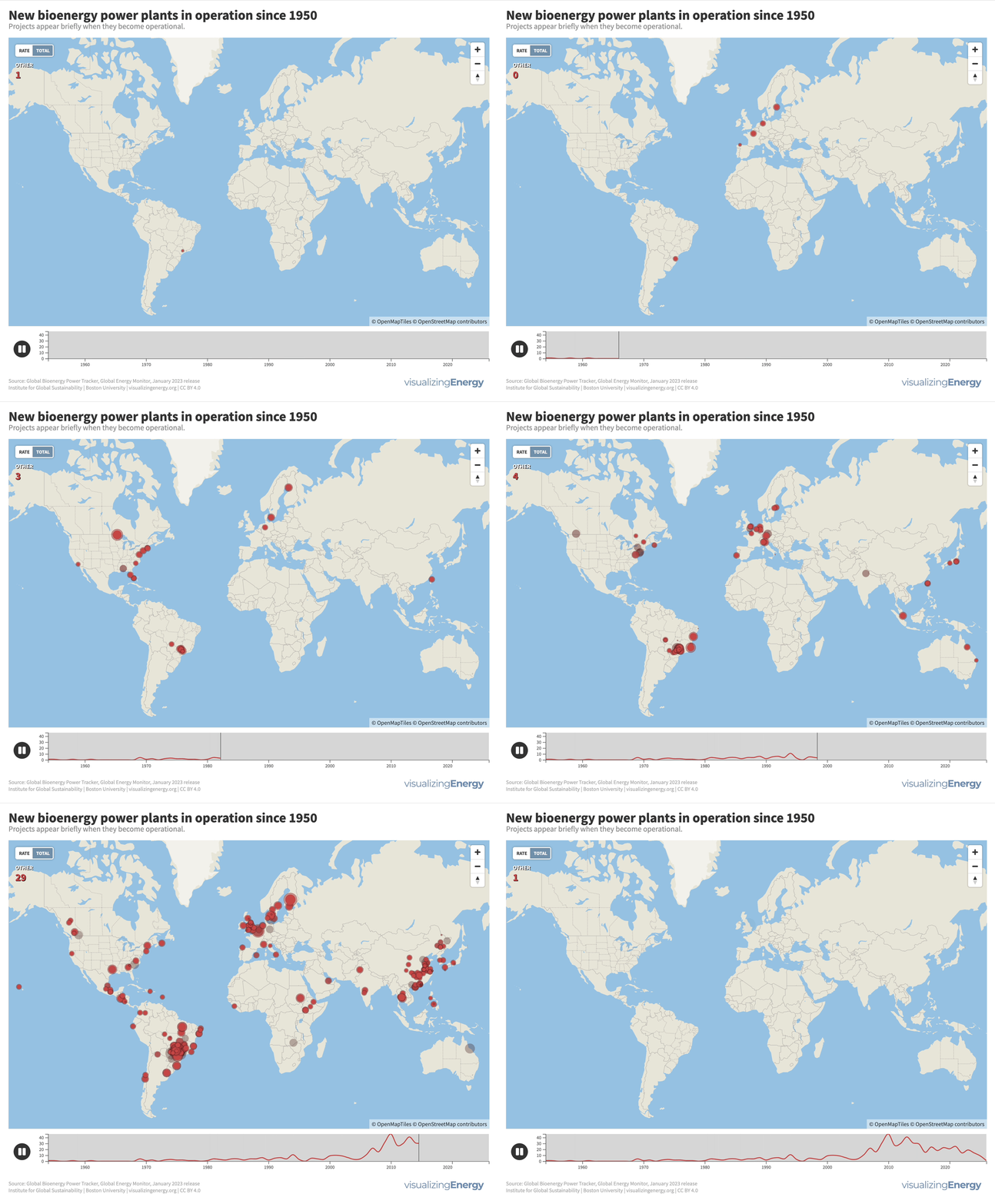
Biopower is the production of electricity from biomass-derived fuels, with significant growth in Brazil due to sugarcane-based ethanol byproducts, while in certain regions like the United States, Germany, and the United Kingdom, waste-to-energy facilities are used due to land constraints and landfill opposition.