
What nations profit the most from fossil fuel extraction?
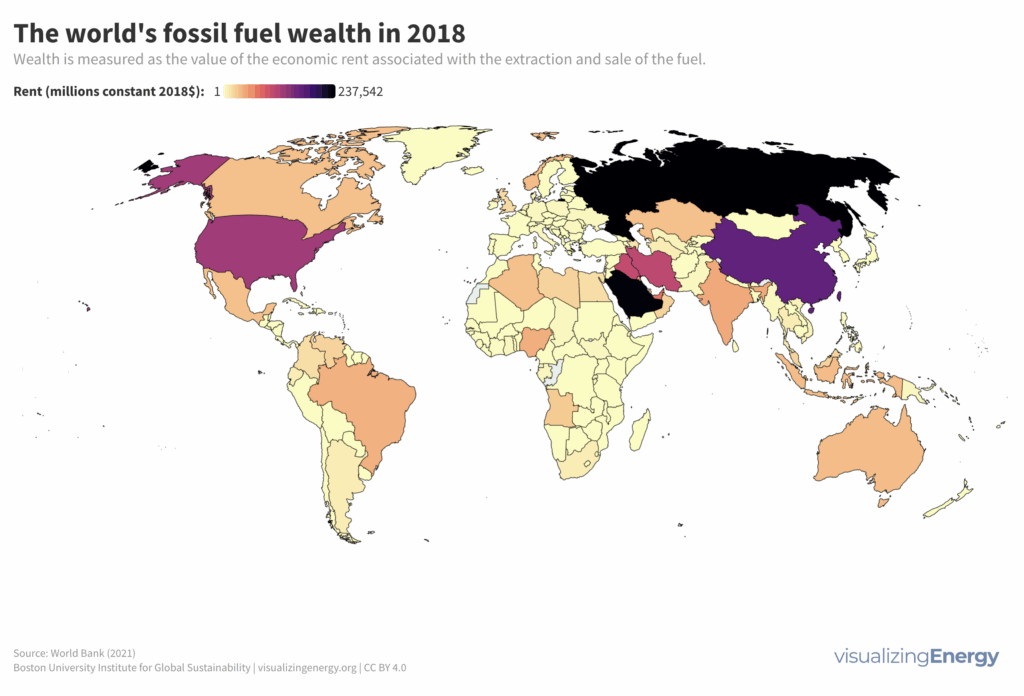
The well-being of a nation’s population is determined in part by how the nation’s wealth is managed. Wealth has two principal components. The first is the stock of physical assets such as machines, buildings, and power grids, and human assets such as labor, knowledge, and social connections. The second is the stock of natural assets […]
Oil spills: when, where, how big?
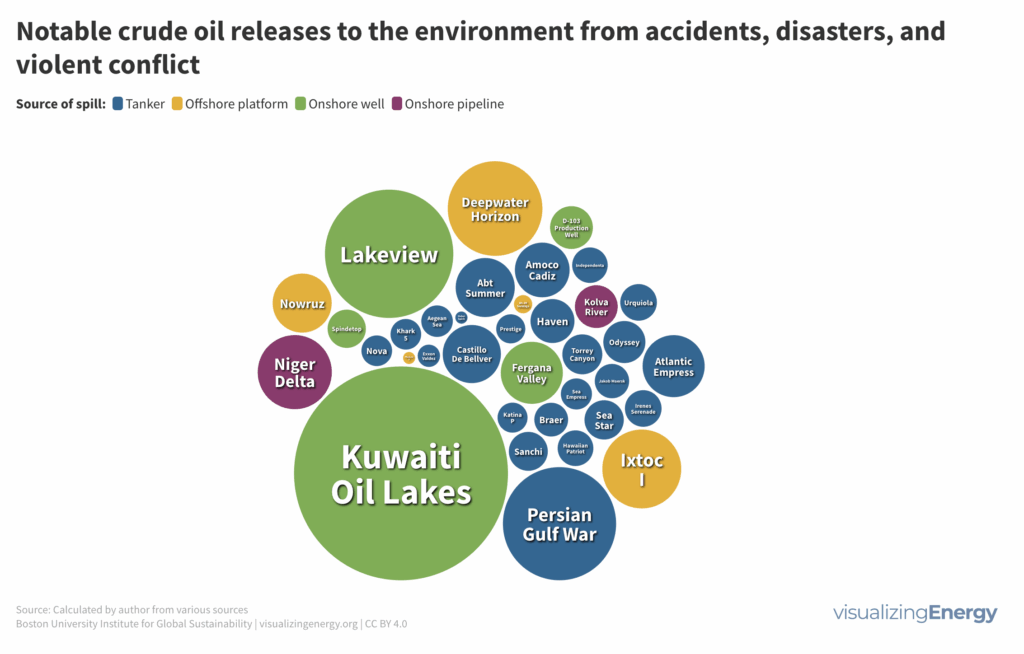
Since the birth of the modern oil industry in the late 19th century, tens of millions of wells have been drilled, and upwards of 1.5 trillion barrels of oil have been extracted. That is enough oil to fill about 96 million Olympic-sized swimming pools! Onshore wells have been drilled in nearly every type of terrestrial […]
Watch the history of hydropower plants in the United States
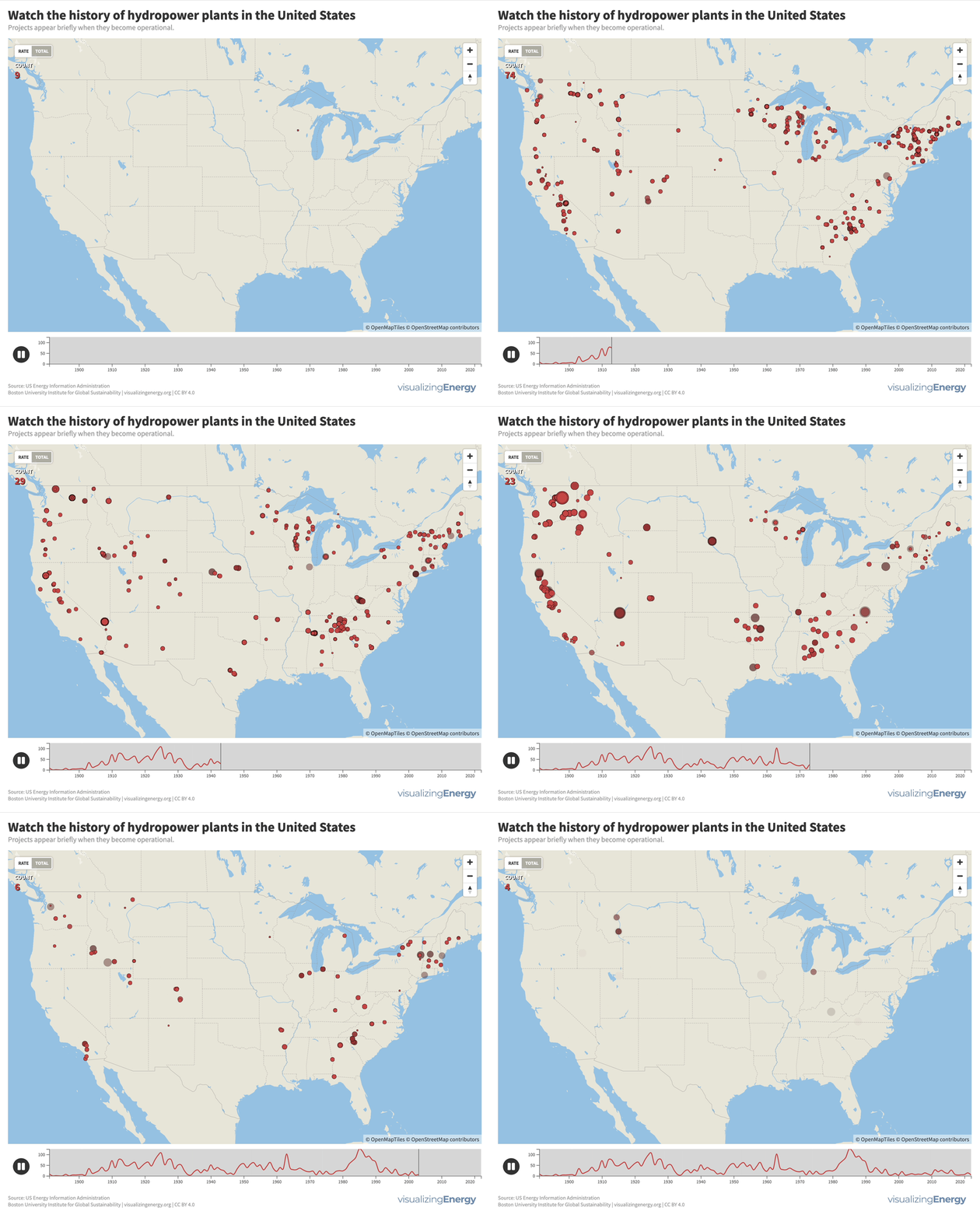
More than 4000 hydroelectric dams have been built in the United States since the late 19th century, representing six percent of all-time additions to electric generation capacity from all sources.
Underground natural gas storage in the United States
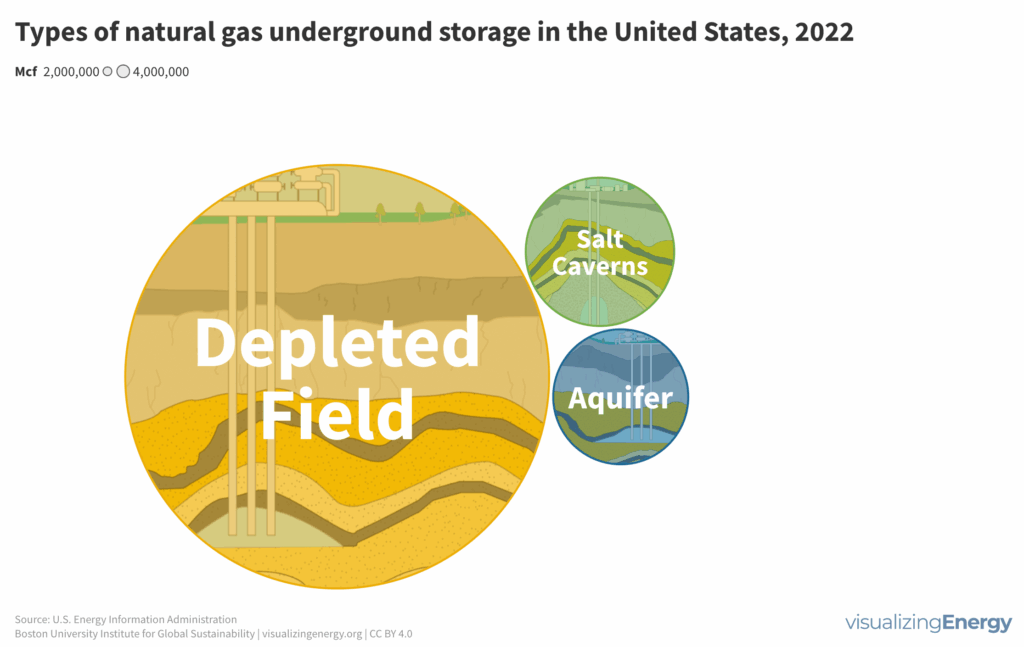
Natural gas demand in the U.S. varies seasonally, with higher consumption during colder months potentially causing price increases due to supply shortages. Underground storage, primarily in depleted reservoirs, salt caverns, and aquifers, helps balance supply and demand year-round. Storage levels drop significantly during colder winters, affecting overall availability.
Global natural gas flaring, 2012-2023
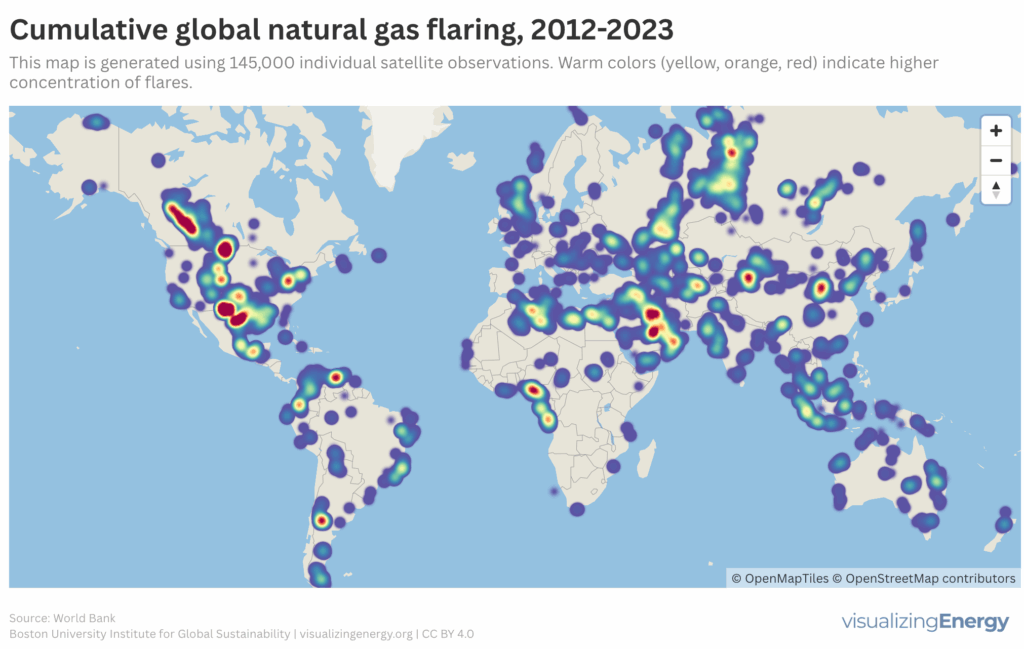
Crude oil and natural gas often coexist in reservoirs, leading to natural gas flaring when oil is extracted. This process not only wastes energy but also contributes significantly to global methane emissions. Despite initiatives like the Zero Routine Flaring by 2030, flaring volumes remain high, particularly in nine major countries responsible for the majority.
Peak shaving facilities in the United States
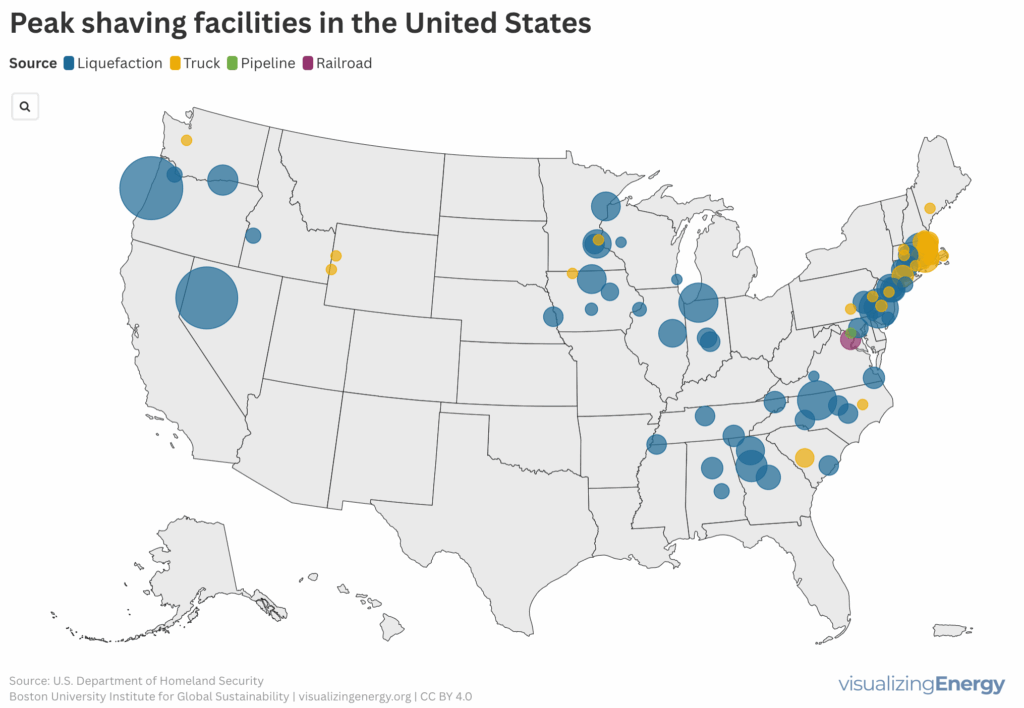
A peak shaving facility is an energy system that balances fuel demand fluctuations, particularly for natural gas during peak usage times. It stores liquefied natural gas (LNG) at low demand and releases it when needed. Commonly found in metropolitan areas and regions with pipeline limitations, these facilities aid in preventing shortages and price spikes.
Where are light-duty electric vehicles the most popular?
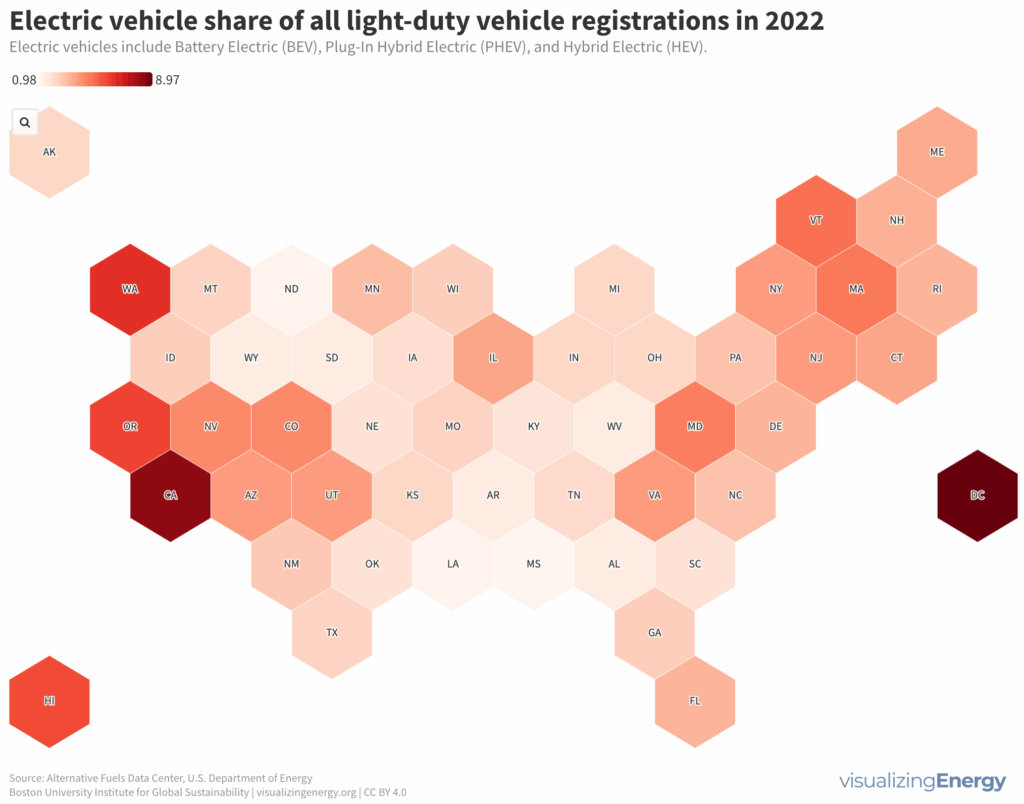
The shift from fossil fuel-powered internal combustion engine vehicles to electric vehicles is a key strategy for reducing transportation emissions. Various regulations and incentives at the state and national level drive this transition, with California leading in policies and EV registrations. The growth of EV sales is supported by policy, lower prices, improved range, and expanded charging infrastructure.
What countries have the greatest hydropower capacity?
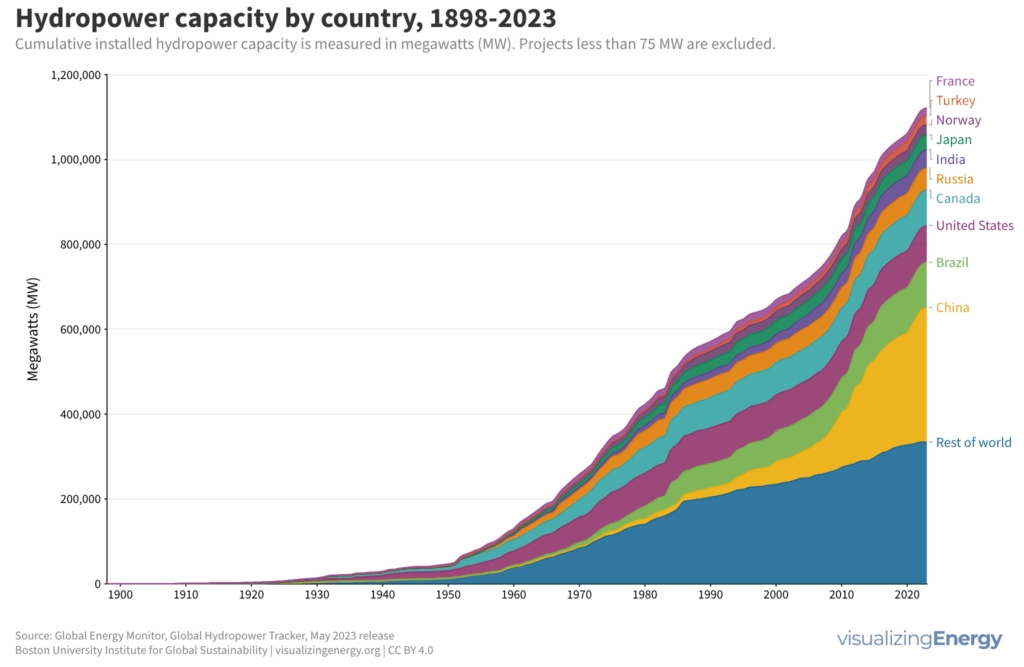
Dams serve various purposes such as navigation improvement, flood control, and electricity generation. There are over 40,000 dams worldwide, with significant hydroelectric capacity. The environmental impact of these large projects, including disturbance of ecosystems and displacement of communities, must be carefully assessed and balanced with their low-cost and low-carbon benefits.
Explore the world’s coal transportation terminals in 2022
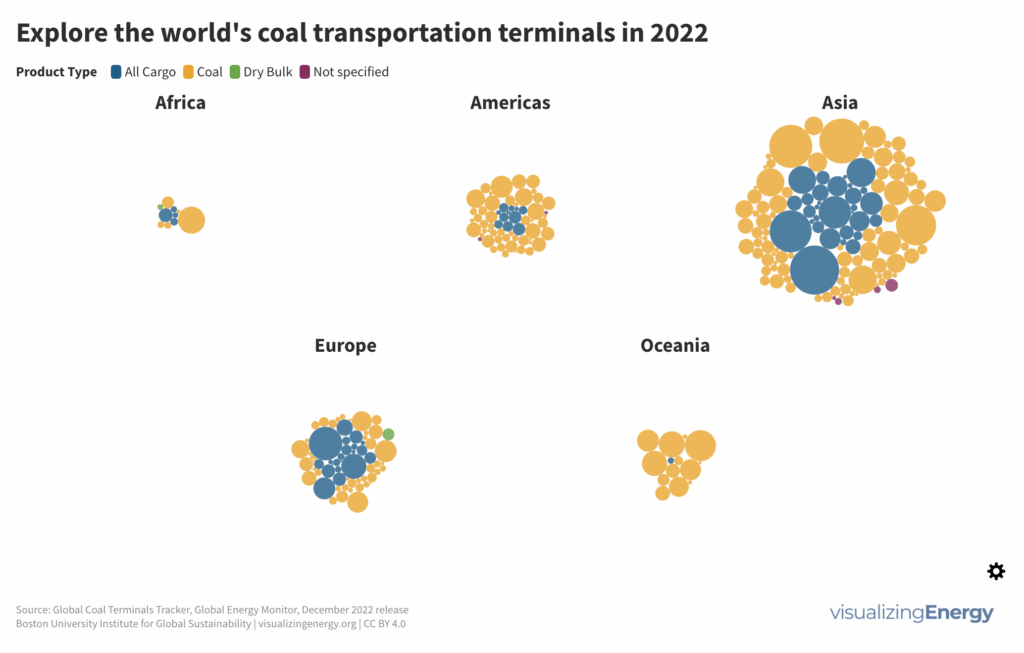
In recent years, 15 to 20% of global coal consumption came from traded coal. The import and export of coal rely on specialized infrastructure known as coal terminals, located near mines or strategic coastal areas. These facilities facilitate the efficient transportation of coal between various modes like ships, trains, and trucks.
Where are coal power plant projects being cancelled?
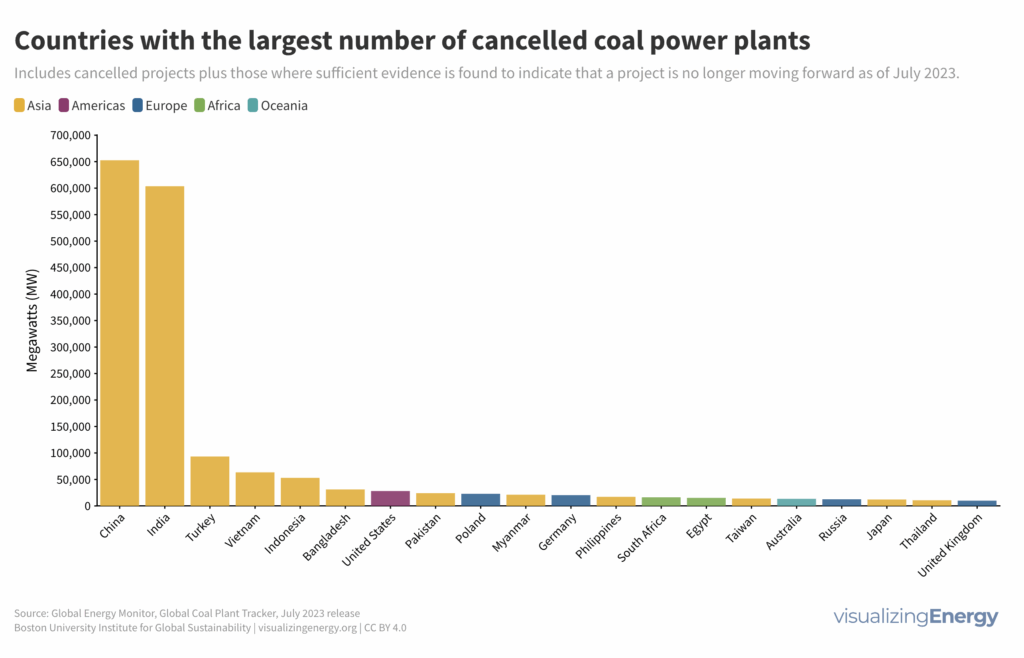
The coal power plant industry’s state is reflected in cancellations and shelved projects, concentrated in Asia (e.g., China, India). China’s paradoxical coal investment includes building new capacity and decommissioning old plants due to renewable energy growth. In the U.S., 23% of coal capacity will retire by 2029 due to competition from natural gas and renewables.