
The history of global coal production
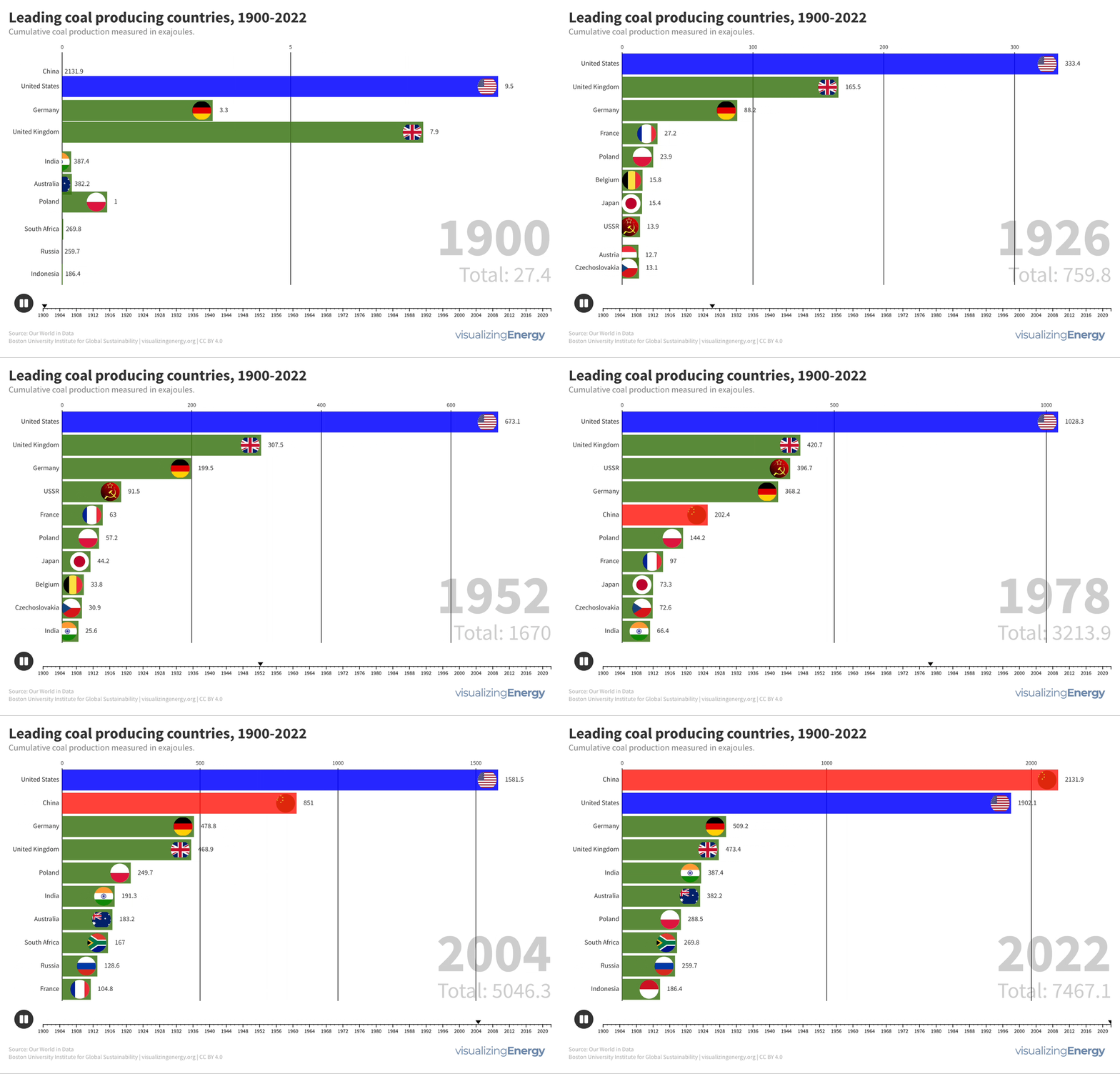
The use of coal has a long history, from its early adoption in Ancient China to the pivotal role it played in the Industrial Revolution and global energy systems. While some countries are moving away from coal due to environmental concerns, it remains a significant part of the energy landscape.
What is the relationship between energy use and income inequality?
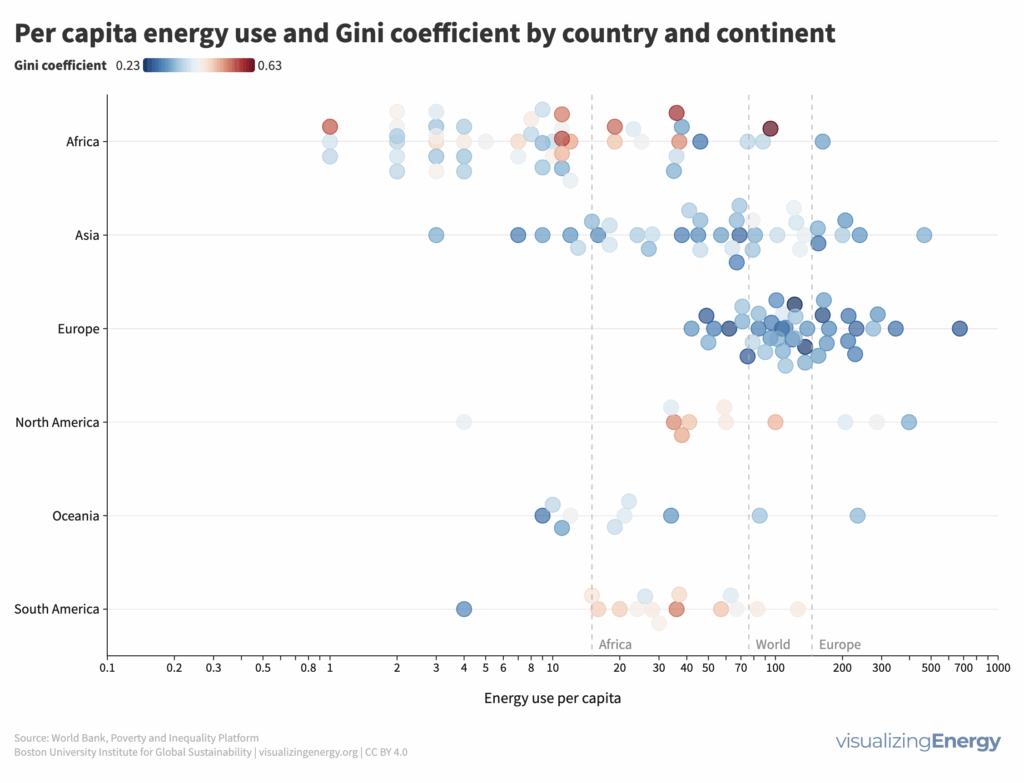
The Gini coefficient assesses income inequality globally, with values ranging from 0 to 1. The impact of energy use per capita on inequality diminishes after reaching 30 GJ. In Europe, there is a pattern of high energy use and low inequality. However, as countries develop, increased energy use doesn’t consistently translate to reduced income inequality.
What is the status of women in the global hydropower sector?

Hydropower, the world’s largest source of renewable, low-carbon electricity, faces a significant gender gap. Women hold only a quarter of jobs globally, mainly in non-technical roles. Factors hindering women include a lack of STEM skills, limited awareness, inadequate female role models, and managerial bias. Improved family-friendly policies and female inclusion in policymaking are required for industry advancement.
What is the relationship between energy use and social progress?
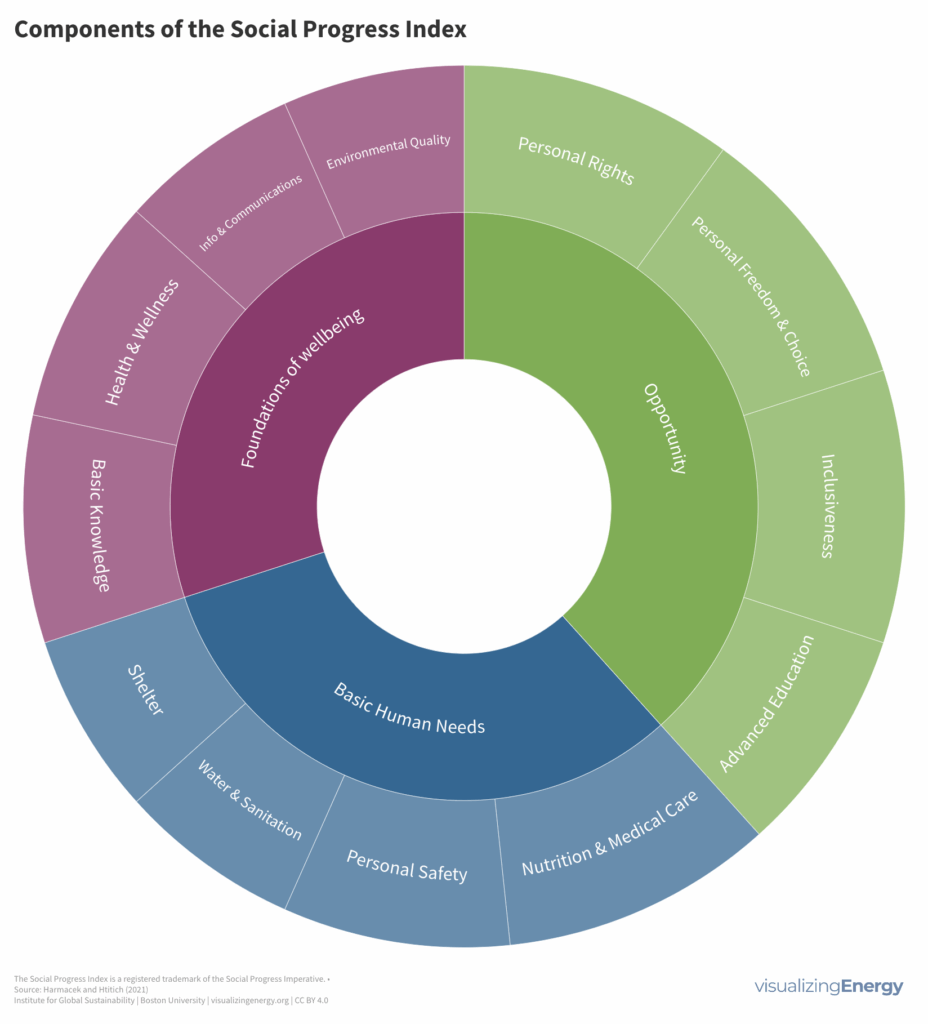
The Social Progress Index (SPI) measures a nation’s overall well-being beyond GDP, with 12 components and 60 indicators. Nations in Sub-Saharan Africa and the Middle East have lower SPI rankings, while Canada, North European countries, Japan, and Australia consistently score high. Energy use affects SPI, but higher consumption doesn’t always lead to greater social progress.