
Explore the solid biomass resources of the United States
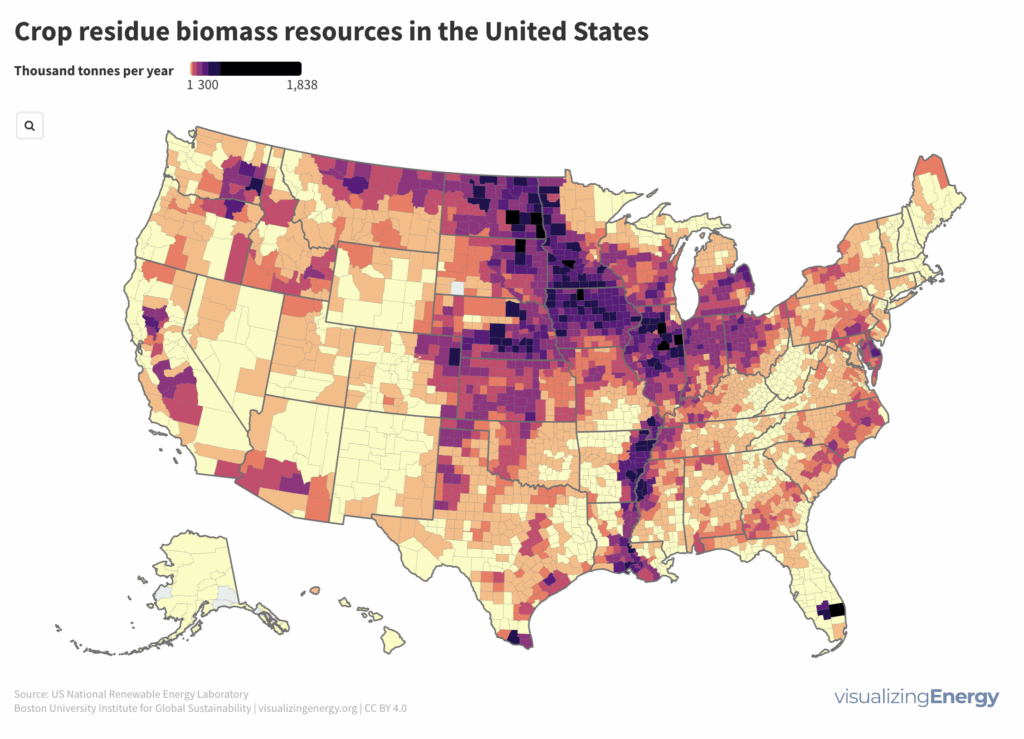
Biomass, derived from plants and animals, is a renewable energy source. The National Renewable Energy Laboratory mapped biomass resources in the US, including crop residues, forest residues, primary and secondary mill residues, and urban wood waste. These resources are used for heat, electricity, and fuel production. The maps offer county-level data for these resources.
Watch the history of biopower plants in the United States
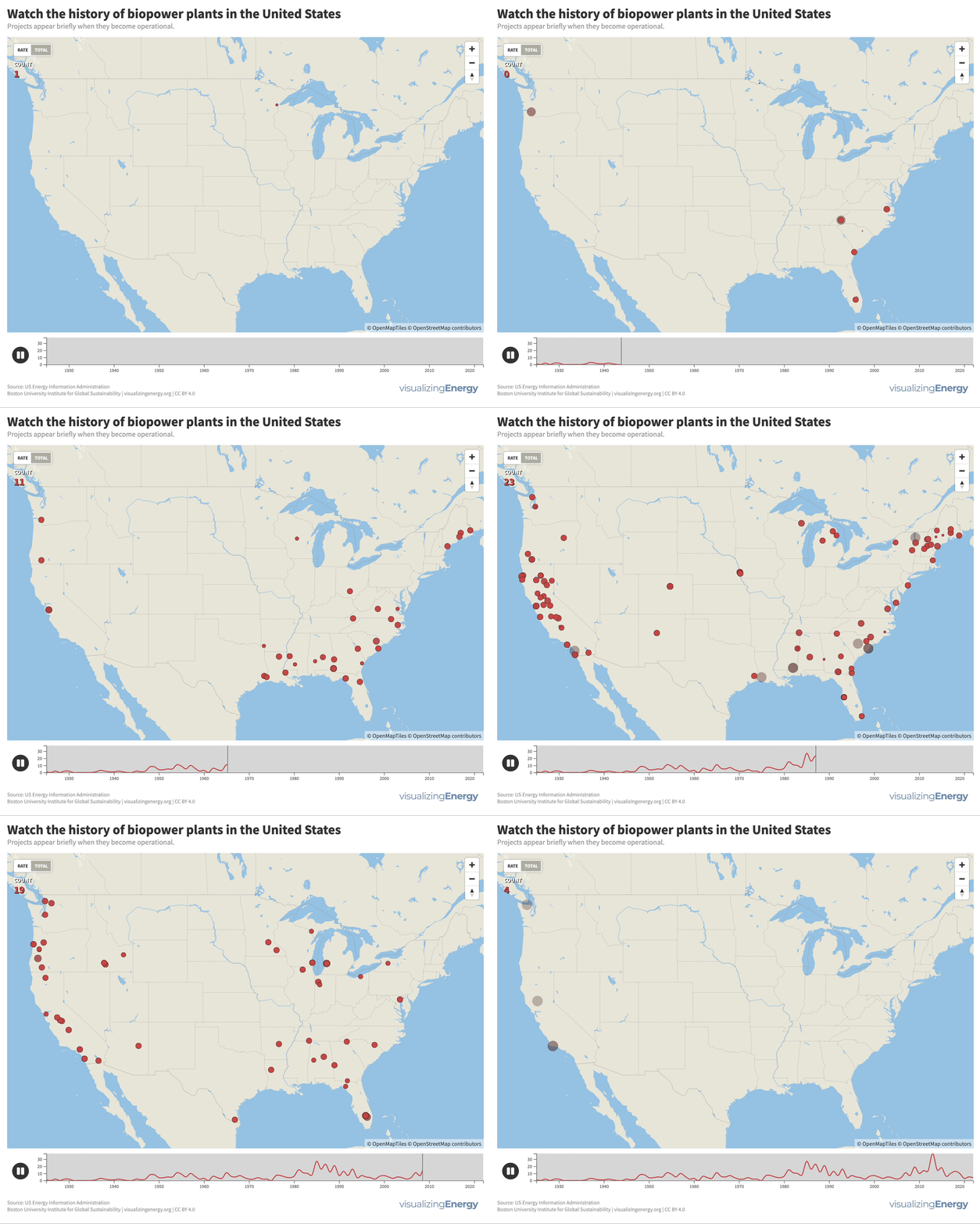
Biomass generates electricity, or biopower, from sources like wood, agricultural residues, and urban waste. In the US, it accounts for 1.2% of electricity.
Watch the history of pumped storage hydropower in the United States
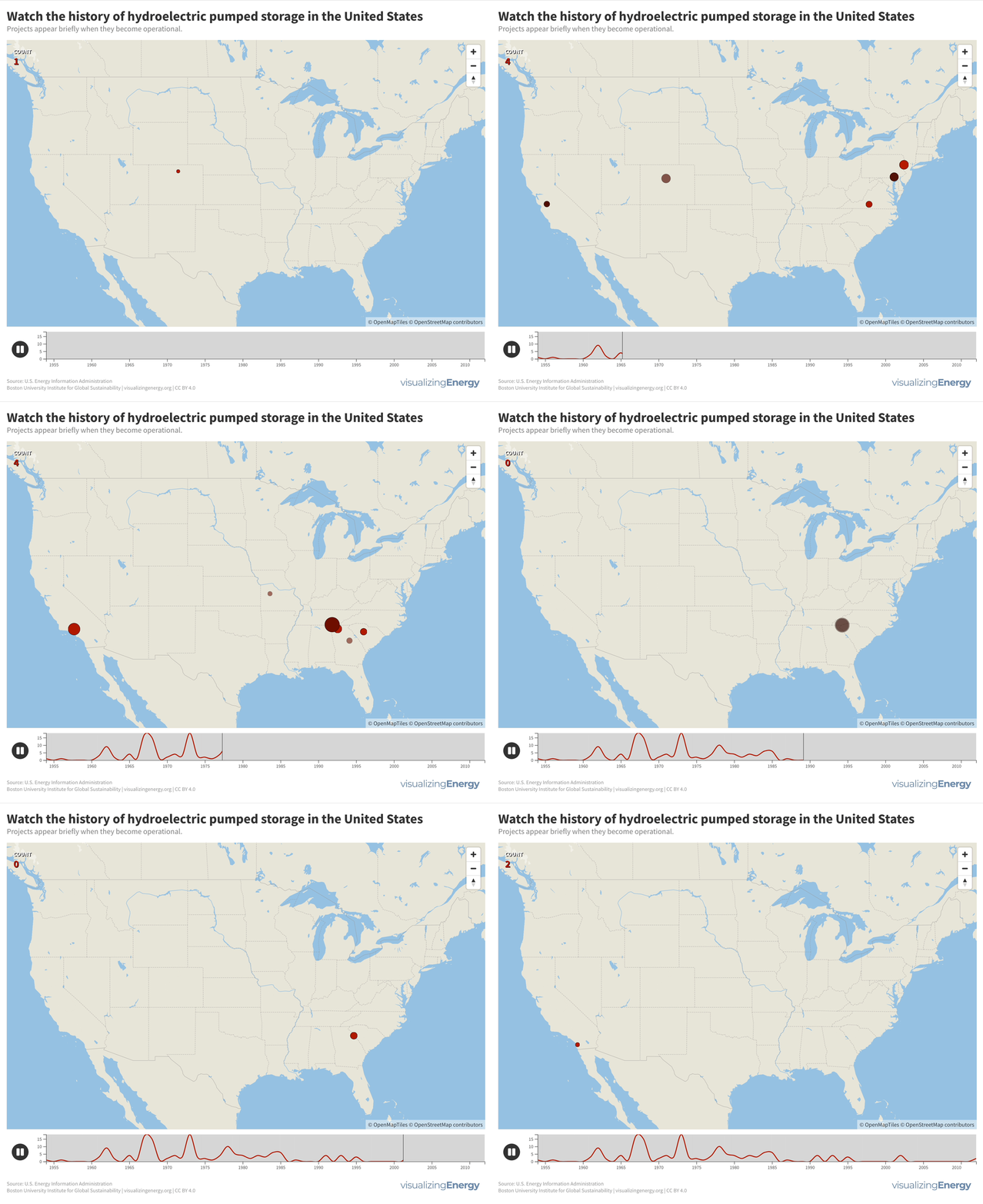
Pumped storage plants for hydroelectric power in the United States were primarily built between 1960 and 1990. There have been no new projects since 2012, but three new ones have been proposed, potentially adding 2.6 GW to the existing 22 GW capacity. The largest facility is the Bath County Pumped Storage Station in Virginia, with 2.9 GW.
Where do people lack access to electricity?
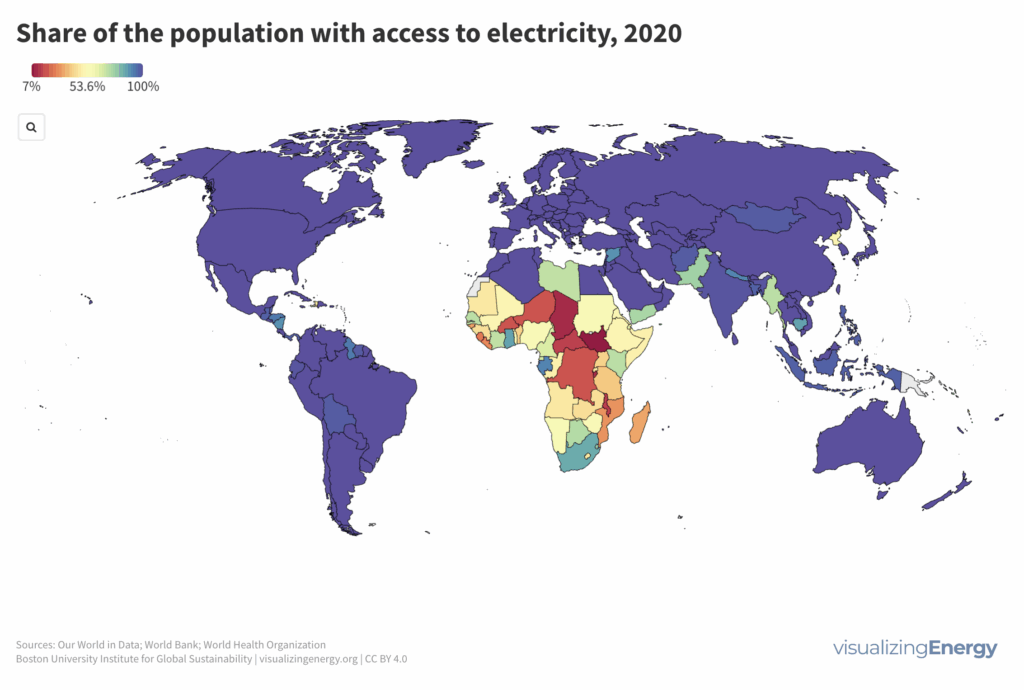
The United Nations’ 17 Sustainable Development Goals (SDGs) include SDG7, which aims to ensure affordable and sustainable energy for all. The share of global population with access to electricity has increased to 90% in 2022, yet around 800 million people are still without access, mostly in sub-Saharan Africa. Various factors influence access to electricity, impacting income and well-being.
The history of fossil fuel production in the United States
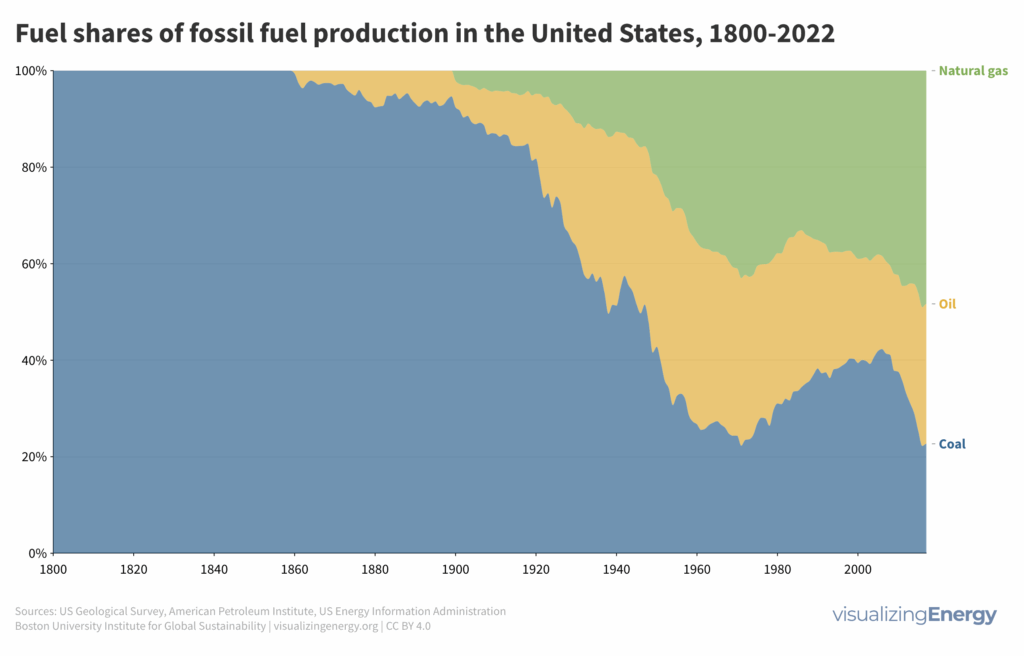
Coal, oil, and natural gas have played major roles in U.S. industrialization and energy. Coal dominated in the 20th century, but oil and natural gas gained prominence after World War II. Fracking revitalized oil and gas production, leading to major shifts in fossil fuel production and investment trends.
What renewable fuels have the largest climate benefit?
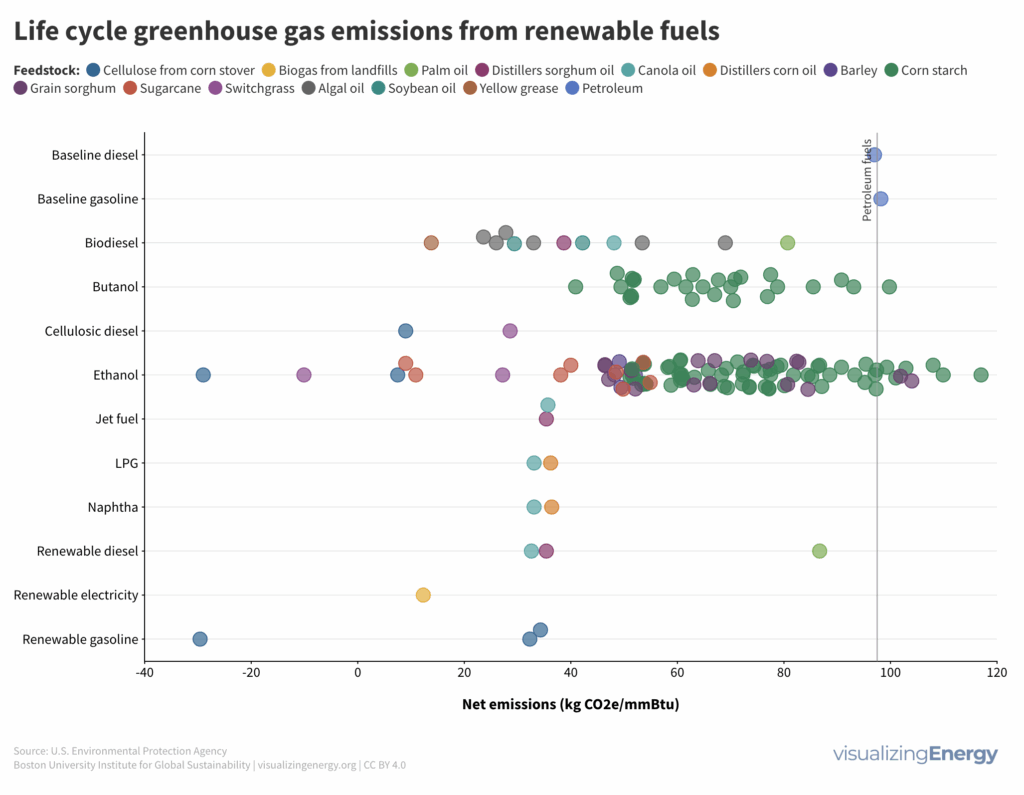
Approximately 91% of transportation energy globally comes from petroleum fuels, creating 29% of US and 20% of global greenhouse gas emissions. Biofuels offer potential emission reductions but raise land use concerns. Ethanol’s carbon emissions have decreased, and ongoing research aims to further reduce them. Government support and investments are driving biofuel expansion.
Where are the highest prices for carbon?
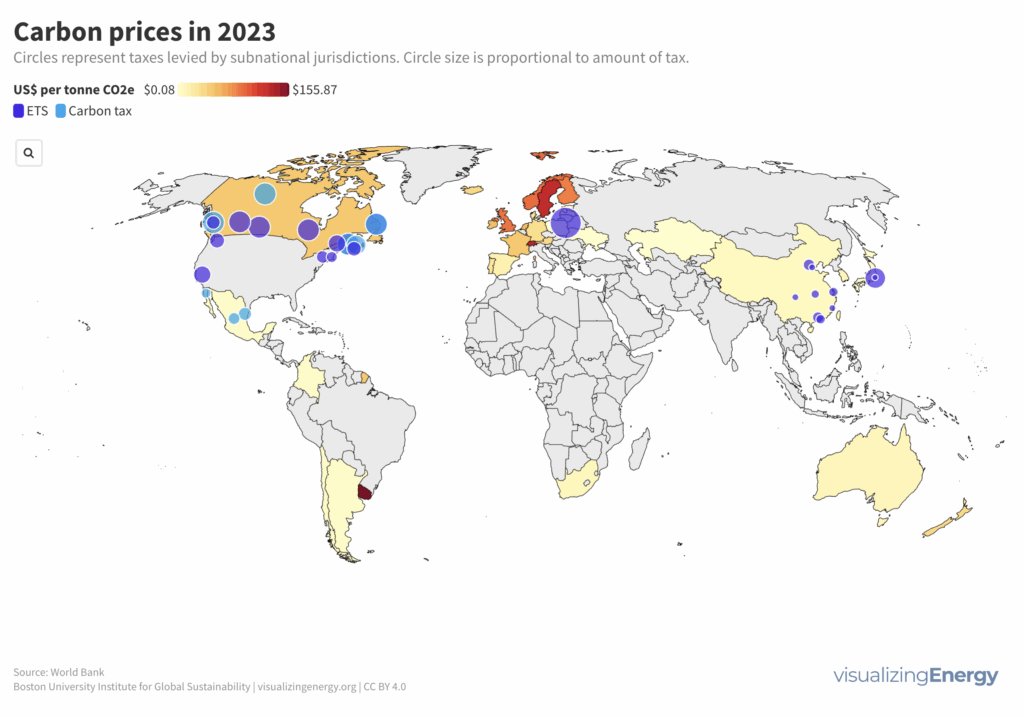
Many experts advocate for “putting a price on carbon” to reduce greenhouse gas emissions and address climate change. This involves capturing the external costs of emissions and linking them to their sources through a price. Approaches include emissions trading systems (e.g., “cap and trade”) and carbon taxes. Currently, 73 initiatives cover 23% of global emissions, with examples in South Africa and the European Union.
Explore renewable fuels in the United States
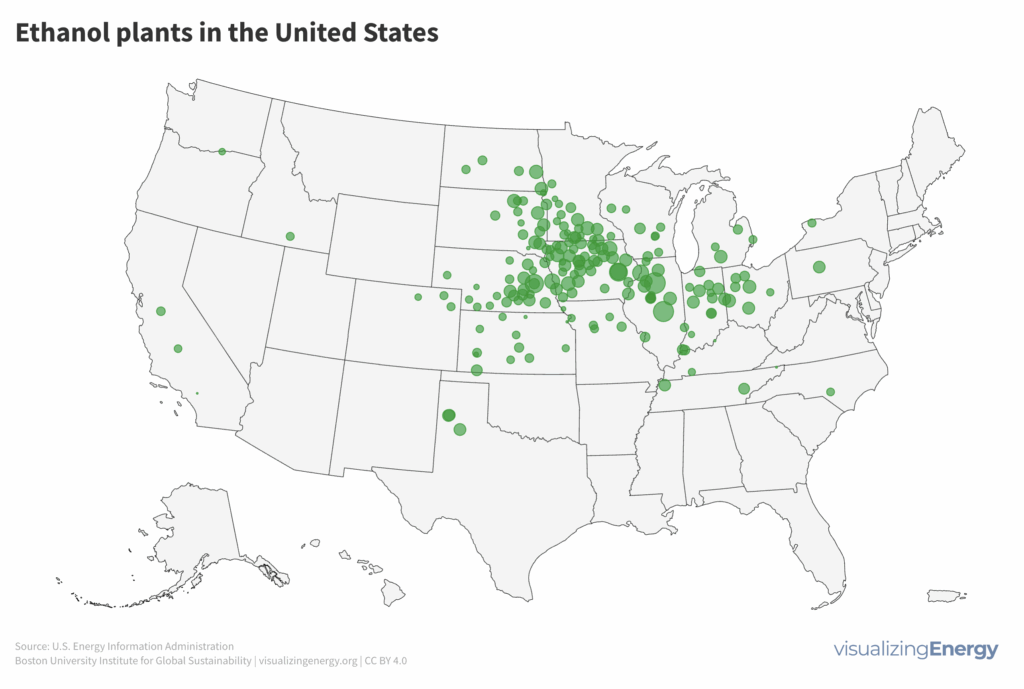
In the United States, ethanol is mainly produced in the Midwest from corn, with Iowa, Nebraska, and Illinois leading in capacity. Ethanol is used as a fuel additive, with E85 being a high-level ethanol-gasoline blend used in flex-fuel vehicles. Biodiesel, made from vegetable oils and animal fats, is mainly produced in states with these feedstocks. Renewable diesel, chemically identical to petroleum diesel, is primarily used in California to meet emissions regulations.
Where do people have access to clean cooking?
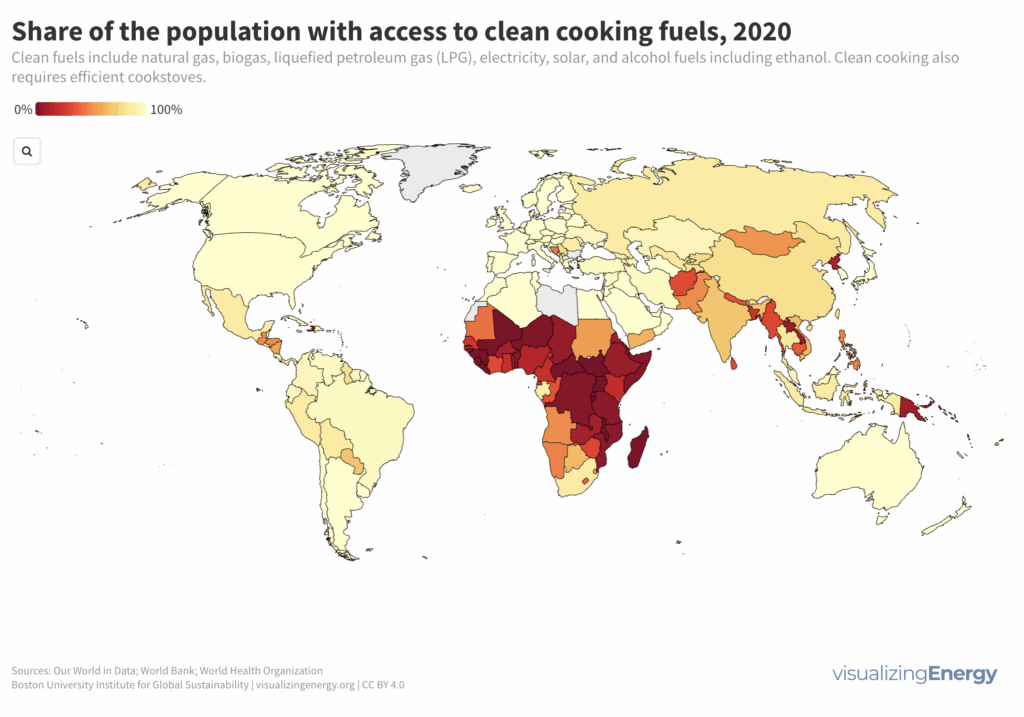
The transition to clean energy brings life-changing benefits like clean cooking services. Clean cooking uses gaseous fuels and electricity, reducing harmful emissions. However, 2.3 billion people still use polluting fuels, leading to millions of deaths annually. Access to clean cooking varies by country income and location. While global access has increased, challenges remain in many countries.
What makes a cooking fuel “clean?”
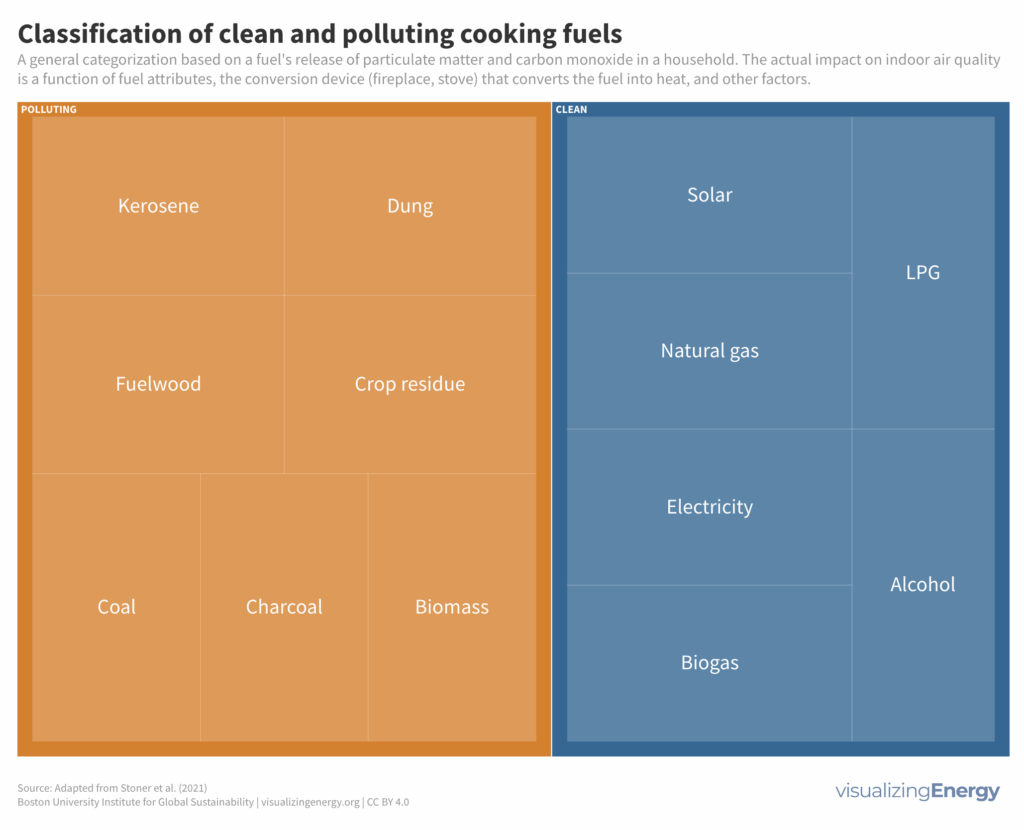
The United Nations established 17 Sustainable Development Goals (SDGs) to address poverty, health, education, inequality, economic growth, climate change, and environmental conservation. SDG 7 focuses on providing affordable, sustainable, and clean energy for all. The World Health Organization sets benchmarks for “clean” cooking, favoring efficient and low-emission technologies while discouraging the use of polluting fuels.