
Global nuclear reactor startups and retirements, 1951-2024
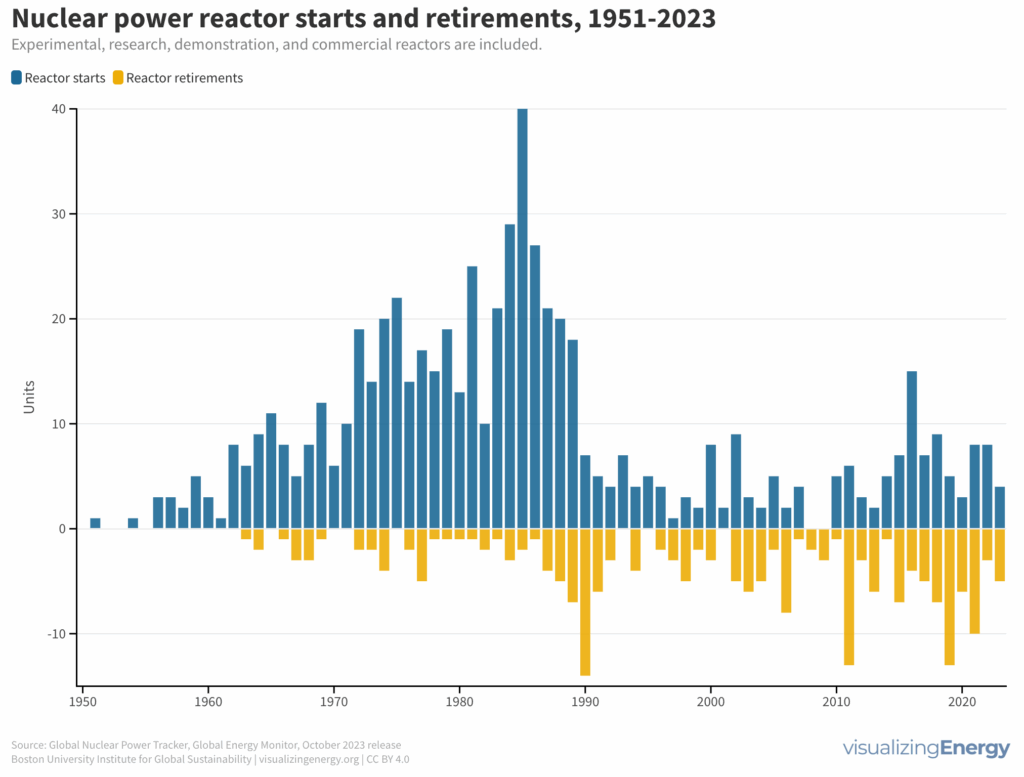
The global nuclear power industry has experienced significant shifts since its post-WWII expansion, with a sharp decline in new reactor starts from the 1990s onwards. More recently, some countries have sought to replace fossil fuels with nuclear power to address emissions and energy security. However, challenges remain in demonstrating the promised benefits of new reactor designs.
Is shared prosperity connected to per capita energy use?
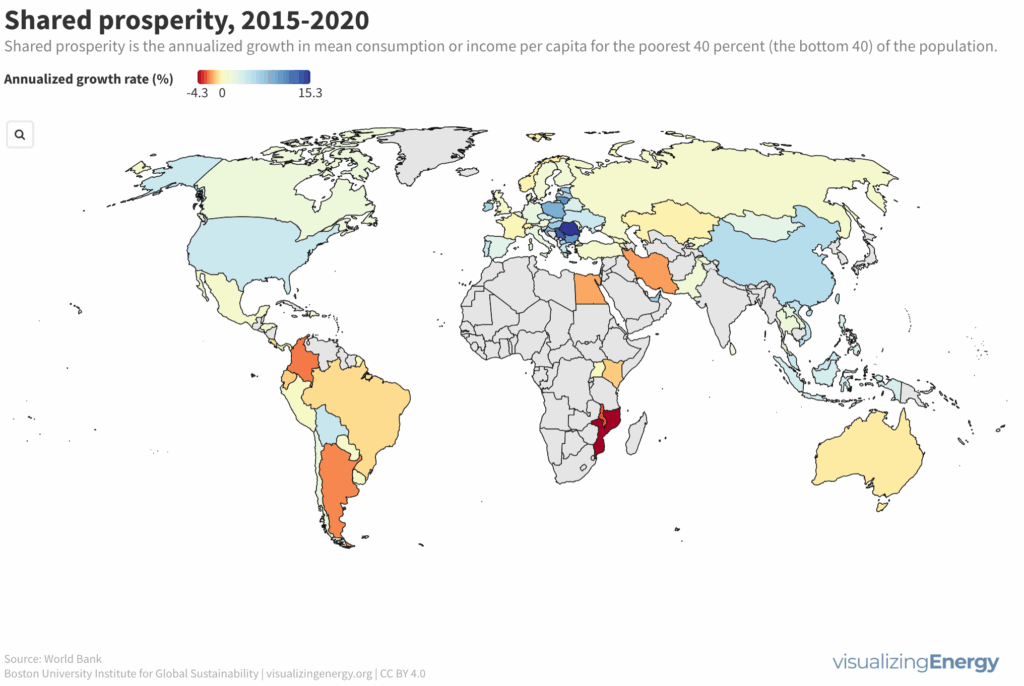
Shared prosperity measures economic growth inclusiveness, focusing on the income growth of the poorest compared to the overall population. It reduces poverty and inequality and is relevant even in high-income countries. Energy use can impact shared prosperity, but other factors like social safety nets and education also play a crucial role.
Global nuclear reactor construction starts and duration, 1949-2023
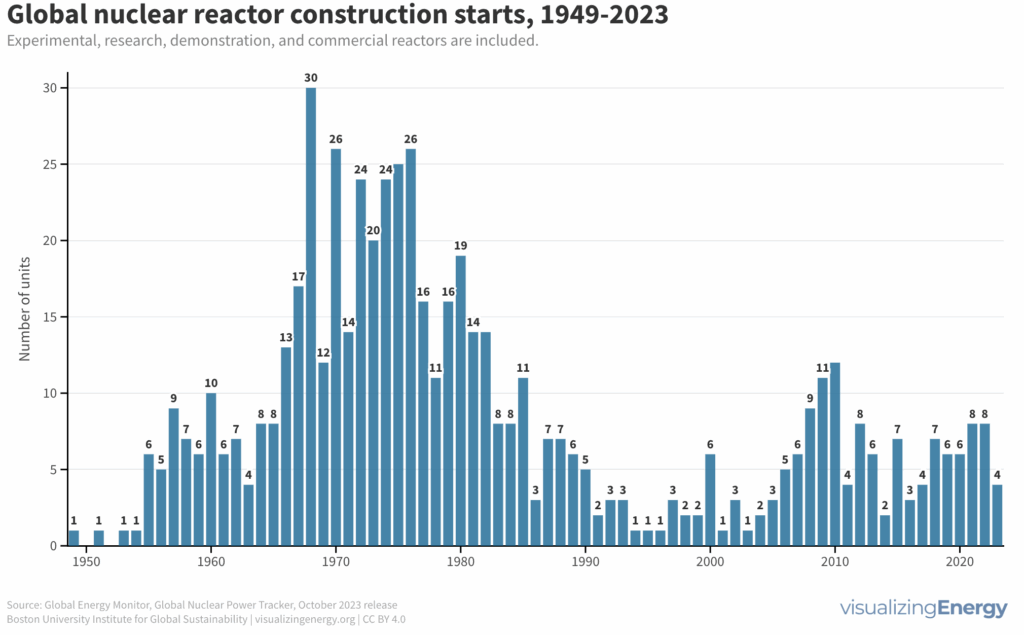
The construction of new nuclear power plants reflects changing electricity demand and technology competitiveness. Despite industry and government support, nuclear power faces challenges such as cost-competitiveness and safety concerns, leading to extended construction times. While some advocate for its expansion as vital for clean energy transition, others question its necessity due to declining global electricity share and the rise of cheaper renewables.
Where are light-duty electric vehicles the most popular?
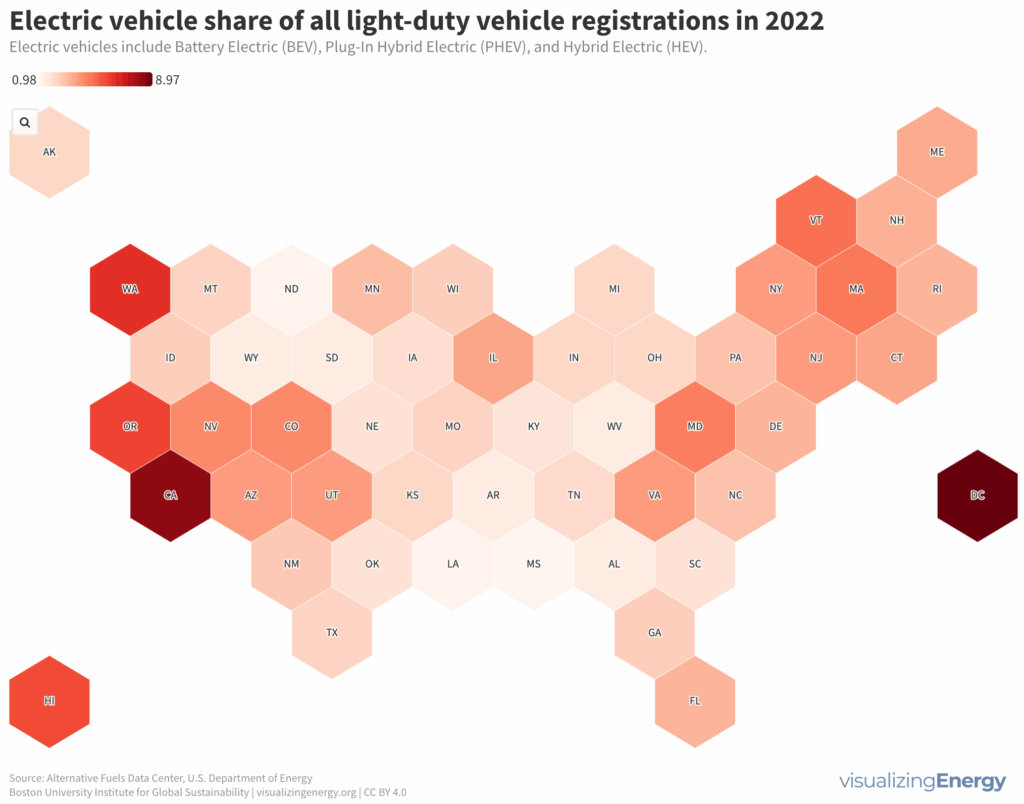
The shift from fossil fuel-powered internal combustion engine vehicles to electric vehicles is a key strategy for reducing transportation emissions. Various regulations and incentives at the state and national level drive this transition, with California leading in policies and EV registrations. The growth of EV sales is supported by policy, lower prices, improved range, and expanded charging infrastructure.
What countries have the greatest hydropower capacity?
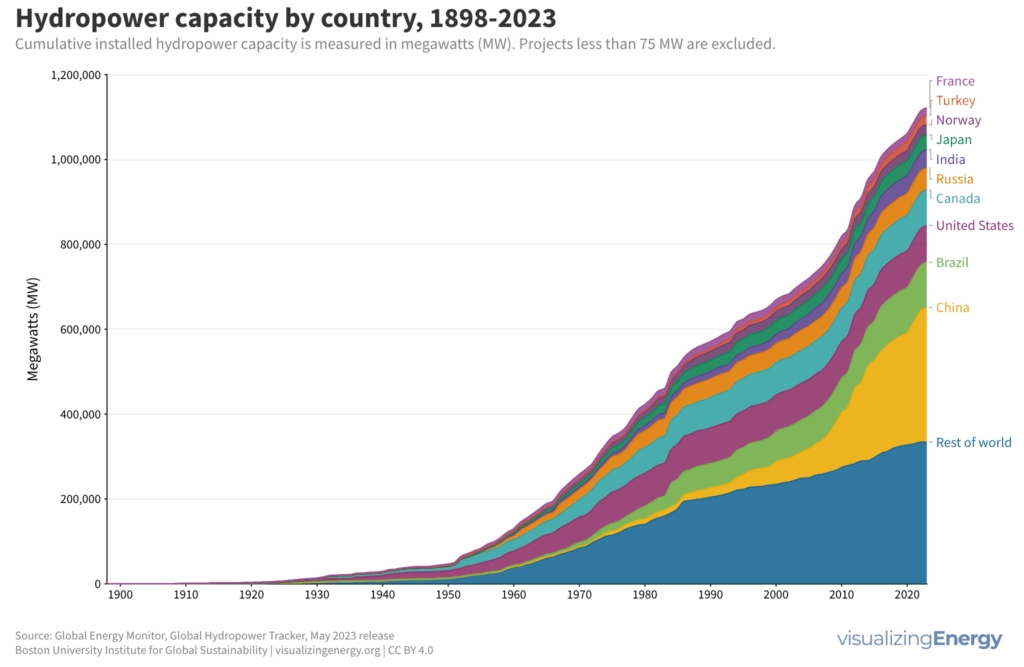
Dams serve various purposes such as navigation improvement, flood control, and electricity generation. There are over 40,000 dams worldwide, with significant hydroelectric capacity. The environmental impact of these large projects, including disturbance of ecosystems and displacement of communities, must be carefully assessed and balanced with their low-cost and low-carbon benefits.
Explore the world’s coal transportation terminals in 2022
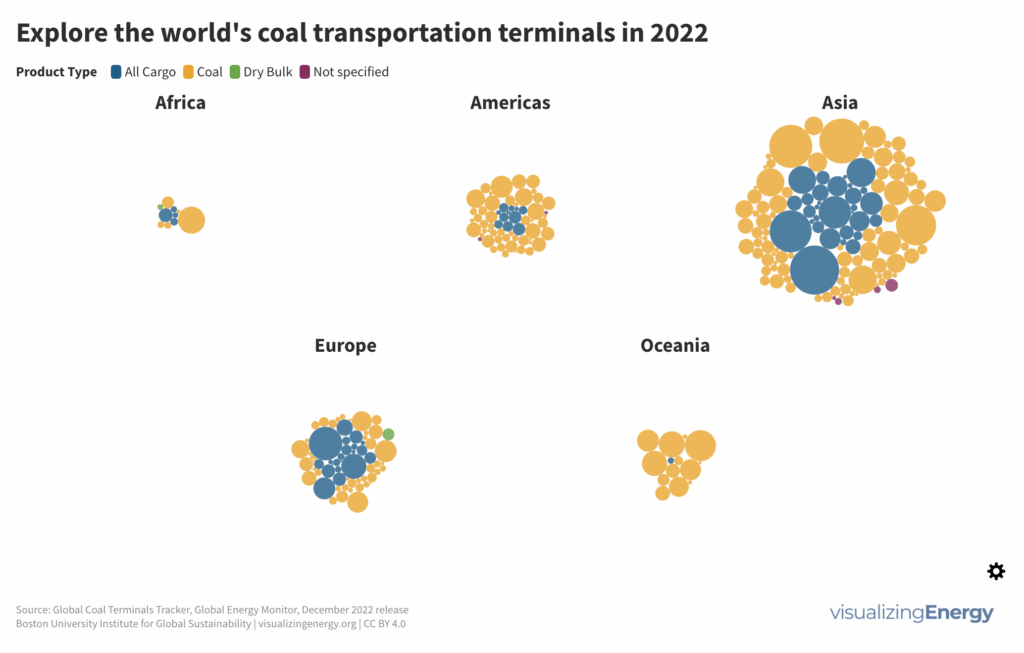
In recent years, 15 to 20% of global coal consumption came from traded coal. The import and export of coal rely on specialized infrastructure known as coal terminals, located near mines or strategic coastal areas. These facilities facilitate the efficient transportation of coal between various modes like ships, trains, and trucks.
The aging of the world’s nuclear reactors
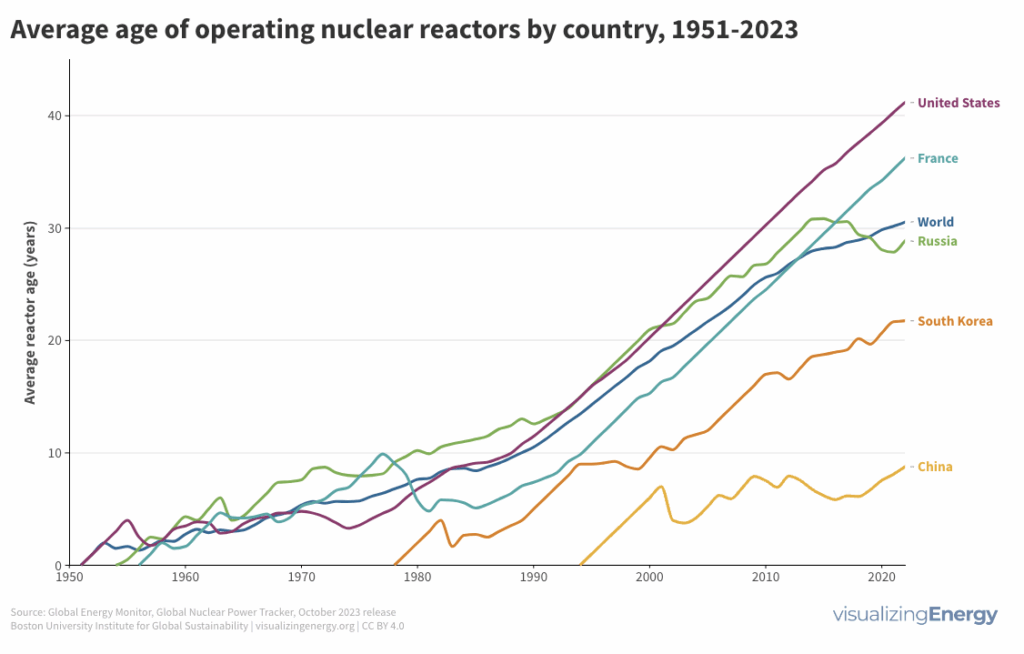
The construction of nuclear reactors peaked in the 1970s, leading to an aging global reactor fleet. The push to relicense these aging reactors has economic and energy security benefits, but questions remain about safety. More data and transparency are needed for informed decision-making in the face of the world’s aging nuclear fleet.
Where are coal power plant projects being cancelled?
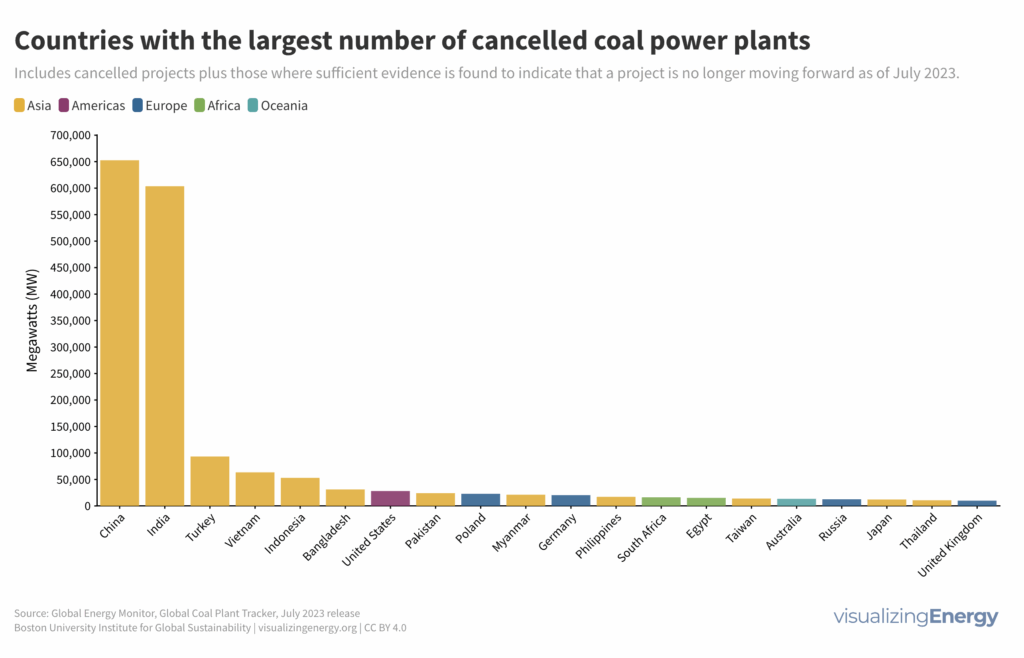
The coal power plant industry’s state is reflected in cancellations and shelved projects, concentrated in Asia (e.g., China, India). China’s paradoxical coal investment includes building new capacity and decommissioning old plants due to renewable energy growth. In the U.S., 23% of coal capacity will retire by 2029 due to competition from natural gas and renewables.
The history of oil production in the United States
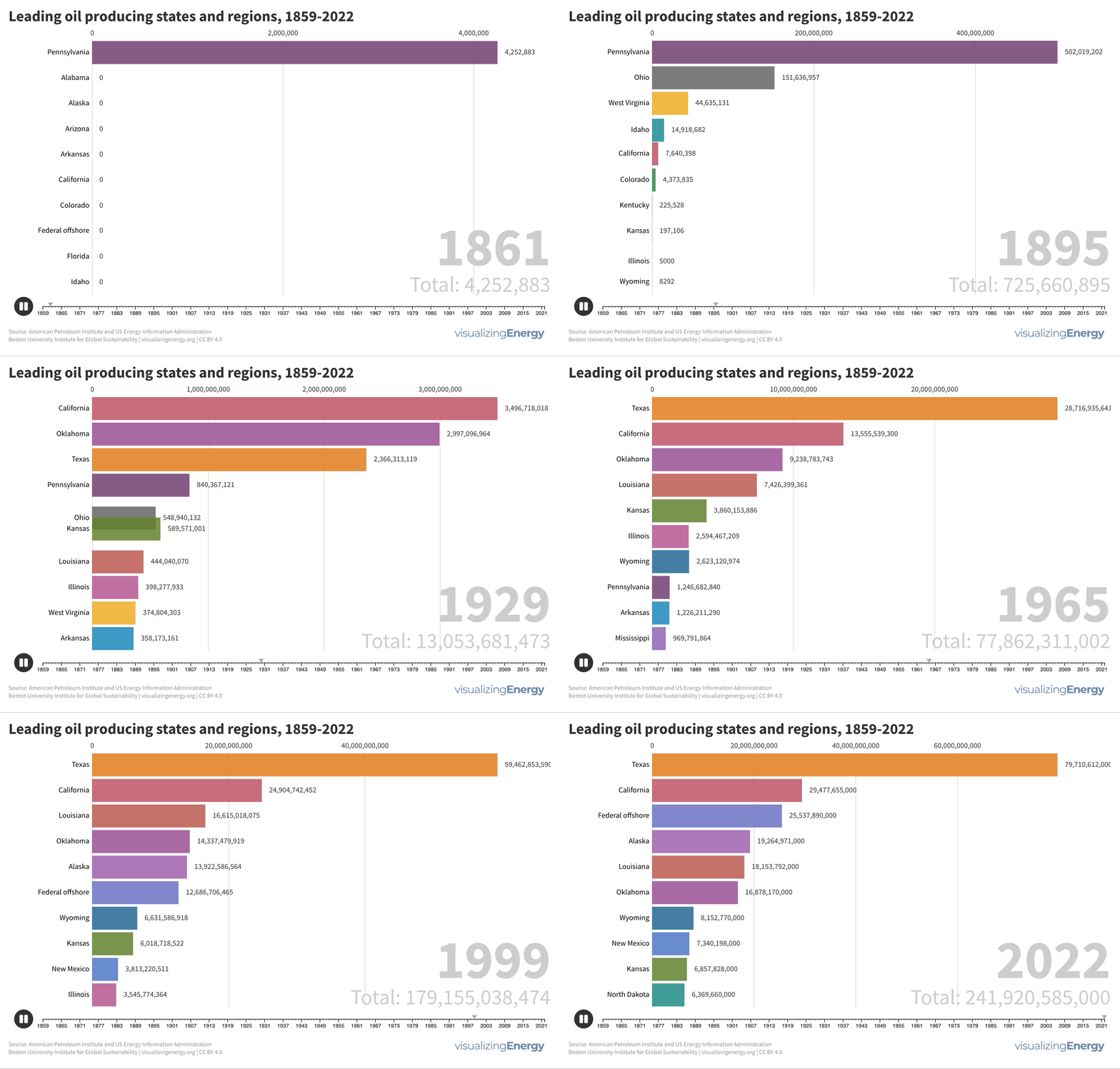
The United States has played a significant role in global oil production, contributing 17% since 1900, with Texas being a major player, accounting for one-third of the nation’s oil production. Technological advancements like hydraulic fracturing and horizontal drilling led to record U.S. oil production in the 2010s, making the country the world’s largest oil producer and a net oil exporter.
Watch the history of natural gas power plants in the United States
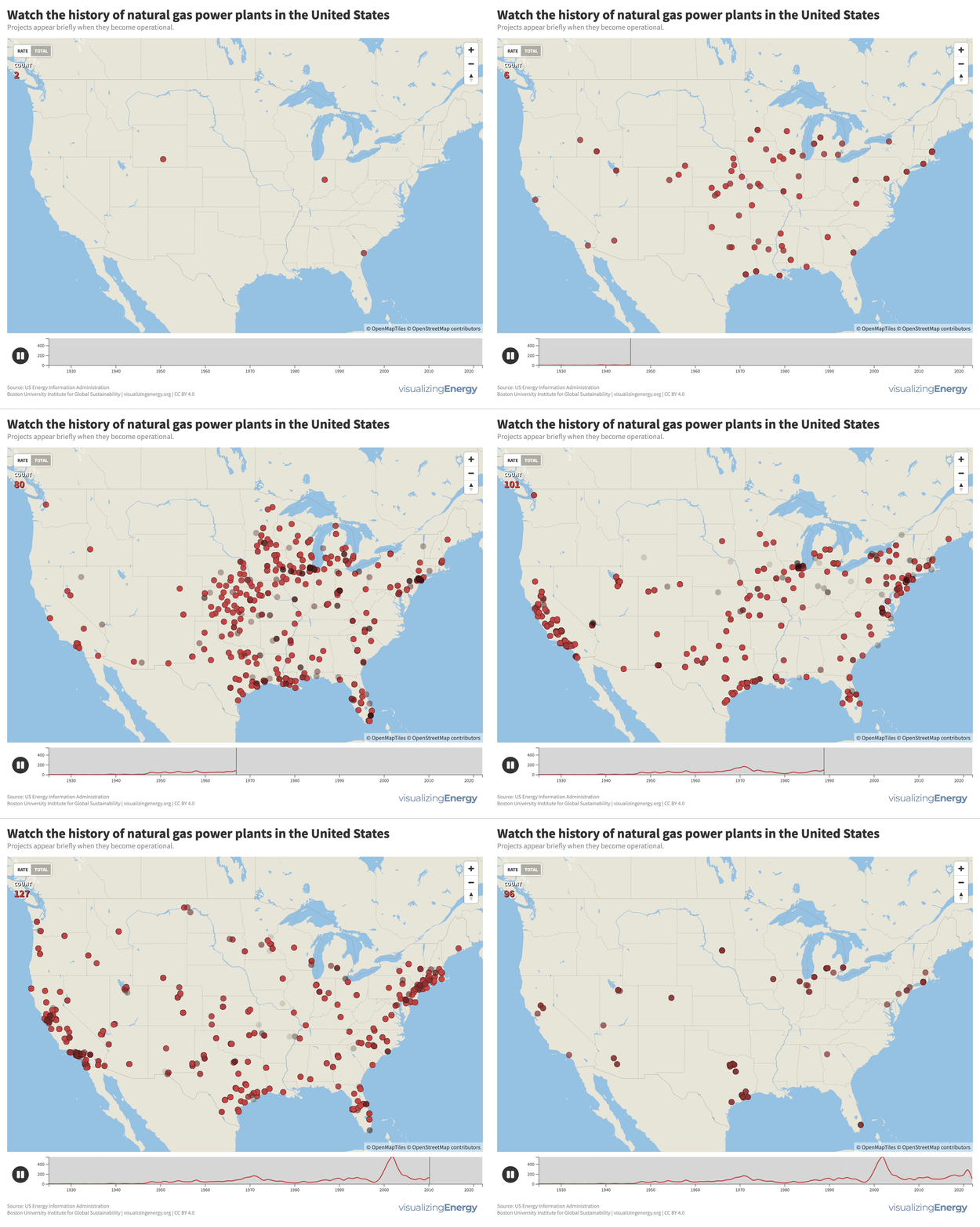
Since the 1920s, natural gas-fueled power plants grew gradually. After WWII, advancements in technology and fracking increased US electricity generated by natural gas from 16% in 2000 to 38% in 2021.