
Oil spills: when, where, how big?
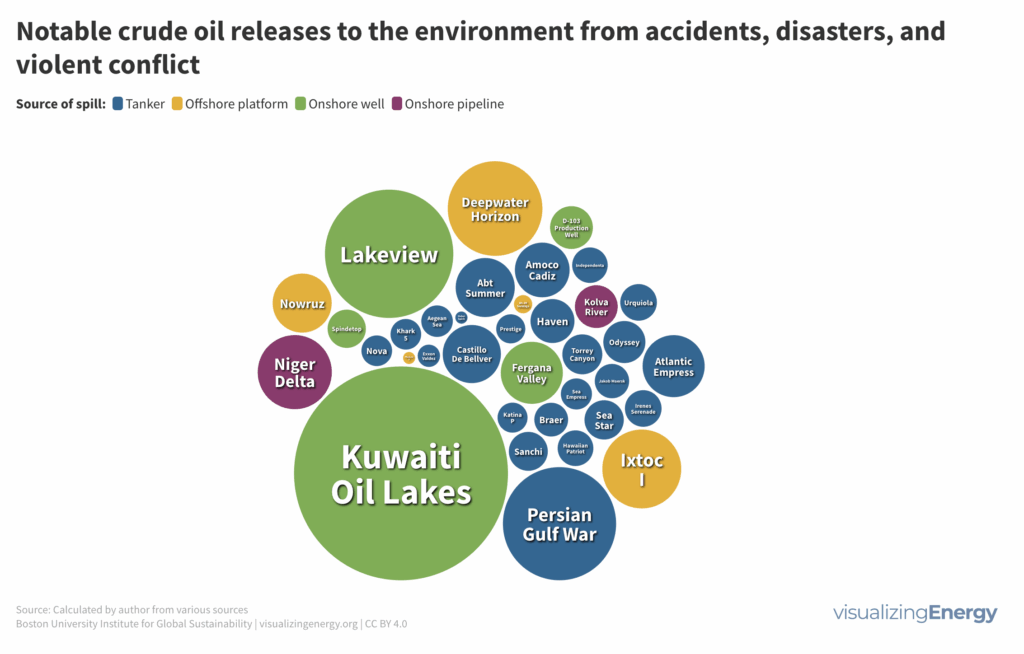
Since the birth of the modern oil industry in the late 19th century, tens of millions of wells have been drilled, and upwards of 1.5 trillion barrels of oil have been extracted. That is enough oil to fill about 96 million Olympic-sized swimming pools! Onshore wells have been drilled in nearly every type of terrestrial […]
What methods of electricity generation use the most water?
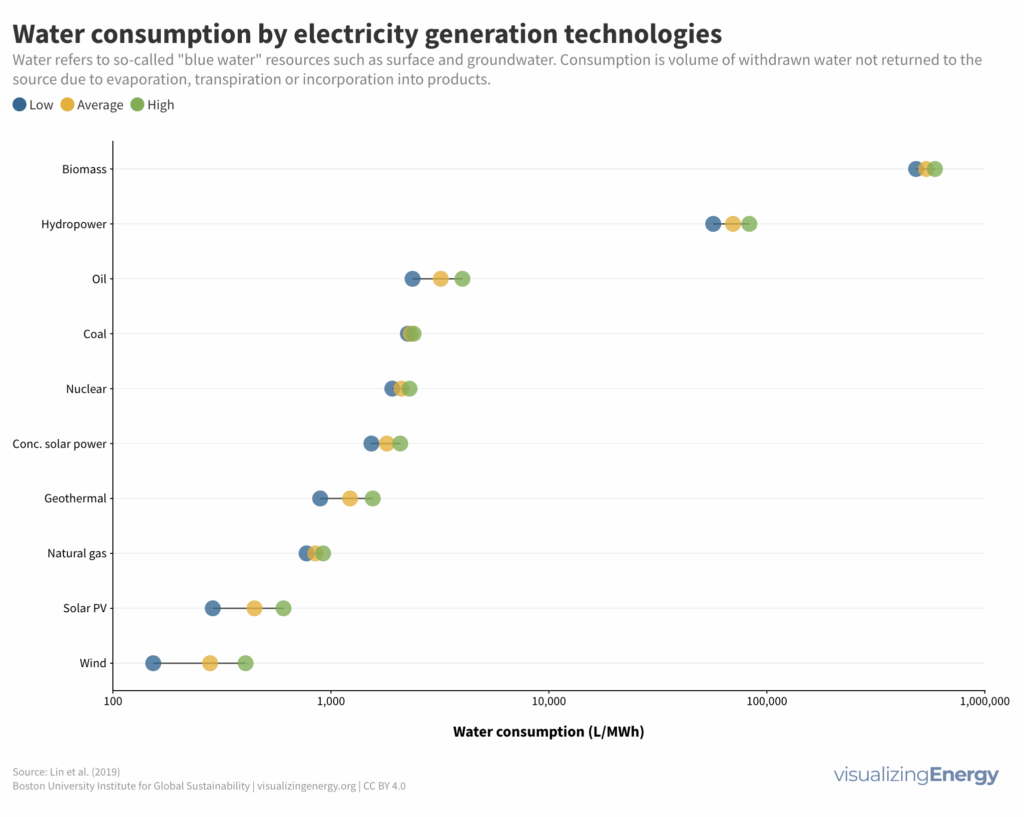
In the twentieth century, global energy use grew tenfold, and global water use grew sixfold. Population growth and rising affluence are expected to drive continued increases in the demand for energy and water. The water-energy nexus refers to the fact that the production and consumption of water and energy are closely interconnected. All forms of […]
Watch the history of hydropower plants in the United States
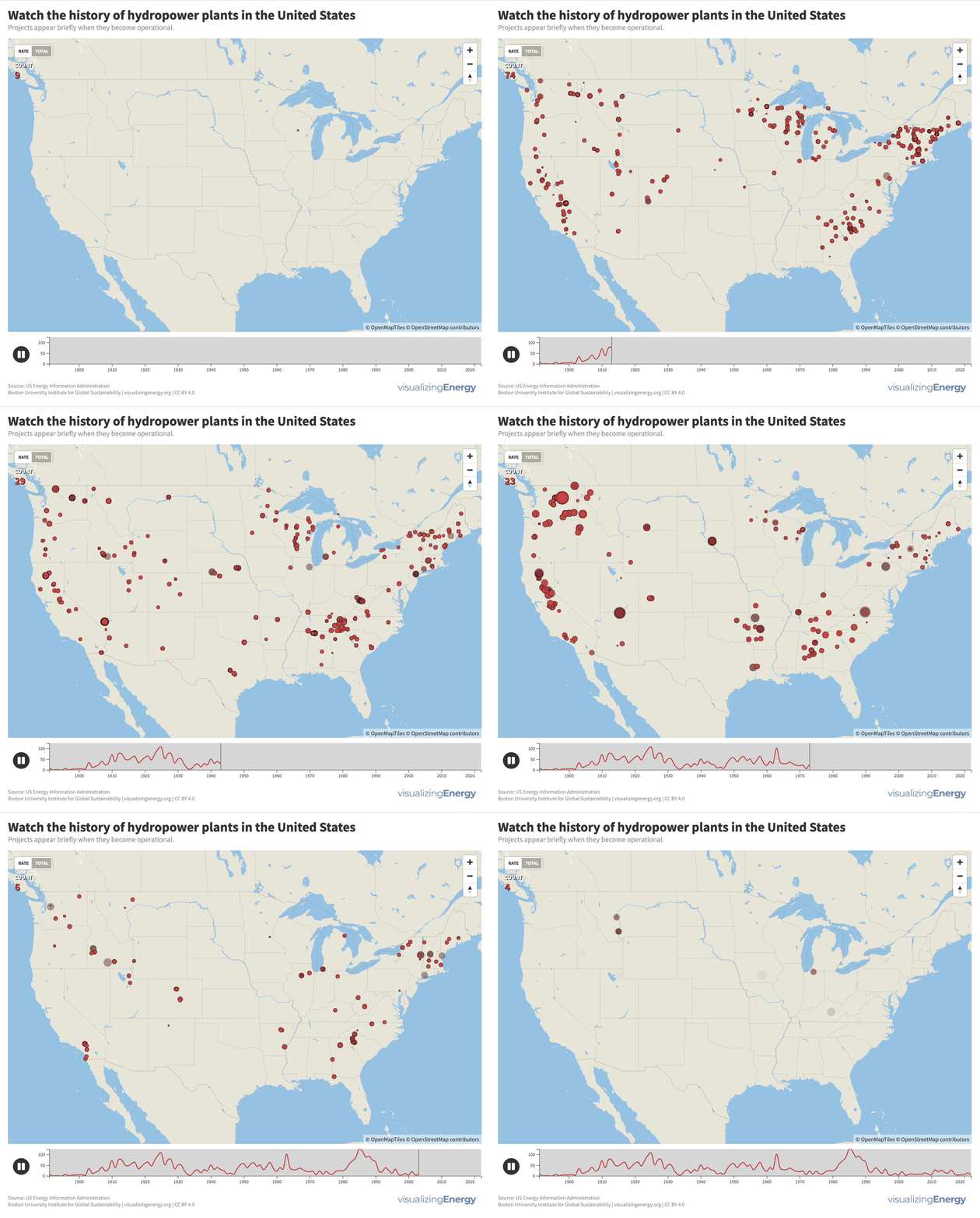
More than 4000 hydroelectric dams have been built in the United States since the late 19th century, representing six percent of all-time additions to electric generation capacity from all sources.
Global anthropogenic emissions of carbon dioxide, 1750-2022
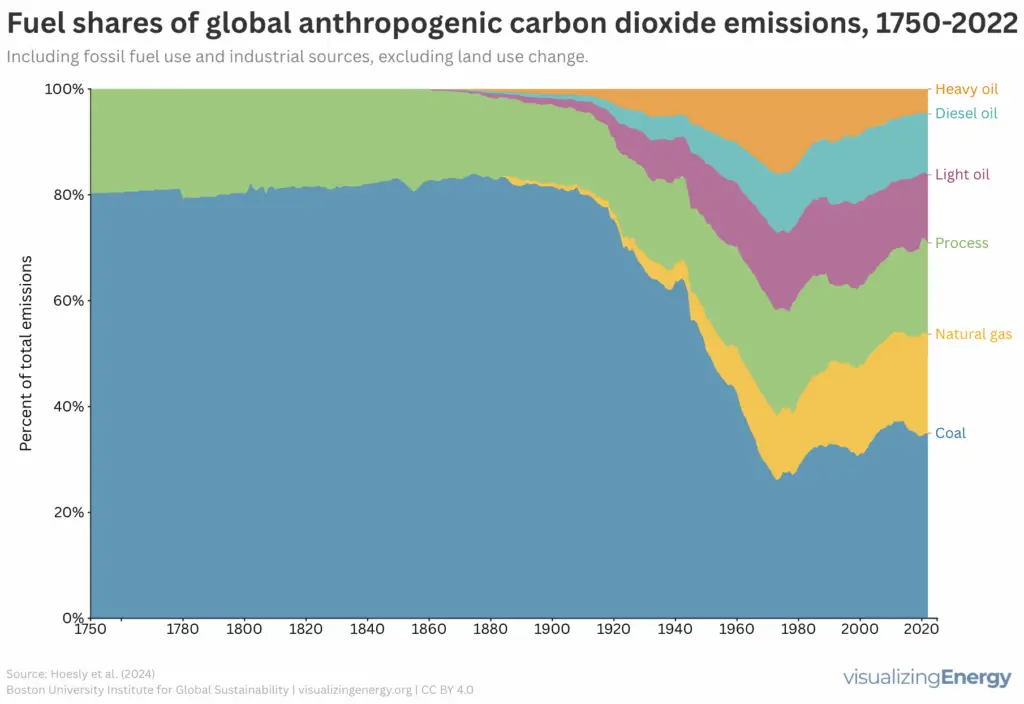
Anthropogenic carbon dioxide emissions increased from about 9,000 kilotons in 1750 to approximately 36 million tons in 2022—a 4,000-fold increase. Economic growth and the shift to fossil fuels that accompanied the Industrial Revolution drove this rise in emissions. Between 1850 and 1900, there were only two years in which emissions did not increase from the previous year.
Global anthropogenic ammonia emissions, 1750-2022
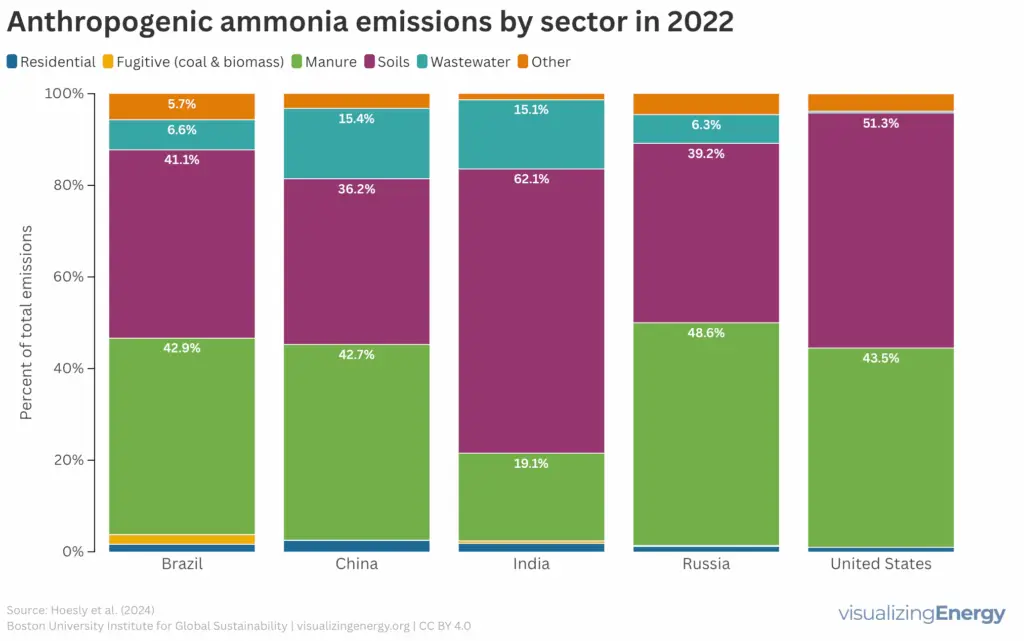
Ammonia (NH3) feeds and pollutes the world.1 The synthesis of ammonia underpins all nitrogen fertilizers, and without their applications it would be impossible to feed, at current levels, nearly half of today’s 8 billion people. China could not feed 40% of its population without nitrogen fertilizers.2 This makes ammonia one of the most important materials […]
Fuel energy density: What is it and why is it important?
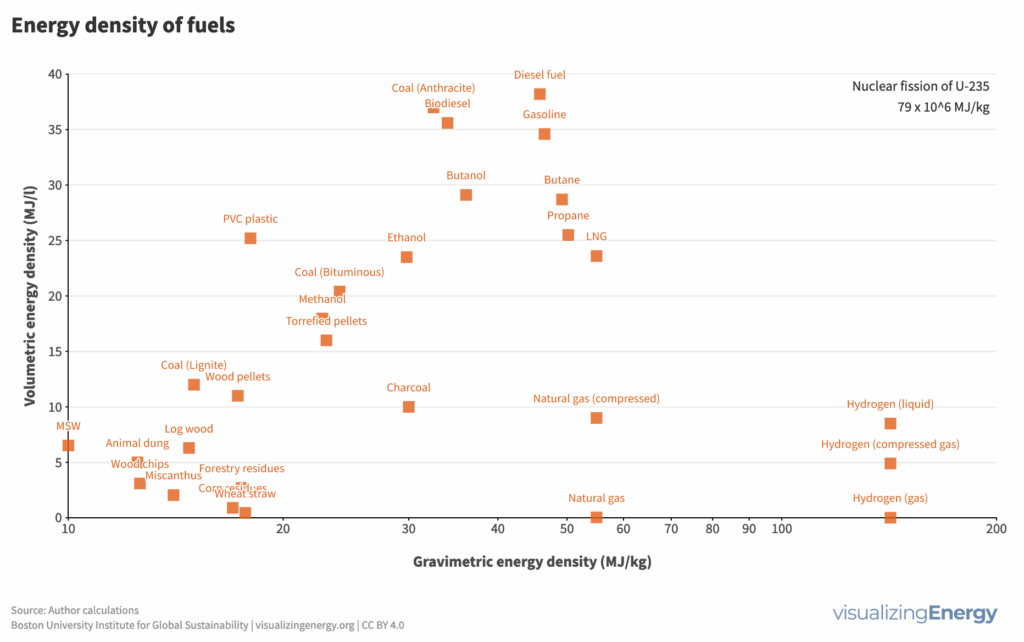
Fuels like wood, diesel, and natural gas have shaped human energy history, driven by technological, economic, and environmental forces. Liquid fuels from oil, with their high mass and volumetric energy density, led to their supremacy in transportation. Shifts in fuel types also influence the devices that convert them into energy services.
Government expenditures on environmental protection
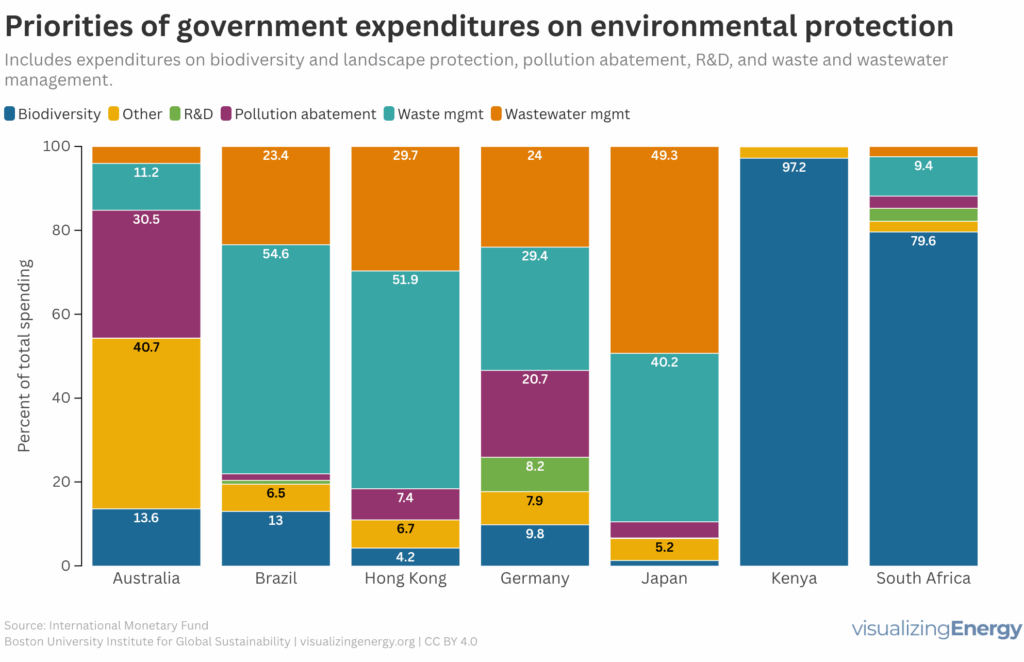
National governments began spending on environmental protection in the late 19th century, escalating after World War II due to pollution concerns. Key legislation emerged worldwide, including Japan’s 1967 law and the U.S. Endangered Species Act. In 2023, EU spending on environmental protection totaled €142 billion, highlighting diverse national priorities in tackling environmental issues.
Global anthropogenic carbon monoxide emissions, 1750-2022
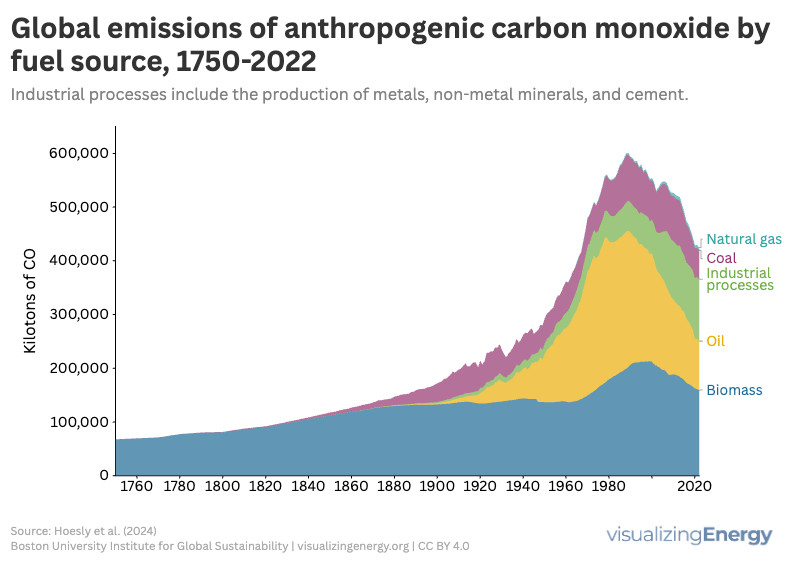
Carbon monoxide (CO) is a toxic, colorless gas from incomplete combustion of fuels, leading to potential health hazards like headaches and confusion. Residential sources produce significant CO emissions, impacting 2.4 billion people reliant on biomass. Globally, emissions peaked in 1989, but have since declined due to regulations and technological advancements in combustion efficiency.
Is the reserve-to-production ratio for fossil fuels a meaningful indicator?
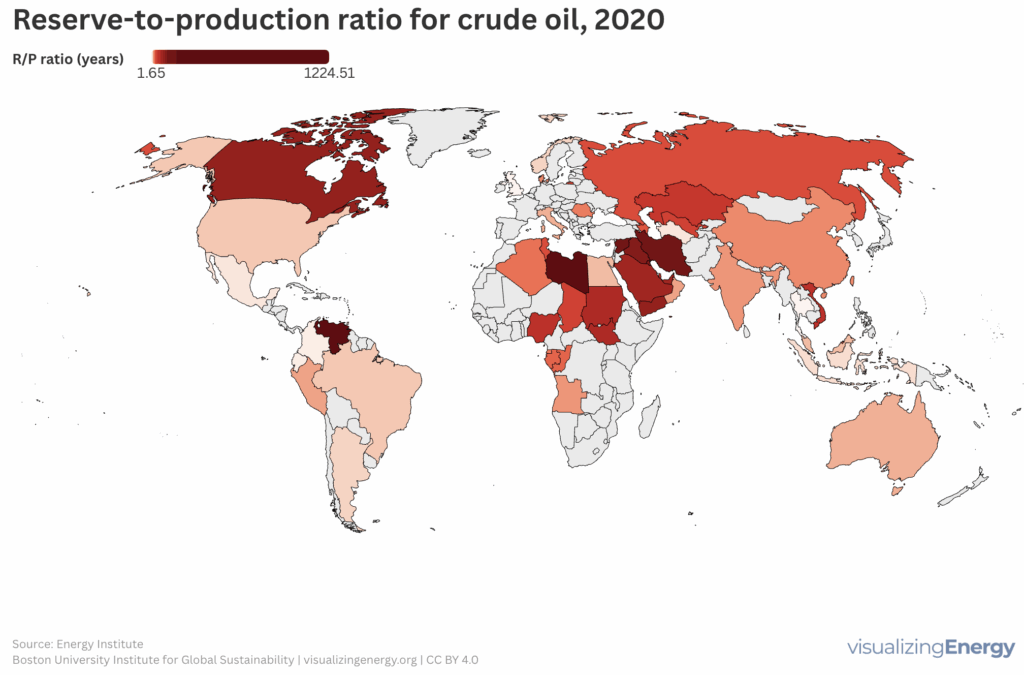
The reserve-to-production (R/P) ratio calculates the lifespan of fossil fuel reserves based on production rates. In the U.S., regulatory frameworks affect reserve reporting, with oil R/P ratios declining from over 40:1 in the early 20th century to about 10:1 today. State-owned enterprises often inflate reserves, complicating future availability assessments.
Global anthropogenic nitrogen dioxide emissions, 1750-2022
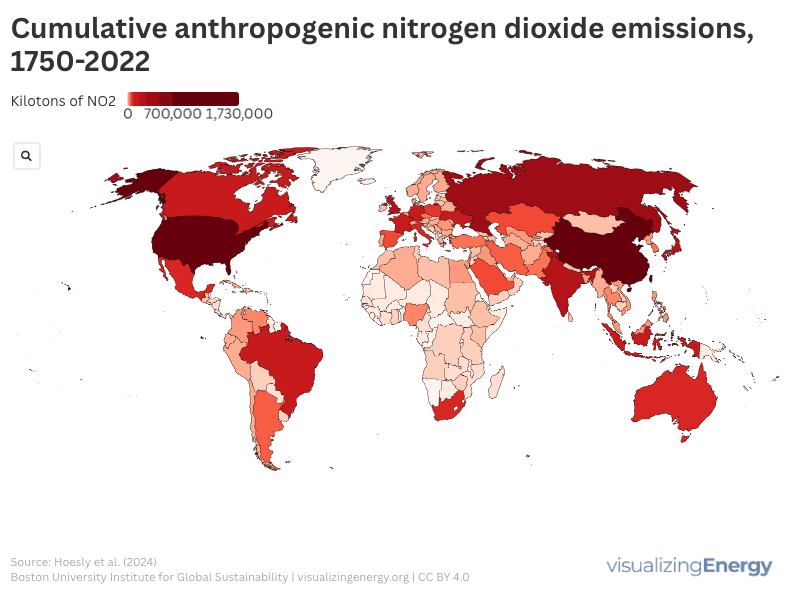
NOx, comprising nitric oxide and nitrogen dioxide, significantly impacts air pollution and health, causing respiratory issues and contributing to harmful pollutants. Mainly emitted from transportation and industrial activities, NOx levels vary globally. Efforts to reduce emissions include regulatory policies and technology advancements, along with a shift towards cleaner energy sources.