
Where are new hydropower plants being built?
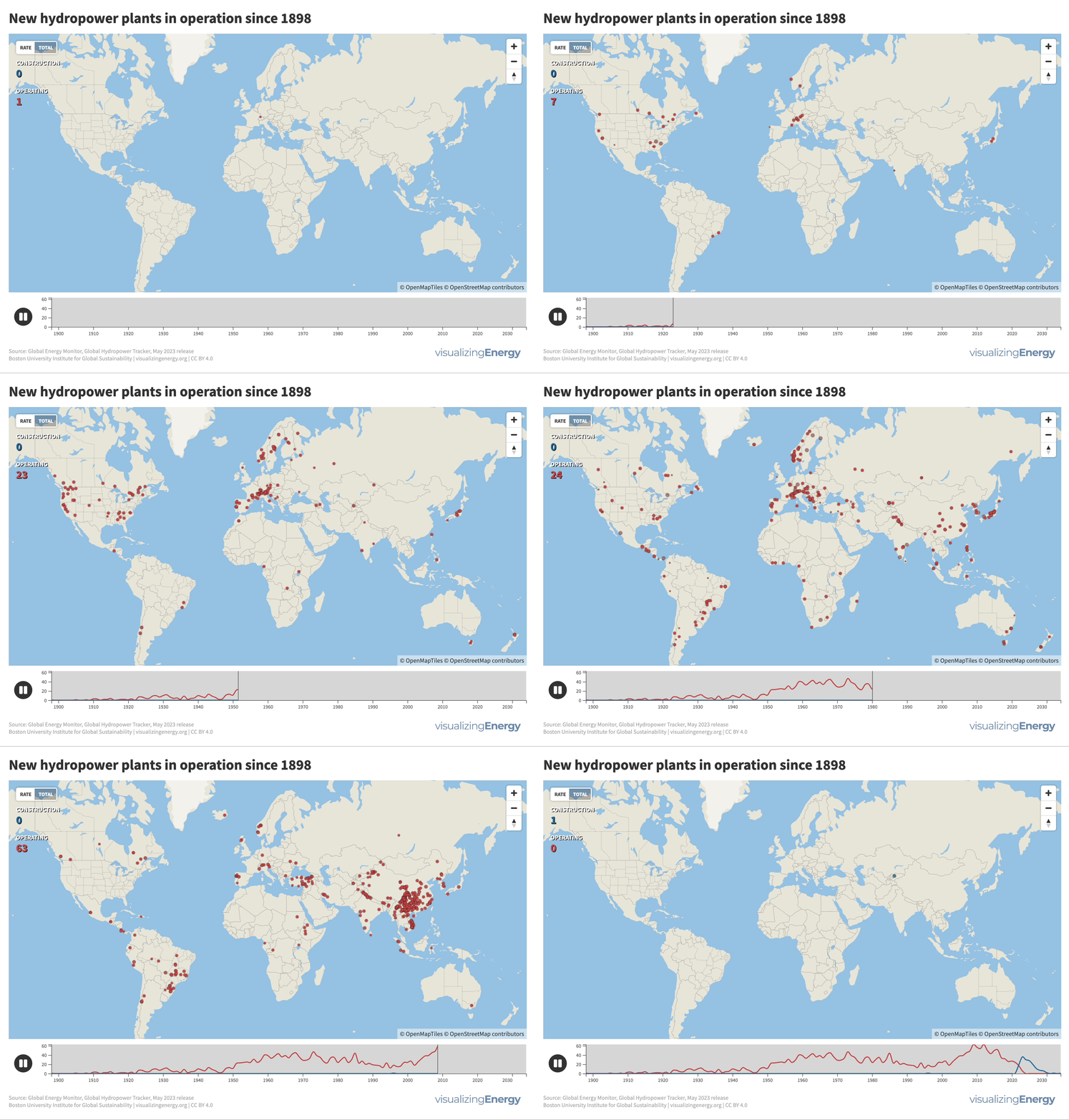
Hydropower’s history traces back to 1882 when the first facility began supplying electricity in Wisconsin. Its adoption surged across North America, Europe, and beyond, with China notably driving expansion in recent decades. Hydropower now contributes 17% of global electricity, surpassing nuclear, wind, solar, bioenergy, and geothermal combined.
Why the weight of your personal vehicle matters

The fuel efficiency of personal highway vehicles, particularly gasoline-powered cars and trucks in the United States, is a crucial factor in energy consumption. Vehicle weight significantly affects fuel efficiency due to basic physics principles like inertia and rolling resistance.
What fuels are used in bioenergy power plants?
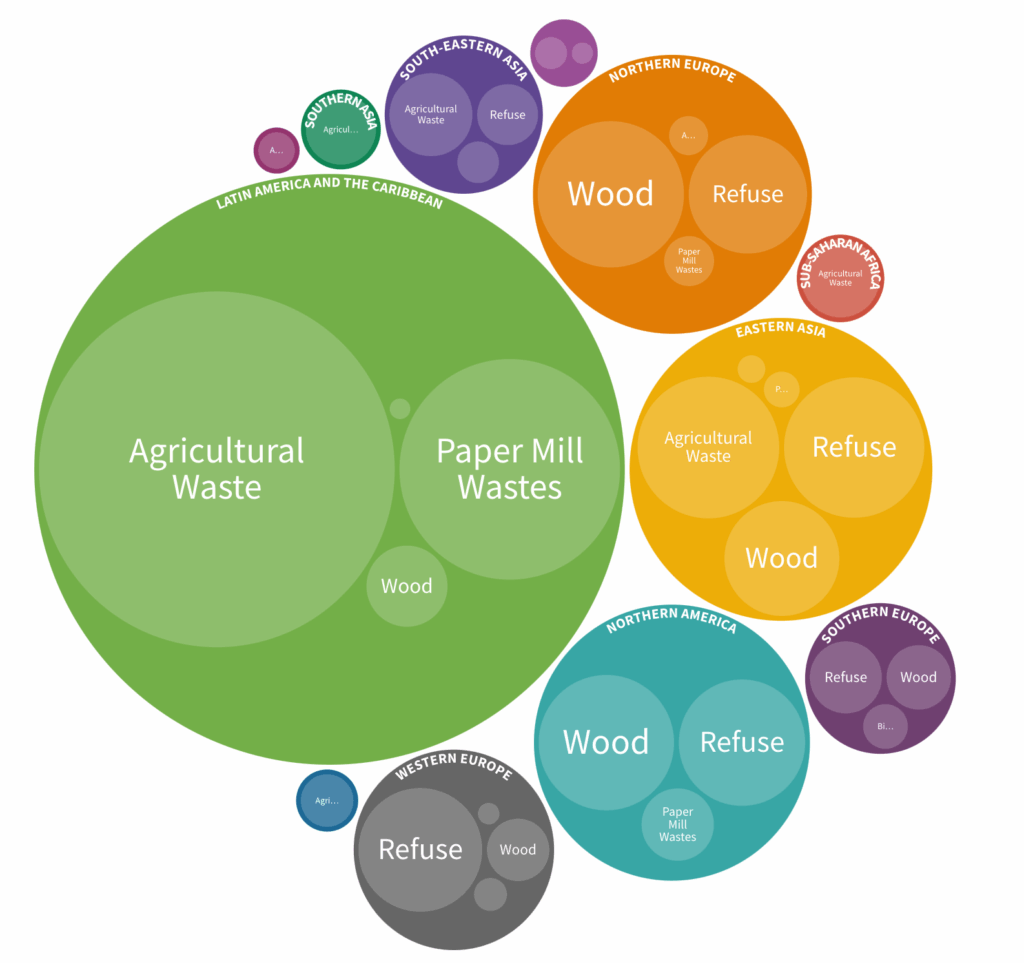
Biopower is electricity generated from renewable organic materials, such as plants and animals. Different countries rely on various biomass sources, including sugarcane, trees, and municipal waste, to produce biopower. However, the impact of biopower on climate change is complex. Despite being initially perceived as carbon neutral, the use of fossil fuels in bioenergy systems and the land requirements for biomass production can have significant environmental consequences.
Explore the world’s bioenergy power plants in 2022
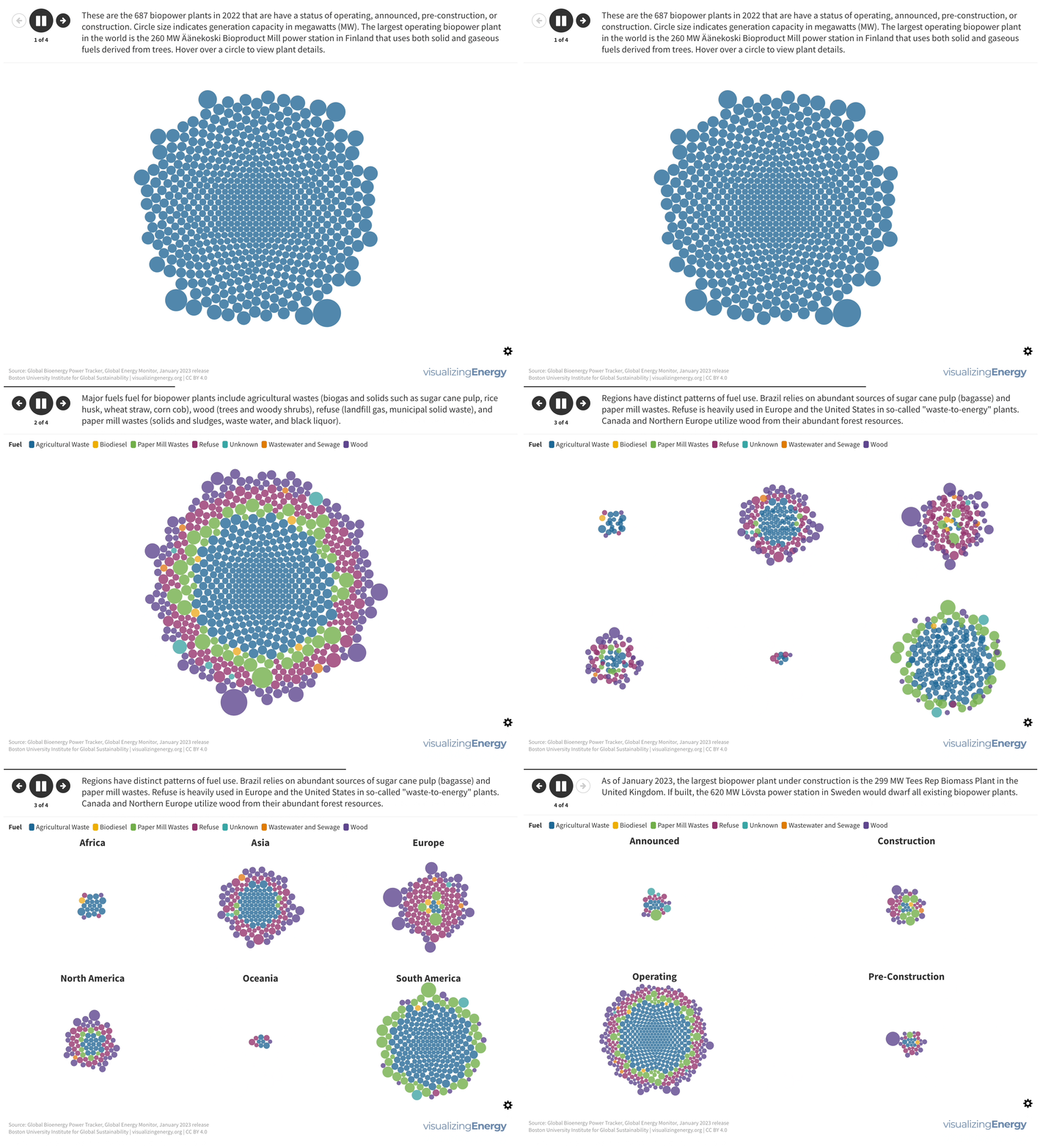
The use of biomass by humans can be traced back at least 1 million years to the controlled use of fire. However, the generation of electricity from biomass, known as biopower, is a more recent development. One of the earliest biopower plants was the São José da Estiva power station in Brazil, which began operating in 1900.
Which U.S. cities prioritize justice in climate action?
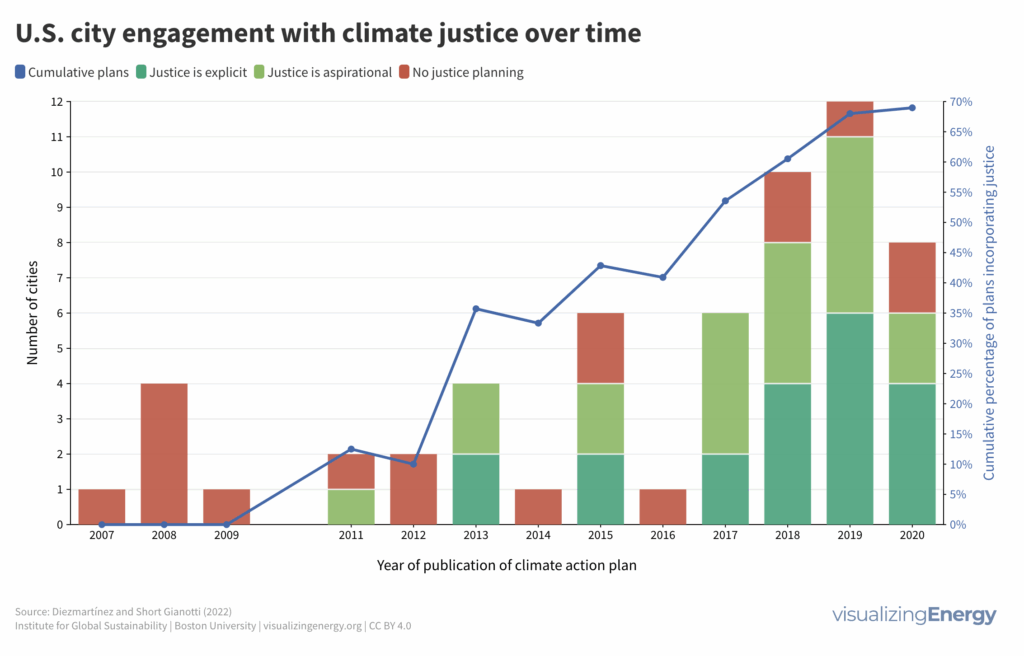
Climate justice recognizes the responsibility of the wealthy for climate change, which disproportionately impacts the vulnerable. Urban climate action plans are increasingly addressing justice, but some cities still lack such plans. Larger cities tend to prioritize justice more, and sectors like energy efficiency and clean energy receive greater attention. More efforts are needed to achieve just and inclusive urban climate transitions.
World electricity generation since 1900
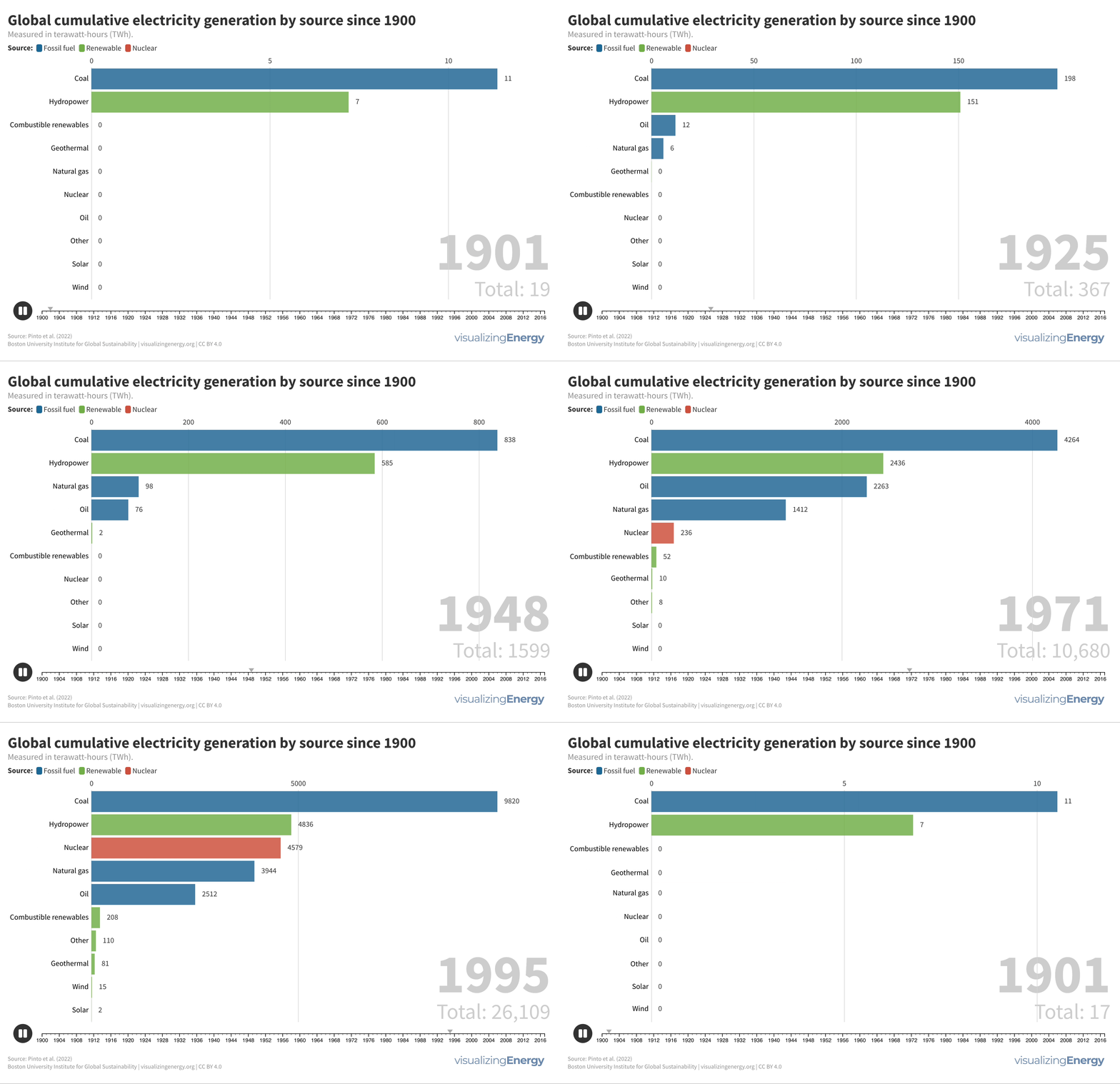
From 1900 to 2022, global electricity generation grew remarkably from 66.4 TWh to 29,165 TWh. Fossil fuels maintained a stable share of around 60% throughout this period, while renewables like wind and solar saw rapid growth from the 2000s. The 1960s saw a rise in oil power plants, but energy price shocks in the 1970s shifted focus to natural gas and nuclear generation, with significant investments in gas power plants from the 2000s onward.
Power plant efficiency since 1900
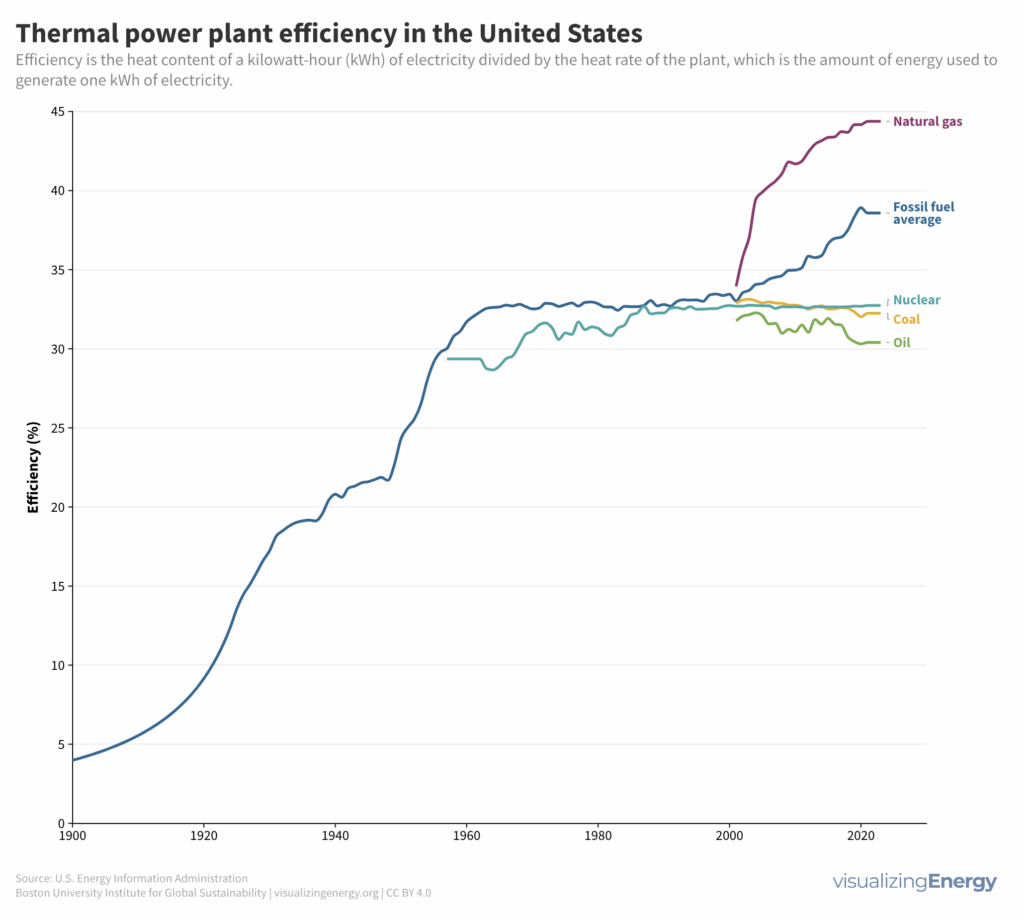
The efficiency of a thermal power plant is the ratio of the electricity output to the energy input, taking into account the heat losses. Over the years, the average efficiency of thermal power plants using fossil fuels in the United States has significantly increased, from 4% in 1900 to 43% in 2023. This improvement is attributed to reducing heat loss in the three main energy conversion processes: fuel combustion, steam generation, and electricity generation.
Two centuries of declining prices for personal transportation in the United Kingdom
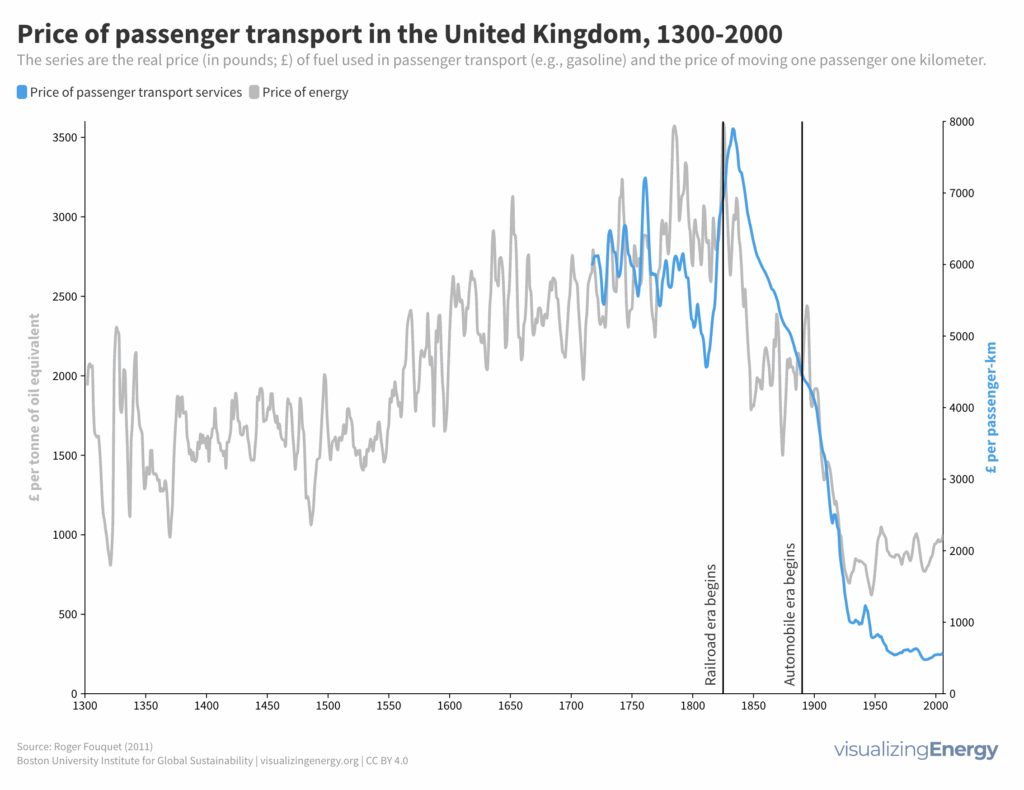
Access to personal mobility has played a crucial role in people’s life satisfaction, with personal vehicles revolutionizing daily life since the early 1900s. The number of global car registrations has dramatically increased over the years, reaching 1.1 billion in 2019. The energy historian Roger Fouquet explored the impact of personal transportation services in the United Kingdom from the 14th to the 20th century, revealing the economic, social, and environmental changes brought about by the expansion of personal travel.
What are “orphaned” oil and gas wells and why should we care about them?
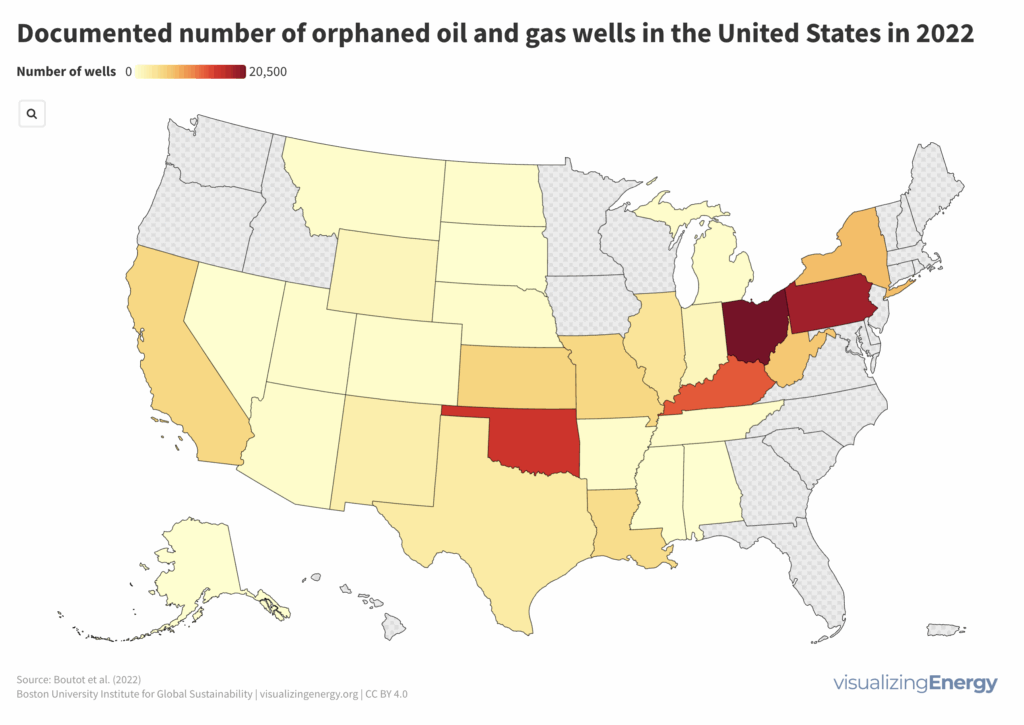
Of the millions of wells drilled, approximately 3.5 million are now abandoned, with some being properly plugged and others left unplugged. Unplugged wells can emit greenhouse gases, contaminate surrounding environments, and pose safety hazards. Orphaned wells, which lack a responsible operator, become the financial responsibility of the government and taxpayers.
How the price of lighting decreased 12,000-fold in the United Kingdom
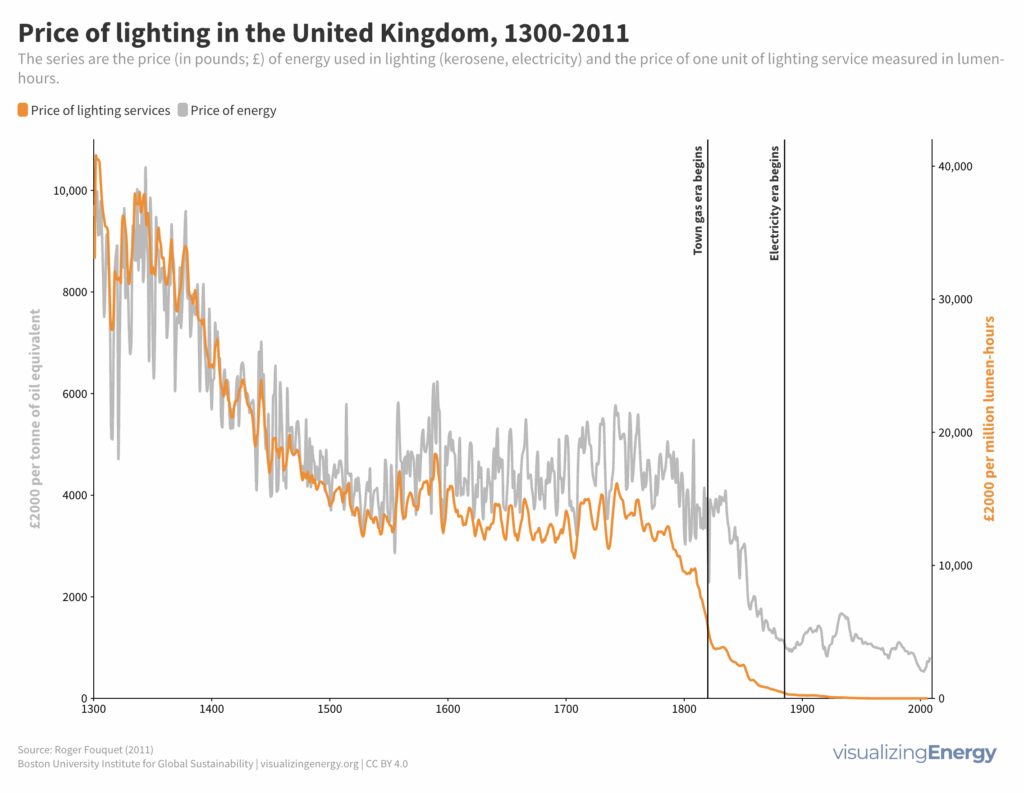
The transition from traditional lighting methods to modern illumination in the United Kingdom has had significant social, economic, and environmental consequences. Historically, lighting services relied on candles made from animal fat, but the 19th century saw the introduction of new fuels such as town gas, kerosene, and eventually electricity.