
What is the relationship between energy use and economic output?
Gross Domestic Product (GDP) measures the dollar value of the final goods and services produced in a country. Changes in GDP are the most widely used indicator of a country’s overall economic health. There are four components of GDP: Data PNG Embed Code Dividing a country’s GDP by its population is a common way to […]
Why is hydrogen assigned different colors?
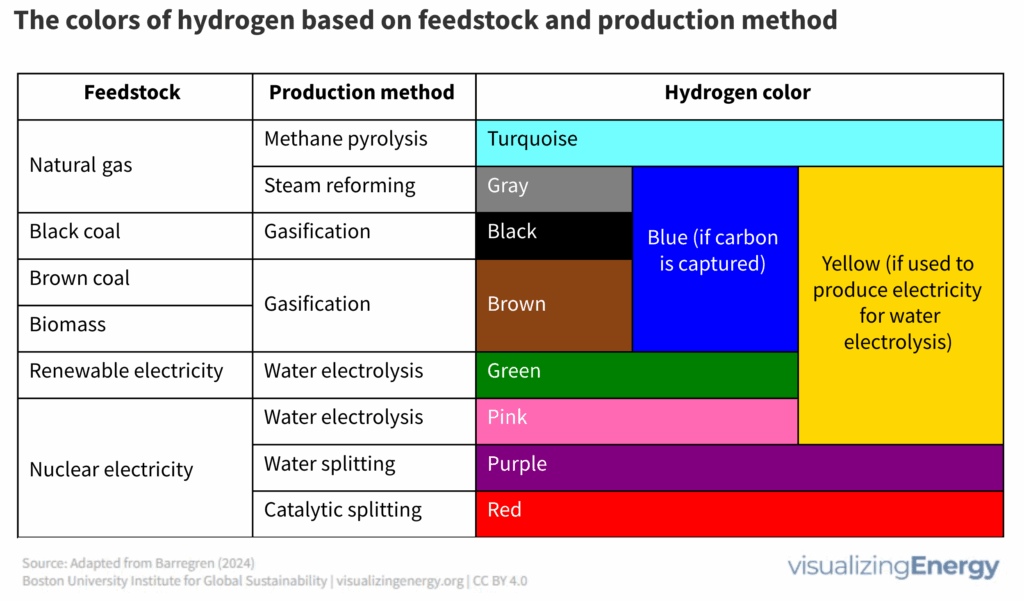
In 1875 the French Novelist Jules Verne published The Mysterious Island in which the protagonist Cyrus Smith envisioned a solution to the perceived inevitable exhaustion of coal: “Water, decomposed into its primitive elements, by electricity. (…) I believe that water will one day be employed as fuel, that hydrogen and oxygen which constitute it, used […]
Where are the world’s nuclear research reactors?
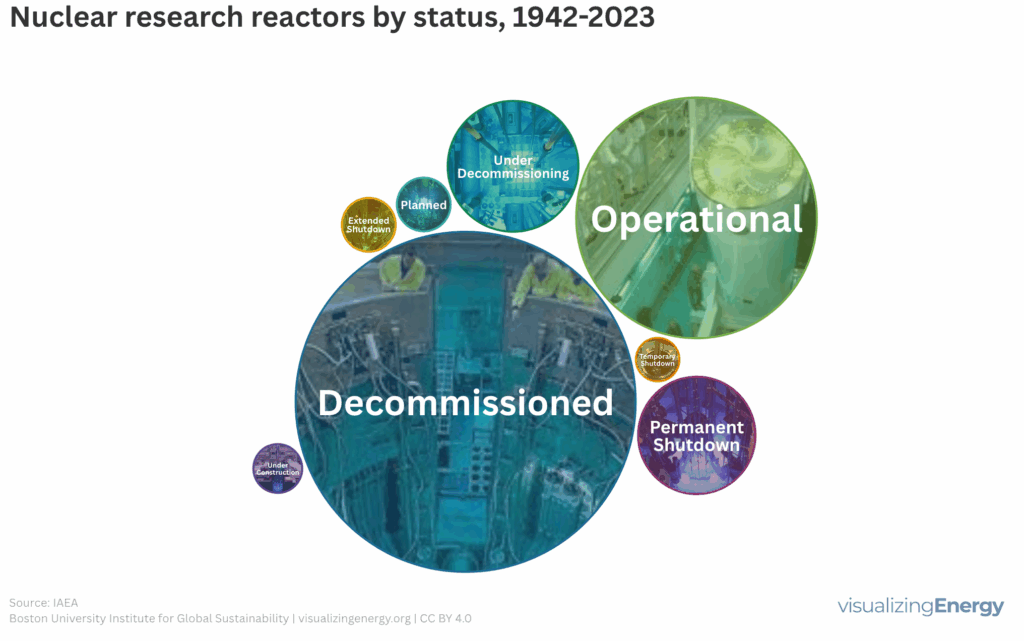
Nuclear research reactors do not generate electricity. Instead, they produce neutrons primarily for research, radioisotope production, and nuclear education and training. Since 1942, about 884 research reactors have been built in 71 countries. As of 2023, 227 reactors were operational in 54 countries, while 520 had been decommissioned or were undergoing decommissioning.1 Data PNG Embed […]
How has the knowledge economy affected energy use?
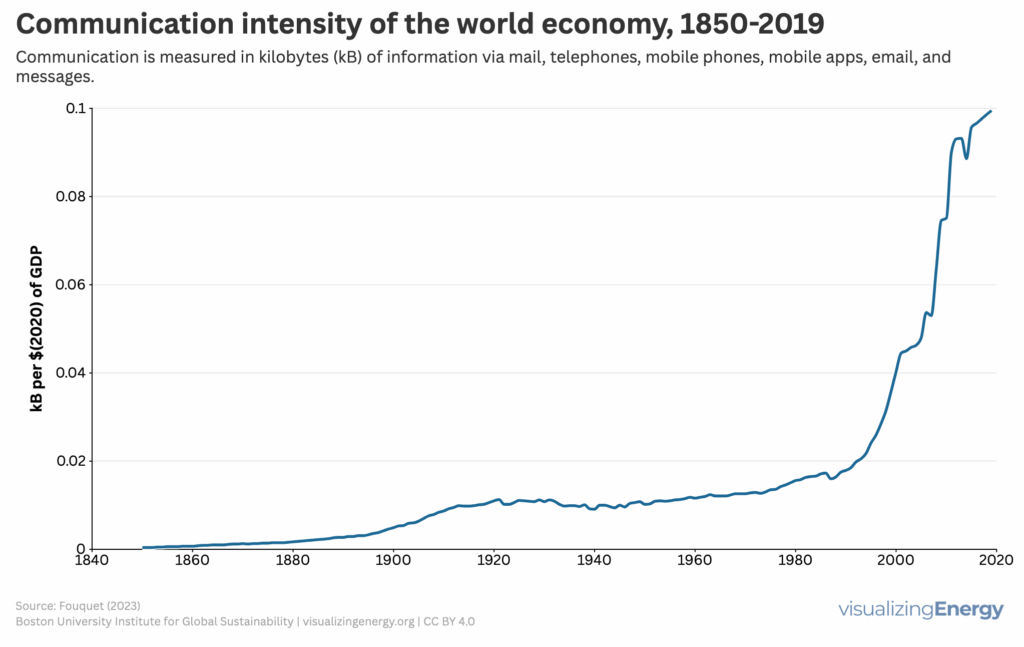
Digitalization uses digital technologies and systems to improve, transform, or create processes, operations, and services. It involves integrating digital tools and technologies, especially computers and the Internet, into various aspects of business, society, and everyday life. With globalization, dematerialization, and decarbonization, digitalization is a “megatrend” producing sweeping changes in society and the environment.1 What is […]
Global anthropogenic methane emissions, 1970-2022
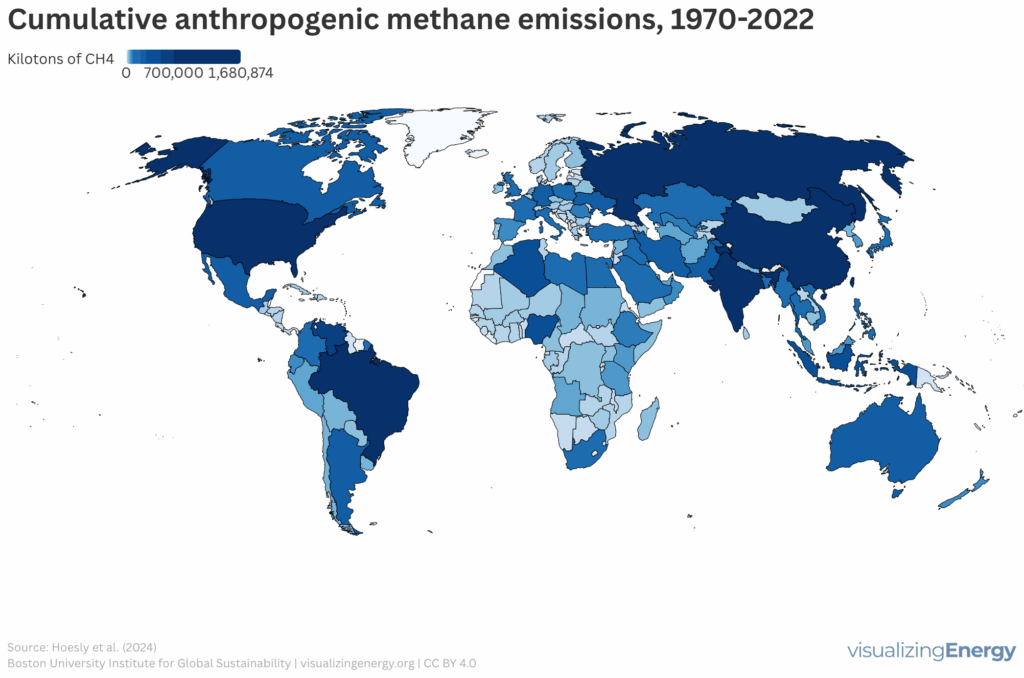
Methane (CH4) is a hydrocarbon and a major component of natural gas. It is a potent greenhouse gas (GHG), so its presence in the atmosphere affects the earth’s temperature and climate system. Methane belongs to a class of so-called “super pollutants” that simultaneously contribute to climate change and degrade the health of people and ecosystems. […]
The cost and potential for global methane emissions reductions from fossil fuels
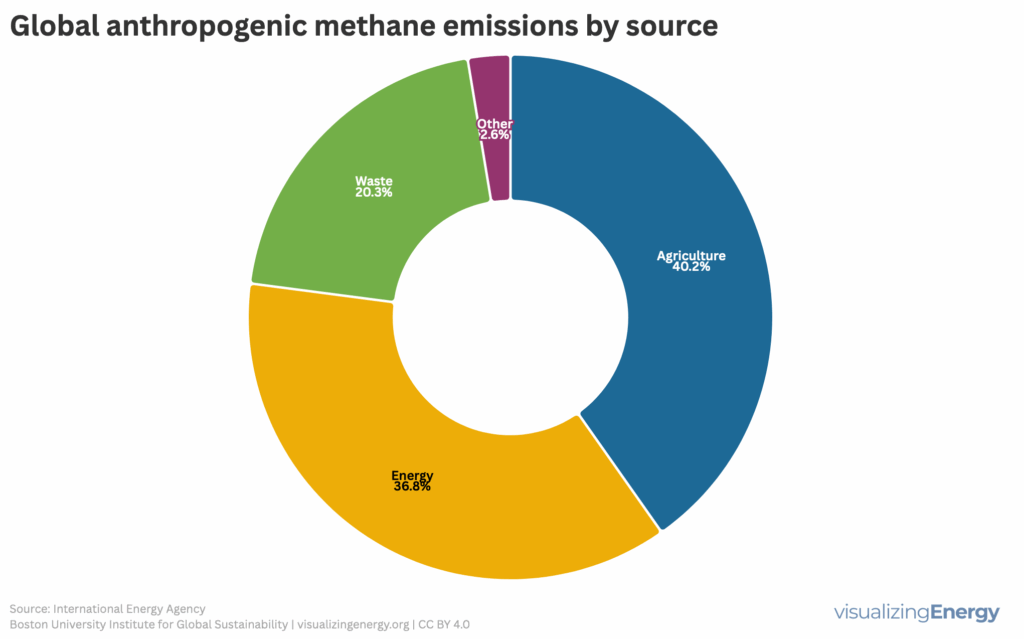
Methane belongs to a class of so-called “super pollutants” that simultaneously contribute to climate change and degrade the health of people and ecosystems. It has about 30 times the impact on global warming per unit mass compared to carbon dioxide over a 100-year lifetime (83 times larger over 20 years).1 Methane is responsible for about […]
Non-energy uses of fossil fuels
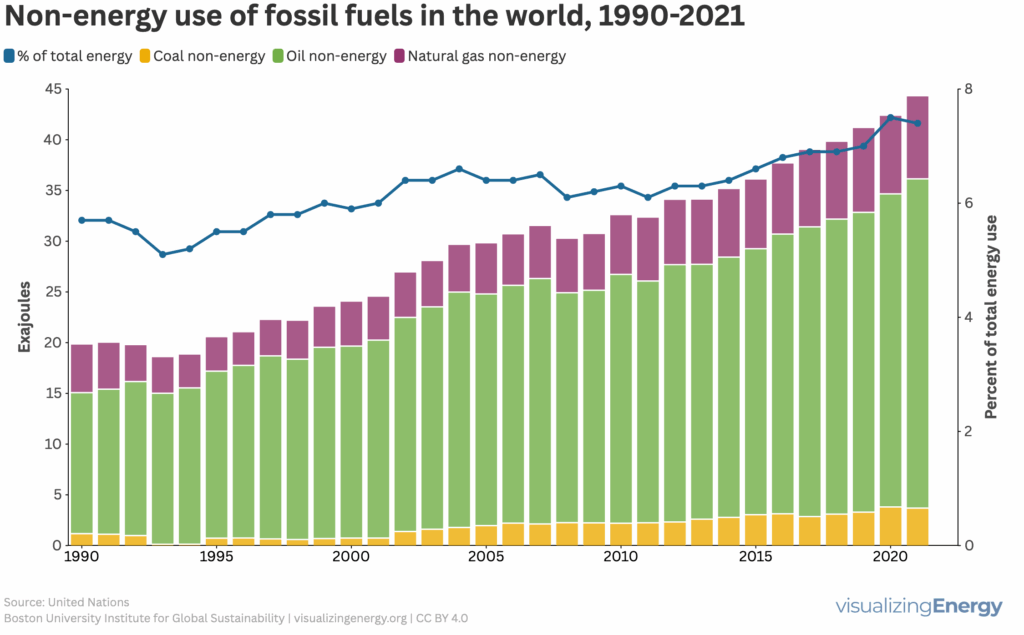
Fossil fuels are most thought of in terms of the energy services they provide: petroleum-derived fuels in transportation, natural gas for heating, and coal for electricity generation. But fossil fuels are consumed—but not combusted—when used as construction materials, chemical feedstocks, and many other non-energy products. About eight percent of fossil fuels used worldwide are for […]
The price of power in the United Kingdom, 1300-2000
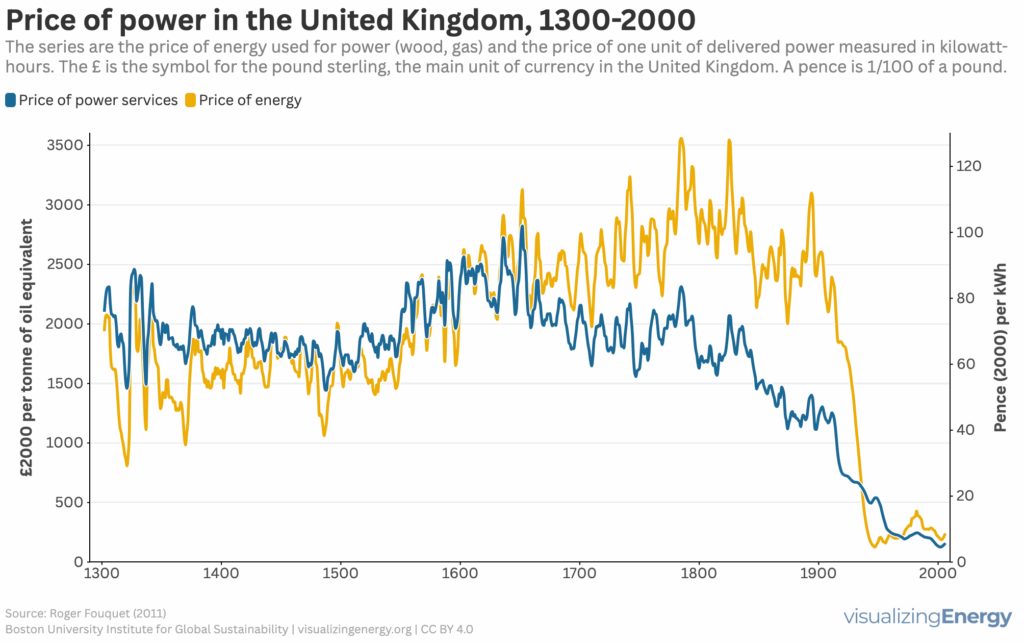
One outstanding feature of historical energy transitions was the change in the cost, power, and efficiency of the energy converters that humans used to perform useful work. These included animate energy converters such as people and draft animals, and inanimate energy converters such as water wheels, windmills, sailing ships, steam engines, internal combustion engines, and […]
What nations profit the most from fossil fuel extraction?
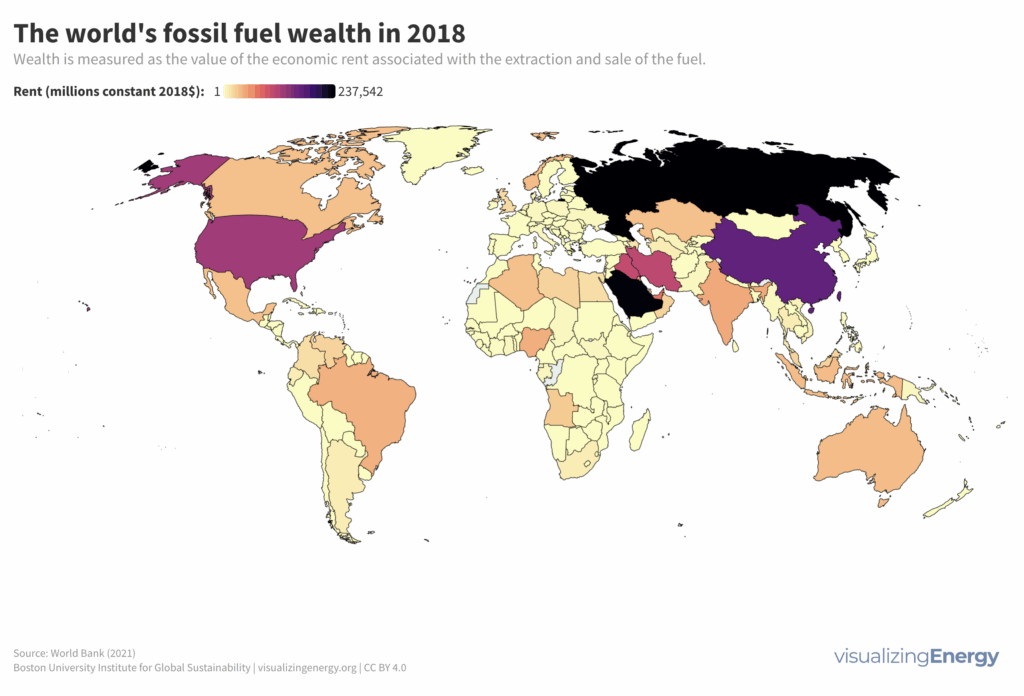
The well-being of a nation’s population is determined in part by how the nation’s wealth is managed. Wealth has two principal components. The first is the stock of physical assets such as machines, buildings, and power grids, and human assets such as labor, knowledge, and social connections. The second is the stock of natural assets […]
Where is new wind power in the United States being built?
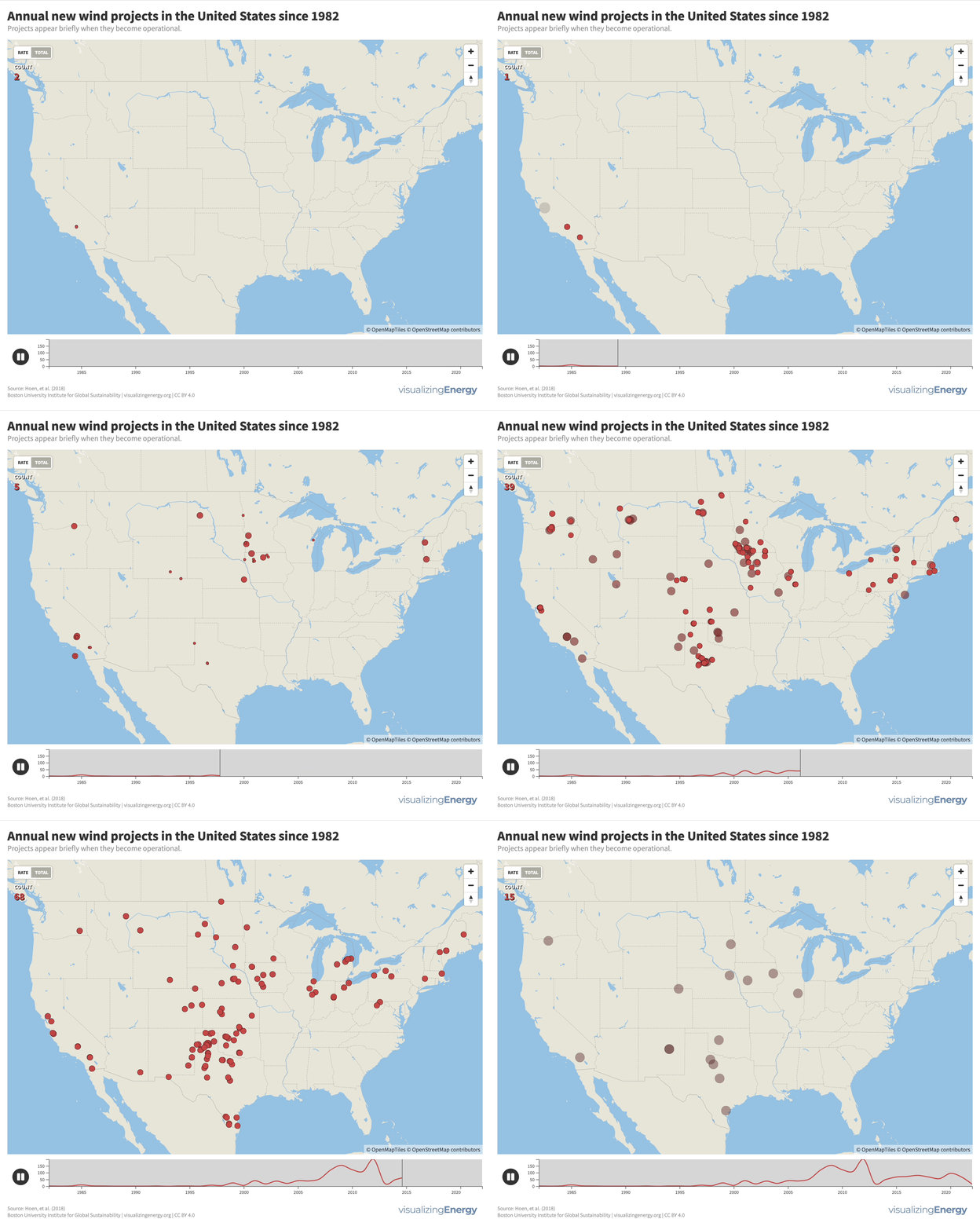
Modern wind energy in the United States began in California in the early 1980s with several wind farms in mountain passes in central and Southern California. By the mid-1980s California accounted for more than half of the wind-generated electricity in the world. Most of those projects are still in operation today, albeit with upgraded/ infrastructure. […]